Explaining the Children's Routine
อธิบายกิจวัตรของเด็ก ๆ
Emma explains when the children eat, play, and go to bed. Grace asks a few questions to make sure she understands the routine.
เอ็มมาอธิบายว่าเด็ก ๆ กินข้าว เล่น และเข้านอนเวลาไหน เกรซถามสองสามคำถามเพื่อให้แน่ใจว่าเข้าใจกิจวัตรของเด็ก ๆ
บทสนทนา9
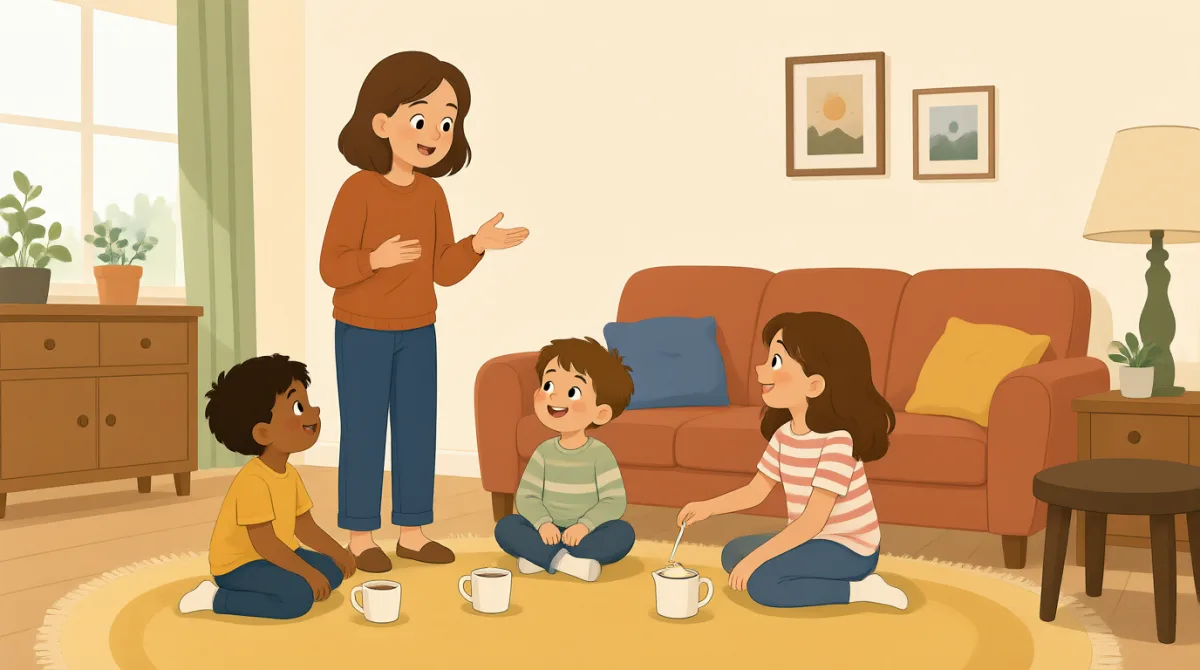

The kids usually eat dinner at six, and then they play for a little while.
ปกติเด็ก ๆ กินมื้อเย็นตอนหกโมง แล้วก็เล่นกันสักพัก

What do they like to eat? Do they have any food allergies?
พวกเขาชอบกินอะไรเหรอ มีอาหารอะไรที่แพ้ไหม
They like pasta and fruit. No allergies, but please cut the grapes in half.
พวกเขาชอบพาสตากับผลไม้ ไม่มีใครแพ้อาหาร แต่ช่วยผ่าองุ่นครึ่งหนึ่งด้วยนะ
Of course. What time do they start getting ready for bed?
ได้เลย พวกเขาเริ่มเตรียมตัวเข้านอนกี่โมงเหรอ
At seven thirty, they brush their teeth and put on their pajamas.
ตอนหนึ่งทุ่มครึ่ง พวกเขาจะแปรงฟันแล้วก็ใส่ชุดนอน
Do you read them a story, or do they choose one?
เธออ่านนิทานให้พวกเขาฟัง หรือพวกเขาเลือกเองเหรอ
They each choose a book. Lights out is at eight o’clock.
พวกเขาเลือกหนังสือกันคนละเล่ม ปิดไฟตอนสองทุ่ม
Got it. Where do they keep their books and pajamas?
เข้าใจแล้ว หนังสือกับชุดนอนของพวกเขาเก็บไว้ที่ไหนเหรอ
The books are on the shelf, and their pajamas are in the top drawer.
หนังสืออยู่บนชั้น ส่วนชุดนอนอยู่ในลิ้นชักบนสุด
คำศัพท์6
- for a little whileสักพัก
This means for a short time. Use it to say how long an activity lasts.
คำนี้หมายถึงช่วงเวลาสั้น ๆ ใช้บอกว่ากิจกรรมหนึ่งใช้เวลานานแค่ไหน
- food allergiesอาการแพ้อาหาร
These are health problems caused by certain foods. You can ask, “Do you have any food allergies?” to check what someone can safely eat.
หมายถึงปัญหาสุขภาพที่เกิดจากอาหารบางชนิด คุณถามว่า “Do you have any food allergies?” (มีอาหารอะไรที่แพ้ไหม) เพื่อเช็กว่าอีกฝ่ายกินอะไรได้อย่างปลอดภัยบ้าง
- cut the grapes in halfผ่าองุ่นครึ่งหนึ่ง
This means cut each grape into two pieces. Use “cut [something] in half” to explain how to prepare food.
หมายถึงหั่นองุ่นแต่ละลูกออกเป็นสองชิ้น ใช้ “cut [something] in half” (หั่น [บางสิ่ง] ครึ่งหนึ่ง) เพื่อบอกวิธีเตรียมอาหาร
- put on their pajamasใส่ชุดนอน
This means dress in their sleep clothes. Use “put on” to talk about wearing clothes.
หมายถึงสวมเสื้อผ้าสำหรับนอน ใช้ “put on” (สวมใส่) เมื่อพูดถึงการใส่เสื้อผ้า
- Lights out is at eight o’clock.ปิดไฟตอนสองทุ่ม
This means it is time to turn off the lights and go to sleep at eight. You can use “Lights out is at [time]” to explain a bedtime.
หมายถึงถึงเวลาปิดไฟและเข้านอนตอนสองทุ่ม ใช้ “Lights out is at [time]” (ปิดไฟตอน [เวลา]) เพื่อบอกเวลาเข้านอน
- top drawerลิ้นชักบนสุด
This is the highest drawer in a piece of furniture. Use it to tell someone where something is kept.
หมายถึงลิ้นชักที่อยู่สูงที่สุดของเฟอร์นิเจอร์ชิ้นหนึ่ง ใช้คำนี้เพื่อบอกว่าเก็บของไว้ที่ไหน
ประโยคสำคัญ7
- 1
The kids usually eat dinner at six, and then they play for a little while.
ปกติเด็ก ๆ กินมื้อเย็นตอนหกโมง แล้วก็เล่นกันสักพัก
This sentence explains a simple daily routine in order. Use “usually” and “and then” to describe what happens and when.
ประโยคนี้อธิบายกิจวัตรประจำวันง่าย ๆ ตามลำดับ ใช้ “usually” และ “and then” เพื่อบอกว่าเกิดอะไรขึ้นและเกิดขึ้นเมื่อไร
- 2
What do they like to eat?
พวกเขาชอบกินอะไรเหรอ
This is a useful way to ask about someone’s food preferences. You can replace “they” with “you,” “he,” or “she.”
นี่เป็นวิธีถามความชอบเรื่องอาหารของใครสักคนที่ใช้ได้ดี คุณเปลี่ยน “they” เป็น “you,” “he,” หรือ “she” ได้
- 3
Do they have any food allergies?
พวกเขามีอาหารอะไรที่แพ้ไหม
Use this question to check whether someone needs to avoid certain foods. You can also ask, “Do you have any food allergies?”
ใช้คำถามนี้เพื่อตรวจสอบว่าใครต้องหลีกเลี่ยงอาหารบางชนิดหรือไม่ คุณถามว่า “Do you have any food allergies?” ก็ได้เช่นกัน
- 4
Of course.
ได้เลย
This is a friendly way to say yes or agree to do something. It is useful when someone makes a request.
นี่เป็นวิธีตอบรับหรือแสดงว่าเต็มใจทำอะไรบางอย่างอย่างเป็นกันเอง เหมาะที่จะใช้เมื่อมีคนขอให้ช่วย
- 5
What time do they start getting ready for bed?
พวกเขาเริ่มเตรียมตัวเข้านอนกี่โมงเหรอ
This question asks when a bedtime routine begins. Replace “they” with another person or group to ask about their routine.
คำถามนี้ถามว่ากิจวัตรก่อนเข้านอนเริ่มเมื่อไร เปลี่ยน “they” เป็นบุคคลหรือกลุ่มคนอื่นเพื่อถามถึงกิจวัตรของพวกเขาได้
- 6
They each choose a book.
พวกเขาเลือกหนังสือกันคนละเล่ม
This explains that every child chooses one book. Use “each” to talk about people doing something individually.
ประโยคนี้บอกว่าเด็กแต่ละคนเลือกหนังสือหนึ่งเล่ม ใช้ “each” เพื่อพูดถึงคนที่ทำสิ่งใดสิ่งหนึ่งแยกกันแต่ละคน
- 7
The books are on the shelf, and their pajamas are in the top drawer.
หนังสืออยู่บนชั้น ส่วนชุดนอนอยู่ในลิ้นชักบนสุด
This sentence gives two clear locations. Use “on” for something on a surface and “in” for something inside a drawer.
ประโยคนี้บอกตำแหน่งสองอย่างอย่างชัดเจน ใช้ “on” กับสิ่งที่วางอยู่บนพื้นผิว และใช้ “in” กับสิ่งที่อยู่ข้างในลิ้นชัก