Asking About Experience
Preguntar por la experiencia
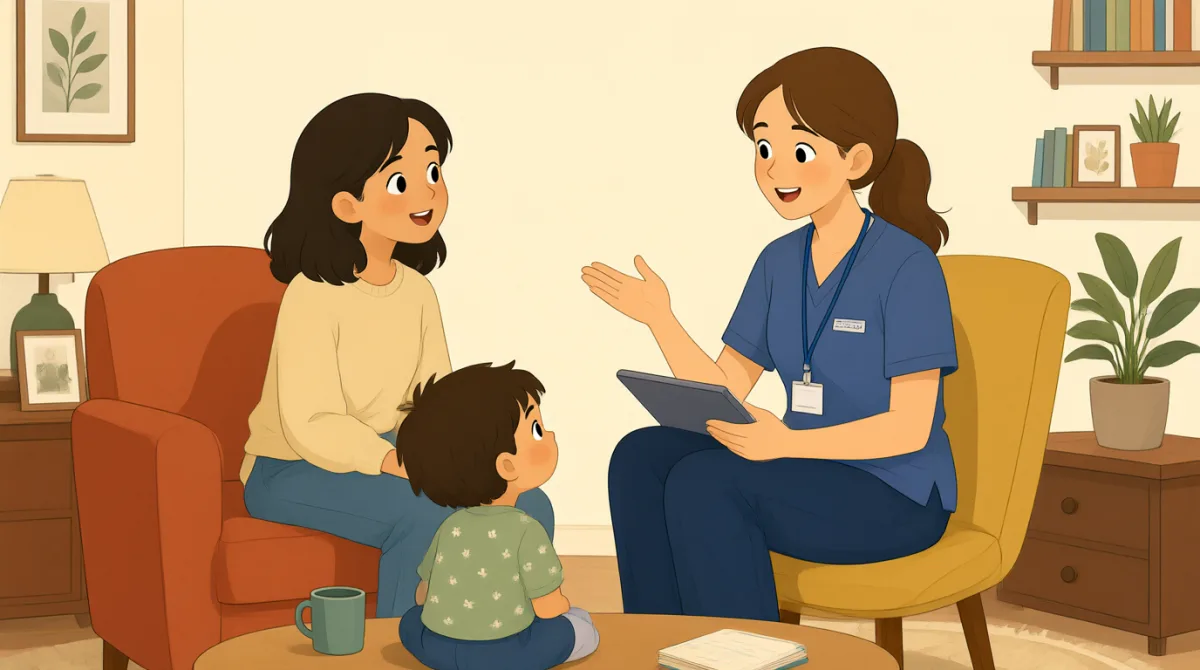
Emma talks with Grace, a babysitter, and asks about her experience with young children. Grace shares what she has done before.
Emma habla con Grace, una niñera, y le pregunta por su experiencia con niños pequeños. Grace cuenta lo que ha hecho antes.
Diálogo9

Hi, Grace. Have you looked after young children before?
Hola, Grace. ¿Has cuidado antes de niños pequeños?

Yes, I have. I cared for two children, ages three and five.
Sí. Cuidé a dos niños, de tres y cinco años.
How long did you work with that family?
¿Cuánto tiempo trabajaste con esa familia?
I worked with them for two years, mostly in the evenings.
Trabajé con ellos durante dos años, sobre todo por las tardes.
What did you do with the children?
¿Qué hacías con los niños?
We read books, played games, and got ready for bed.
Leíamos libros, jugábamos y nos preparábamos para ir a dormir.
Have you ever cared for two children at the same time?
¿Alguna vez has cuidado de dos niños al mismo tiempo?
Yes. I stayed calm and made sure both children were safe.
Sí. Mantuve la calma y me aseguré de que los dos niños estuvieran seguros.
That sounds good. I’m glad you have experience with young children.
Suena bien. Me alegra que tengas experiencia con niños pequeños.
Vocabulario8
- looked aftercuidar de
To looked after children means to take care of them. You can also use this phrase for caring for a person or pet.
“Looked after” significa cuidar de alguien. También puedes usar esta expresión para hablar de cuidar a una persona o a una mascota.
- cared forcuidé de
This means took care of someone. Grace uses it to describe her past work with children.
Significa que cuidaste de alguien. Grace lo usa para describir su trabajo anterior con niños.
- How longcuánto tiempo
Use this phrase to ask about the length of time something lasted. For example, “How long did you live there?”
Usa esta expresión para preguntar cuánto duró algo. Por ejemplo: “How long did you live there?” (¿Cuánto tiempo viviste allí?).
- mostlysobre todo
This means usually or for the most part. Grace worked in the evenings most of the time.
Significa “por lo general” o “en su mayor parte”. Grace trabajaba por las tardes la mayor parte del tiempo.
- got ready for bedprepararse para ir a dormir
This means did the things needed before going to sleep, such as putting on pajamas. You can use it to talk about a child's bedtime routine.
Significa hacer lo necesario antes de irse a dormir, como ponerse el pijama. Puedes usar esta expresión para hablar de la rutina de un niño antes de acostarse.
- at the same timeal mismo tiempo
This means during the same period or together. You can use it to ask if someone can care for two children together.
Significa durante el mismo período o juntos. Puedes usarla para preguntar si alguien puede cuidar de dos niños a la vez.
- stayed calmmantener la calma
This means remained relaxed and did not become upset. It is useful to describe how someone handles a difficult situation.
Significa seguir tranquilo y no alterarse. Es útil para describir cómo alguien maneja una situación difícil.
- made sureasegurarse de
This means checked or took action to ensure something happened. For example, you can make sure children are safe.
Significa comprobar o hacer lo necesario para que algo ocurra. Por ejemplo, puedes asegurarte de que los niños estén seguros.
Frases clave8
- 1
Have you looked after young children before?
¿Has cuidado antes de niños pequeños?
Use this question to ask about someone's past experience caring for children. You can replace “young children” with another kind of work or responsibility.
Usa esta pregunta para preguntar por la experiencia anterior de alguien cuidando niños. Puedes cambiar “young children” por otro tipo de trabajo o responsabilidad.
- 2
I cared for two children, ages three and five.
Cuidé a dos niños, de tres y cinco años.
This sentence gives a simple example of past childcare experience. You can use the pattern “I cared for [number] children, ages [ages].”
Esta frase da un ejemplo sencillo de experiencia cuidando niños. Puedes usar el modelo “I cared for [number] children, ages [ages].”
- 3
How long did you work with that family?
¿Cuánto tiempo trabajaste con esa familia?
Use this question to ask how much time someone spent working with a person or group. Replace “that family” with a job, company, or person.
Usa esta pregunta para saber cuánto tiempo trabajó alguien con una persona o un grupo. Cambia “that family” por un trabajo, una empresa o una persona.
- 4
I worked with them for two years, mostly in the evenings.
Trabajé con ellos durante dos años, sobre todo por las tardes.
This explains how long Grace worked and when she usually worked. You can reuse “I worked with them for [length of time], mostly [when].”
Esta frase explica cuánto tiempo trabajó Grace y cuándo solía hacerlo. Puedes reutilizar “I worked with them for [length of time], mostly [when].”
- 5
What did you do with the children?
¿Qué hacías con los niños?
Use this question to ask about someone's past activities or duties. You can replace “the children” with another group or person.
Usa esta pregunta para preguntar por las actividades o tareas que alguien hacía antes. Puedes cambiar “the children” por otro grupo o persona.
- 6
Have you ever cared for two children at the same time?
¿Alguna vez has cuidado de dos niños al mismo tiempo?
This question asks if someone has had a particular experience at any point in their life. You can change the number or activity to ask about other experiences.
Esta pregunta sirve para saber si alguien ha tenido una experiencia concreta alguna vez. Puedes cambiar el número o la actividad para preguntar por otras experiencias.
- 7
I stayed calm and made sure both children were safe.
Mantuve la calma y me aseguré de que los dos niños estuvieran seguros.
This sentence describes how Grace handled her responsibility. You can use “I stayed calm and made sure…” to explain how you dealt with a situation.
Esta frase describe cómo Grace asumió su responsabilidad. Puedes usar “I stayed calm and made sure…” para explicar cómo manejaste una situación.
- 8
I’m glad you have experience with young children.
Me alegra que tengas experiencia con niños pequeños.
Use this sentence to show that you are pleased someone has relevant experience. Replace “young children” with another skill or kind of experience.
Usa esta frase para mostrar que te alegra que alguien tenga experiencia relevante. Cambia “young children” por otra habilidad o tipo de experiencia.