Getting Updates While Away
Recibiendo noticias mientras estás fuera
While Emma is away, she texts Jack to ask how Buddy is doing. Jack sends a photo and tells her that Buddy ate well and enjoyed his walk.
Mientras Emma está fuera, le escribe a Jack para preguntarle cómo está Buddy. Jack le manda una foto y le cuenta que Buddy comió bien y disfrutó del paseo.
Diálogo8
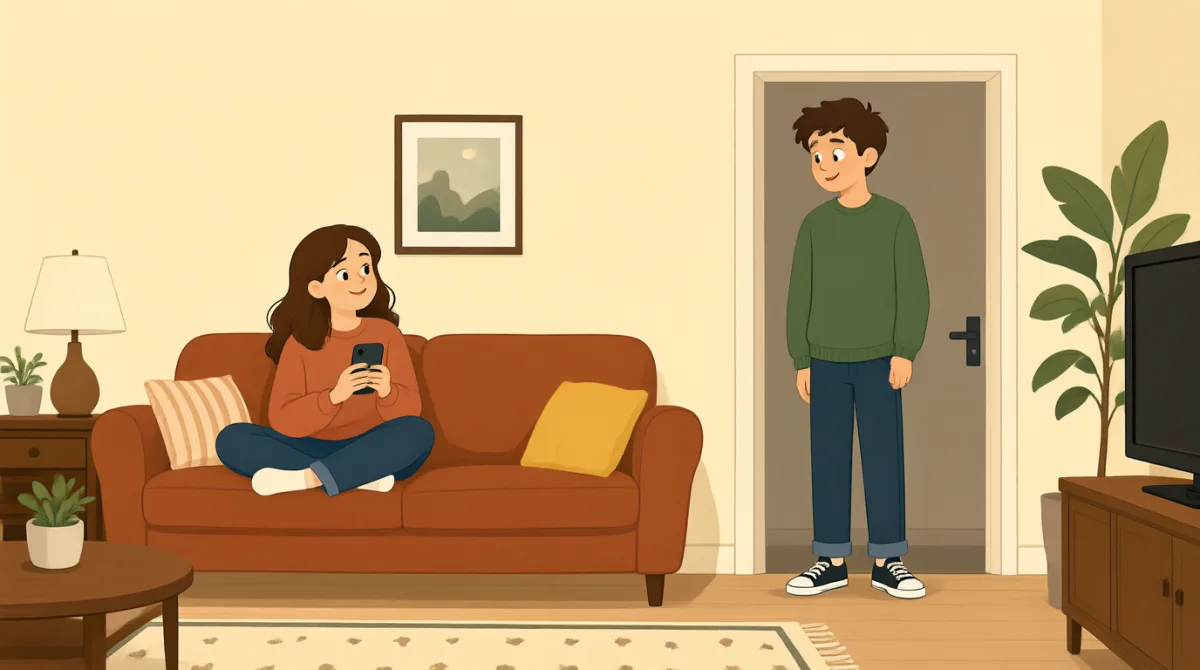

Hi, Jack! How is Buddy doing? Could you send me a quick update?
¡Hola, Jack! ¿Cómo está Buddy? ¿Me puedes contar rápidamente cómo va?

He’s doing great! He ate all his food and enjoyed his walk.
¡Está genial! Se comió toda la comida y disfrutó del paseo.
That’s good to hear. Did he drink some water after the walk?
Qué bueno. ¿Tomó agua después del paseo?
Yes, he drank a lot. I filled his water bowl before I left.
Sí, tomó mucha. Le llené el cuenco de agua antes de irme.
Thanks! Could you send me a photo of him when you have time?
¡Gracias! ¿Me puedes mandar una foto suya cuando tengas tiempo?
Sure! Here he is, relaxing by the door after our walk.
¡Claro! Aquí está, descansando junto a la puerta después de nuestro paseo.
He looks so happy! Thanks for taking such good care of him.
¡Se ve tan feliz! Gracias por cuidarlo tan bien.
You’re welcome! I’ll see him again tomorrow and send you another update.
¡De nada! Mañana lo volveré a ver y te mandaré otra actualización.
Vocabulario8
- doing greatestar genial
This means feeling or behaving very well. You can use it to give a positive update about a person or pet.
Significa sentirse o comportarse muy bien. Puedes usarlo para dar noticias positivas sobre una persona o una mascota.
- ate all his foodcomerse toda la comida
This means Buddy finished everything he was given to eat. Use “ate all his food” to report that a pet has eaten well.
Significa que Buddy terminó todo lo que le dieron de comer. Usa “ate all his food” para contar que una mascota comió bien.
- enjoyed his walkdisfrutar del paseo
This means Buddy liked going for a walk. You can use “enjoyed” to say someone or a pet liked an activity.
Significa que a Buddy le gustó salir a pasear. Puedes usar “enjoyed” para decir que a alguien o a una mascota le gustó una actividad.
- That’s good to hear.Qué bueno.
This is a friendly way to say you are glad about some news. Use it when someone gives you a positive update.
Es una forma cordial de decir que te alegra recibir una noticia. Úsala cuando alguien te dé buenas noticias.
- filled his water bowlllenarle el cuenco de agua
This means Jack put water into Buddy’s bowl. You can use “filled the bowl” when talking about giving a pet fresh water.
Significa que Jack puso agua en el cuenco de Buddy. Puedes usar “filled the bowl” para hablar de ponerle agua fresca a una mascota.
- when you have timecuando tengas tiempo
This means the other person can do something when it is convenient. Use it to make a polite request without creating pressure.
Significa que la otra persona puede hacer algo cuando le venga bien. Úsalo para hacer una petición amable sin presionar.
- taking such good care of himcuidarlo tan bien
This means looking after Buddy very well. You can use “taking good care of” to thank someone for looking after a person or pet.
Significa cuidar muy bien de Buddy. Puedes usar “taking good care of” para agradecerle a alguien que cuide de una persona o una mascota.
- send you another updatemandarte otra actualización
This means Jack will give Emma more information later. Use “send you another update” when promising to share news again.
Significa que Jack le dará más información a Emma más adelante. Usa “send you another update” cuando prometas volver a compartir noticias.
Frases clave8
- 1
Could you send me a quick update?
¿Me puedes contar rápidamente cómo va?
This is a polite way to ask for brief news. You can reuse “Could you send me…” to request a message, photo, or other information.
Es una forma amable de pedir noticias breves. Puedes volver a usar “Could you send me…” para pedir un mensaje, una foto u otra información.
- 2
He ate all his food and enjoyed his walk.
Se comió toda la comida y disfrutó del paseo.
This sentence gives two simple updates about Buddy. You can replace “he” and the activities to report how someone or a pet is doing.
Esta oración da dos noticias sencillas sobre Buddy. Puedes cambiar “he” y las actividades para contar cómo está una persona o una mascota.
- 3
Did he drink some water after the walk?
¿Tomó agua después del paseo?
This is a yes-or-no question about something that happened in the past. Use “Did he…?” to ask about a completed action.
Es una pregunta de sí o no sobre algo que ocurrió en el pasado. Usa “Did he…?” para preguntar por una acción ya terminada.
- 4
I filled his water bowl before I left.
Le llené el cuenco de agua antes de irme.
This tells someone what you did before going somewhere. You can reuse “I filled…” for bowls, bottles, or other containers.
Esta oración cuenta lo que hiciste antes de ir a algún sitio. Puedes volver a usar “I filled…” para hablar de cuencos, botellas u otros recipientes.
- 5
Could you send me a photo of him when you have time?
¿Me puedes mandar una foto suya cuando tengas tiempo?
This is a polite request that gives the other person flexibility. Replace “a photo of him” with the thing you would like them to send.
Es una petición amable que le da flexibilidad a la otra persona. Cambia “a photo of him” por lo que quieras que te mande.
- 6
Here he is, relaxing by the door after our walk.
Aquí está, descansando junto a la puerta después de nuestro paseo.
This sentence introduces a photo and describes what Buddy is doing. You can use “Here [someone] is…” when sharing a picture.
Esta oración presenta una foto y describe lo que está haciendo Buddy. Puedes usar “Here [someone] is…” al compartir una foto.
- 7
Thanks for taking such good care of him.
Gracias por cuidarlo tan bien.
This is a warm way to thank someone for looking after a pet or person. Replace “him” with the person or animal they cared for.
Es una forma afectuosa de agradecerle a alguien que cuide de una mascota o una persona. Cambia “him” por la persona o el animal que cuidaron.
- 8
I’ll see him again tomorrow and send you another update.
Mañana lo volveré a ver y te mandaré otra actualización.
This sentence describes future plans using “I’ll.” You can reuse the pattern to say when you will meet someone and share news.
Esta oración describe planes futuros usando “I’ll.” Puedes volver a usar esta estructura para decir cuándo verás a alguien y le contarás novedades.