Cooking Over a Fire
আগুনে রান্না
Emma and Jack cook dinner over the campsite fire. They prepare a simple meal and talk about what they want to do the next day.
এমা ও জ্যাক ক্যাম্পের আগুনে রাতের খাবার রান্না করে। তারা সহজ একটা খাবার তৈরি করে এবং পরের দিন কী করতে চায়, তা নিয়ে কথা বলে।
সংলাপ8
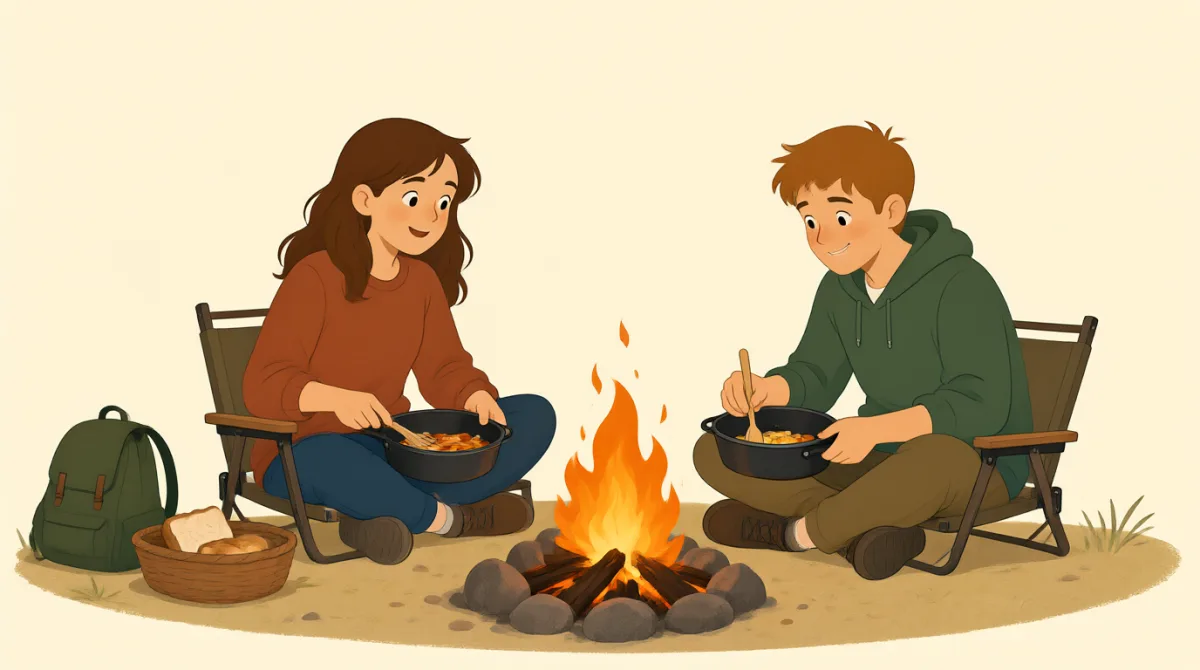

The fire is ready. What should we cook for dinner?
আগুন জ্বালানো হয়ে গেছে। রাতের খাবারে কী রান্না করা উচিত?

Let’s cook sausages and potatoes. I brought some bread, too.
চলো সসেজ আর আলু রান্না করি। আমি কিছু পাউরুটিও এনেছি।
Great! Can you put the potatoes in the pan?
দারুণ! আলুগুলো কি প্যানে দিতে পারবে?
Sure. We should cook them slowly so they don’t burn.
অবশ্যই। এগুলো ধীরে ধীরে রান্না করা উচিত, যাতে পুড়ে না যায়।
I’ll turn the sausages. They smell really good.
আমি সসেজগুলো উল্টে দিচ্ছি। দারুণ গন্ধ হচ্ছে।
Dinner will be ready soon. What do you want to do tomorrow?
শিগগিরই রাতের খাবার তৈরি হয়ে যাবে। কাল কী করতে চাও?
I’d like to hike by the lake and take some pictures.
আমি হ্রদের ধারে হাঁটতে যেতে আর কিছু ছবি তুলতে চাই।
Sounds good. Let’s eat, then plan our morning.
ভালোই তো। চলো খেয়ে নিই, তারপর সকালের পরিকল্পনা করি।
শব্দভান্ডার8
- cook for dinnerরাতের খাবার রান্না করা
This means to prepare food for the evening meal. You can ask, “What should we cook for dinner?”
এর মানে সন্ধ্যার খাবার তৈরি করা। তুমি জিজ্ঞেস করতে পারো, “What should we cook for dinner?” (রাতের খাবারে কী রান্না করা উচিত?)
- broughtএনেছিলাম
“Brought” is the past form of “bring.” Use it to say you carried something with you, such as food on a camping trip.
“Brought” হলো “bring”-এর অতীত রূপ। সঙ্গে করে কিছু নিয়ে এসেছ বোঝাতে এটি ব্যবহার করো, যেমন ক্যাম্পিংয়ে খাবার নিয়ে আসা।
- put the potatoes in the panআলুগুলো প্যানে দেওয়া
This means to place the potatoes inside the pan. You can use “put [something] in [a container]” when giving a simple instruction.
এর মানে আলুগুলো প্যানের ভেতরে রাখা। সহজ কোনো নির্দেশ দিতে “put [something] in [a container]” ব্যবহার করতে পারো।
- cook them slowlyসেগুলো ধীরে ধীরে রান্না করা
This means to heat the food gently over time. You can use this phrase when food needs to cook without burning.
এর মানে সময় নিয়ে অল্প আঁচে খাবার গরম করা। খাবার পুড়ে না গিয়ে রান্না হওয়া দরকার হলে এই কথাটি ব্যবহার করতে পারো।
- turn the sausagesসসেজগুলো উল্টে দেওয়া
This means to move or flip the sausages so they cook on the other side. It is useful when cooking food in a pan or over a fire.
এর মানে সসেজগুলো নাড়িয়ে বা উল্টে দেওয়া, যাতে অন্য পাশটাও রান্না হয়। প্যানে বা আগুনের ওপর খাবার রান্না করার সময় কথাটি কাজে লাগে।
- burnপুড়ে যাওয়া
Food burns when it gets too hot or cooks for too long. You can say, “Watch the food so it doesn’t burn.”
খাবার অতিরিক্ত গরম হলে বা বেশি সময় ধরে রান্না করলে তা পুড়ে যায়। তুমি বলতে পারো, “Watch the food so it doesn’t burn.” (খাবারটা খেয়াল রেখো, যাতে পুড়ে না যায়।)
- by the lakeহ্রদের ধারে
This means near or beside the lake. Use “by” to describe a place next to something.
এর মানে হ্রদের কাছে বা পাশে। কোনো কিছুর পাশের জায়গা বোঝাতে “by” ব্যবহার করো।
- take some picturesকিছু ছবি তোলা
This means to use a camera or phone to make photographs. You can say, “I’d like to take some pictures” when talking about plans.
এর মানে ক্যামেরা বা ফোন দিয়ে ছবি তোলা। কী করার পরিকল্পনা আছে বলতে তুমি “I’d like to take some pictures” (আমি কিছু ছবি তুলতে চাই) বলতে পারো।
গুরুত্বপূর্ণ বাক্য8
- 1
What should we cook for dinner?
রাতের খাবারে কী রান্না করা উচিত?
Use this question to ask for ideas about what to prepare for an evening meal. You can replace “dinner” with another meal or occasion.
সন্ধ্যার খাবারে কী তৈরি করা যায়, সে বিষয়ে কারও কাছে পরামর্শ চাইতে এই প্রশ্নটি ব্যবহার করো। “dinner”-এর বদলে অন্য কোনো খাবার বা উপলক্ষের নাম বসাতে পারো।
- 2
I brought some bread, too.
আমি কিছু পাউরুটিও এনেছি।
This sentence tells someone that you brought an additional item. Use “I brought [something], too” to mention something you have with you.
এই বাক্যে কাউকে জানানো হয় যে তুমি সঙ্গে করে আরও একটি জিনিস এনেছ। সঙ্গে কী আছে তা বলতে “I brought [something], too” ব্যবহার করো।
- 3
Can you put the potatoes in the pan?
আলুগুলো কি প্যানে দিতে পারবে?
This is a polite way to ask someone to do a task. Replace “the potatoes” and “the pan” with other things and places.
কাউকে কোনো কাজ করতে বলার এটি একটি ভদ্র উপায়। অন্য জিনিস ও জায়গার নাম দিয়ে “the potatoes” এবং “the pan”-এর বদলে বসাতে পারো।
- 4
We should cook them slowly so they don’t burn.
এগুলো ধীরে ধীরে রান্না করা উচিত, যাতে পুড়ে না যায়।
Use “We should” to make a suggestion, and “so” to explain the reason. You can use this pattern to give practical advice.
কোনো পরামর্শ দিতে “We should” ব্যবহার করো, আর কারণ বোঝাতে “so” ব্যবহার করো। ব্যবহারিক পরামর্শ দেওয়ার সময় এই গঠনটি কাজে লাগে।
- 5
I’ll turn the sausages.
আমি সসেজগুলো উল্টে দিচ্ছি।
Use “I’ll” to offer to do something now or soon. Replace “turn the sausages” with another helpful task.
এখন বা একটু পরেই কিছু করার প্রস্তাব দিতে “I’ll” ব্যবহার করো। অন্য কোনো সহায়ক কাজের কথা বলতে “turn the sausages”-এর বদলে সেই কাজটি বসাও।
- 6
What do you want to do tomorrow?
কাল তুমি কী করতে চাও?
Use this question to ask someone about their plans for the next day. You can replace “tomorrow” with another time.
পরের দিন কারও কী পরিকল্পনা আছে, তা জানতে এই প্রশ্নটি ব্যবহার করো। অন্য কোনো সময়ের কথা বলতে “tomorrow”-এর বদলে সেই সময়টি বসাতে পারো।
- 7
I’d like to hike by the lake and take some pictures.
আমি হ্রদের ধারে হাঁটতে যেতে আর কিছু ছবি তুলতে চাই।
Use “I’d like to” to talk about something you want to do. Add two activities with “and” to describe your plans.
তুমি কিছু করতে চাও বোঝাতে “I’d like to” ব্যবহার করো। নিজের পরিকল্পনায় দুটি কাজের কথা বলতে “and” দিয়ে সেগুলো জুড়ে দাও।
- 8
Let’s eat, then plan our morning.
চলো খেয়ে নিই, তারপর সকালের পরিকল্পনা করি।
Use “Let’s” to suggest doing something together. “Then” shows the order of the activities: eat first and plan afterward.
একসঙ্গে কিছু করার প্রস্তাব দিতে “Let’s” ব্যবহার করো। “Then” কাজগুলোর ক্রম বোঝায়: আগে খাওয়া, তারপর পরিকল্পনা করা।