Requesting the Bread Basket
রুটির ঝুড়ি এগিয়ে দিতে বলা
Someone at the dinner table wants a piece of bread and asks for the bread basket, which is currently closer to someone else.
রাতের খাবারের টেবিলে কেউ এক টুকরো রুটি চান এবং রুটির ঝুড়িটি এগিয়ে দিতে বলেন। ঝুড়িটি তখন অন্য একজনের কাছাকাছি রয়েছে।
সংলাপ5
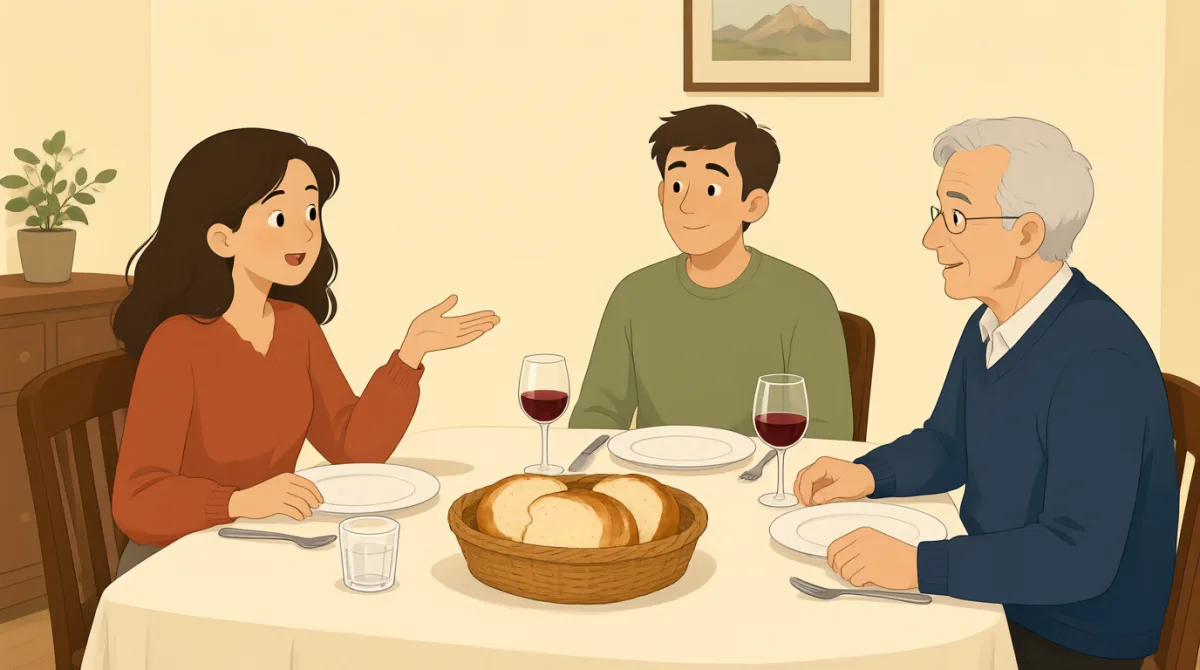

Excuse me, Mia, would you mind passing the bread basket?
মিয়া, একটু শুনবে? রুটির ঝুড়িটা এগিয়ে দেবে?

Oh, sure, Jack! Here you go.
ওহ, অবশ্যই, জ্যাক! এই নাও।
Thanks a lot!
অনেক ধন্যবাদ!
No problem! Do you need anything else?
কোনো সমস্যা নেই! আর কিছু লাগবে?
Not at the moment, thanks!
এই মুহূর্তে না, ধন্যবাদ!
শব্দভান্ডার6
- Excuse meExcuse me — একটু শুনবেন / একটু শুনবে
A polite way to get someone's attention, especially in social situations like at a dinner table. Use it before making a request to show respect.
কারও মনোযোগ আকর্ষণ করার একটি ভদ্র উপায়, বিশেষ করে রাতের খাবারের টেবিলের মতো সামাজিক পরিবেশে। সম্মান দেখাতে কোনো অনুরোধ করার আগে এটি বলুন।
- would you mindwould you mind — কিছু মনে করবেন কি
A polite phrase used to ask for a favor or permission. It softens the request, making it more courteous, like asking someone to do something small.
কাউকে কোনো উপকার করতে বা অনুমতি দিতে ভদ্রভাবে বলার একটি বাক্যাংশ। অনুরোধটিকে নরম ও আরও সৌজন্যমূলক করে তোলে—যেন কাউকে ছোটখাটো কিছু করতে বলা হচ্ছে।
- passingpassing — এগিয়ে দেওয়া
The act of handing something from one person to another. In table manners, it's used when asking for shared items like food or condiments.
একজনের কাছ থেকে অন্যজনের হাতে কিছু তুলে দেওয়া। খাবারের টেবিলে খাবার বা মসলা একে অন্যকে এগিয়ে দেওয়ার অনুরোধে এটি ব্যবহৃত হয়।
- bread basketbread basket — রুটির ঝুড়ি
A container that holds bread slices, often passed around at meals. In general, it refers to any shared food holder on the table.
রুটির টুকরো রাখার পাত্র, যা খাবারের সময় সাধারণত সবাইকে এগিয়ে দেওয়া হয়। সাধারণভাবে, এটি টেবিলে সবার জন্য রাখা খাবারের যেকোনো পাত্রকেও বোঝাতে পারে।
- suresure — অবশ্যই
An informal way to say 'yes' or 'of course' when agreeing to help. It's friendly and common in casual conversations.
কাউকে সাহায্য করতে রাজি হওয়ার সময় 'হ্যাঁ' বা 'অবশ্যই' বলার একটি অনানুষ্ঠানিক উপায়। বন্ধুত্বপূর্ণ কথাবার্তায় এটি খুব প্রচলিত।
- No problemNo problem — কোনো সমস্যা নেই
A casual response meaning 'you're welcome' or 'it's okay.' Use it after someone thanks you to show it's no trouble at all.
এর অর্থ 'স্বাগতম' বা 'কিছু মনে করবেন না'। কেউ ধন্যবাদ জানালে বোঝাতে এটি বলুন যে সাহায্য করতে আপনার কোনো অসুবিধা হয়নি।
গুরুত্বপূর্ণ বাক্য5
- 1
Excuse me, Mia, would you mind passing the bread basket?
মিয়া, একটু শুনবে? রুটির ঝুড়িটা এগিয়ে দেবে?
This is a polite request for an item at the table. 'Would you mind' is a conditional structure for indirect requests, making it more formal and respectful. Use it in dining situations to avoid seeming demanding.
টেবিলে কোনো জিনিস চাওয়ার এটি একটি ভদ্র উপায়। 'Would you mind' (কিছু মনে করবে কি) শর্তসূচক গঠন ব্যবহার করে পরোক্ষভাবে অনুরোধ করে, ফলে কথাটি আরও আনুষ্ঠানিক ও সম্মানজনক শোনায়। দাবিদার মনে হওয়া এড়াতে খাবার টেবিলে এটি ব্যবহার করুন।
- 2
Oh, sure, Jack! Here you go.
ওহ, অবশ্যই, জ্যাক! এই নাও।
A friendly agreement and handover. 'Here you go' is an idiomatic expression meaning 'take it' or 'this is for you.' It's useful for responding positively to requests in everyday interactions.
এখানে বন্ধুত্বপূর্ণভাবে রাজি হয়ে জিনিসটি এগিয়ে দেওয়া হচ্ছে। 'Here you go' (এই নাও) একটি বাগ্ধারা, যার অর্থ 'নাও' বা 'এটা তোমার জন্য'। দৈনন্দিন কথাবার্তায় কোনো অনুরোধে ইতিবাচকভাবে সাড়া দিতে এটি কাজে লাগে।
- 3
Thanks a lot!
অনেক ধন্যবাদ!
An enthusiastic way to express gratitude. 'Thanks a lot' emphasizes appreciation more than simple 'thanks.' Use it after receiving help to show politeness at meals or in social settings.
কৃতজ্ঞতা প্রকাশের একটি আন্তরিক উপায়। 'Thanks a lot' (অনেক ধন্যবাদ) শুধু 'thanks' (ধন্যবাদ)-এর চেয়ে বেশি কৃতজ্ঞতা প্রকাশ করে। খাবার টেবিলে বা সামাজিক পরিবেশে কেউ সাহায্য করলে সৌজন্য দেখাতে এটি বলুন।
- 4
No problem! Do you need anything else?
কোনো সমস্যা নেই! আর কিছু লাগবে?
Combines a casual 'you're welcome' with an offer of more help. The question uses 'do you need' in present simple for ongoing offers. It's practical for continuing polite conversation at the table.
এটি বন্ধুত্বপূর্ণভাবে “you're welcome” বলার সঙ্গে আরও সাহায্যের প্রস্তাব যোগ করে। চলমানভাবে সাহায্যের প্রস্তাব দেওয়ার জন্য প্রশ্নটিতে present simple-এ “do you need” ব্যবহার করা হয়েছে। টেবিলে ভদ্র কথোপকথন চালিয়ে যাওয়ার জন্য এটি বেশ কার্যকর।
- 5
Not at the moment, thanks!
এই মুহূর্তে না, ধন্যবাদ!
A polite decline of further help. 'Not at the moment' uses 'at the moment' to mean 'right now,' and adds thanks for courtesy. Use this to end the exchange nicely without being rude.
আরও সাহায্যের প্রস্তাবটি ভদ্রভাবে প্রত্যাখ্যান করার উপায়। 'Not at the moment' (এই মুহূর্তে নয়) কথাটিতে 'at the moment' দিয়ে 'এখন' বোঝানো হয়েছে, আর সৌজন্যের জন্য ধন্যবাদও জানানো হয়েছে। অভদ্র না শোনিয়ে কথোপকথন সুন্দরভাবে শেষ করতে এটি ব্যবহার করুন।