Requesting the Bread Basket
ब्रेड की टोकरी माँगना
Someone at the dinner table wants a piece of bread and asks for the bread basket, which is currently closer to someone else.
खाने की मेज़ पर किसी को ब्रेड का एक टुकड़ा चाहिए, इसलिए वह ब्रेड की टोकरी माँगता है, जो इस समय किसी और के पास है।
संवाद5
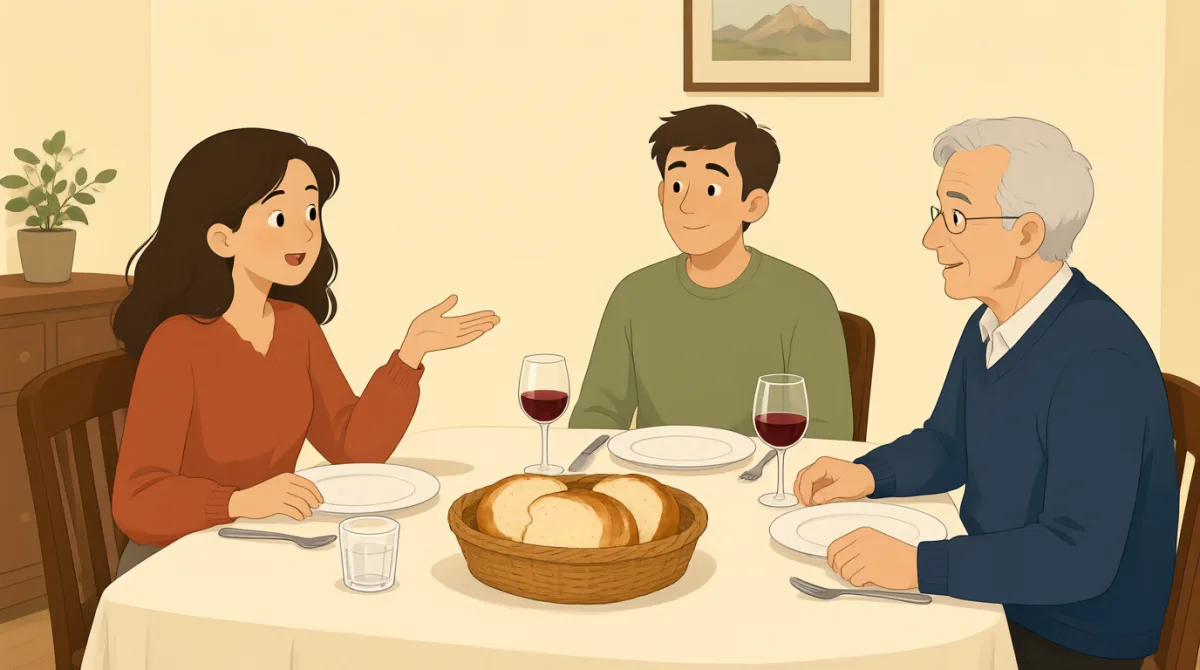

Excuse me, Mia, would you mind passing the bread basket?
माफ़ करना, मिया, क्या तुम ब्रेड की टोकरी पास कर दोगी?

Oh, sure, Jack! Here you go.
अरे, ज़रूर, जैक! ये लो।
Thanks a lot!
बहुत-बहुत शुक्रिया!
No problem! Do you need anything else?
कोई बात नहीं! तुम्हें और कुछ चाहिए?
Not at the moment, thanks!
अभी तो नहीं, शुक्रिया!
शब्दावली6
- Excuse meमाफ़ कीजिए
A polite way to get someone's attention, especially in social situations like at a dinner table. Use it before making a request to show respect.
किसी का ध्यान आकर्षित करने का यह एक विनम्र तरीका है, खासकर खाने की मेज़ जैसी सामाजिक जगहों पर। सम्मान दिखाने के लिए कोई अनुरोध करने से पहले इसका इस्तेमाल करें।
- would you mindक्या तुम बुरा मानोगे
A polite phrase used to ask for a favor or permission. It softens the request, making it more courteous, like asking someone to do something small.
किसी से मदद या अनुमति माँगने का यह एक विनम्र वाक्यांश है। इससे अनुरोध नरम और ज़्यादा शिष्ट लगता है, जैसे किसी से कोई छोटा-सा काम करने को कहना।
- passingपास करना
The act of handing something from one person to another. In table manners, it's used when asking for shared items like food or condiments.
किसी चीज़ को एक व्यक्ति से दूसरे व्यक्ति को थमाने की क्रिया। खाने की मेज़ पर साझा चीज़ें, जैसे खाना या मसाले, माँगते समय इसका इस्तेमाल होता है।
- bread basketब्रेड की टोकरी
A container that holds bread slices, often passed around at meals. In general, it refers to any shared food holder on the table.
ब्रेड के टुकड़े रखने का एक बर्तन, जिसे अक्सर खाने के दौरान लोगों के बीच पास किया जाता है। आम तौर पर, इसका मतलब मेज़ पर रखी कोई भी साझा खाने की चीज़ रखने वाली टोकरी या डिश हो सकता है।
- sureज़रूर
An informal way to say 'yes' or 'of course' when agreeing to help. It's friendly and common in casual conversations.
मदद के लिए हाँ कहते समय इस्तेमाल होने वाला अनौपचारिक शब्द। यह दोस्ताना है और रोज़मर्रा की बातचीत में आम है।
- No problemकोई बात नहीं
A casual response meaning 'you're welcome' or 'it's okay.' Use it after someone thanks you to show it's no trouble at all.
यह एक अनौपचारिक जवाब है, जिसका मतलब है ‘स्वागत है’ या ‘कोई परेशानी नहीं’। किसी के धन्यवाद कहने पर यह दिखाने के लिए कहें कि मदद करने में कोई दिक्कत नहीं हुई।
मुख्य वाक्य5
- 1
Excuse me, Mia, would you mind passing the bread basket?
माफ़ करना, मिया, क्या तुम ब्रेड की टोकरी पास कर दोगी?
This is a polite request for an item at the table. 'Would you mind' is a conditional structure for indirect requests, making it more formal and respectful. Use it in dining situations to avoid seeming demanding.
यह मेज़ पर रखी किसी चीज़ के लिए एक विनम्र अनुरोध है। 'Would you mind' अप्रत्यक्ष अनुरोध करने का एक शर्तसूचक ढाँचा है, जिससे बात ज़्यादा औपचारिक और सम्मानजनक लगती है। खाने की मेज़ पर इसका इस्तेमाल करें, ताकि आपका अनुरोध ज़ोर डालने जैसा न लगे।
- 2
Oh, sure, Jack! Here you go.
अरे, ज़रूर, जैक! ये लो।
A friendly agreement and handover. 'Here you go' is an idiomatic expression meaning 'take it' or 'this is for you.' It's useful for responding positively to requests in everyday interactions.
यह दोस्ताना सहमति जताने और चीज़ थमाने का तरीका है। 'Here you go' एक मुहावरेदार अभिव्यक्ति है, जिसका मतलब है ‘लो’ या ‘यह तुम्हारे लिए है’। रोज़मर्रा की बातचीत में किसी अनुरोध का सकारात्मक जवाब देने के लिए यह काम आती है।
- 3
Thanks a lot!
बहुत-बहुत शुक्रिया!
An enthusiastic way to express gratitude. 'Thanks a lot' emphasizes appreciation more than simple 'thanks.' Use it after receiving help to show politeness at meals or in social settings.
आभार जताने का यह एक उत्साहपूर्ण तरीका है। 'Thanks a lot' साधारण 'thanks' से ज़्यादा आभार जताता है। खाने की मेज़ पर या सामाजिक मौकों पर मदद मिलने के बाद शिष्टता दिखाने के लिए इसका इस्तेमाल करें।
- 4
No problem! Do you need anything else?
कोई बात नहीं! तुम्हें और कुछ चाहिए?
Combines a casual 'you're welcome' with an offer of more help. The question uses 'do you need' in present simple for ongoing offers. It's practical for continuing polite conversation at the table.
इसमें अनौपचारिक रूप से ‘कोई बात नहीं’ कहने के साथ-साथ और मदद की पेशकश भी है। सवाल में आगे मदद की पेशकश करने के लिए वर्तमान काल के 'do you need' का इस्तेमाल किया गया है। मेज़ पर बातचीत को शिष्टता से आगे बढ़ाने के लिए यह उपयोगी है।
- 5
Not at the moment, thanks!
अभी तो नहीं, शुक्रिया!
A polite decline of further help. 'Not at the moment' uses 'at the moment' to mean 'right now,' and adds thanks for courtesy. Use this to end the exchange nicely without being rude.
आगे की मदद को विनम्रता से मना करने का यह तरीका है। 'Not at the moment' में 'at the moment' का मतलब ‘अभी’ है, और साथ में धन्यवाद कहने से बात शिष्ट लगती है। बिना रूखे लगे बातचीत को अच्छे ढंग से समाप्त करने के लिए इसका इस्तेमाल करें।