Cooking Over a Fire
الطهي على نار المخيم
Emma and Jack cook dinner over the campsite fire. They prepare a simple meal and talk about what they want to do the next day.
تُعِدّ إيما وجاك العشاء على نار المخيم. يجهّزان وجبة بسيطة ويتحدثان عمّا يريدان فعله في اليوم التالي.
حوار8
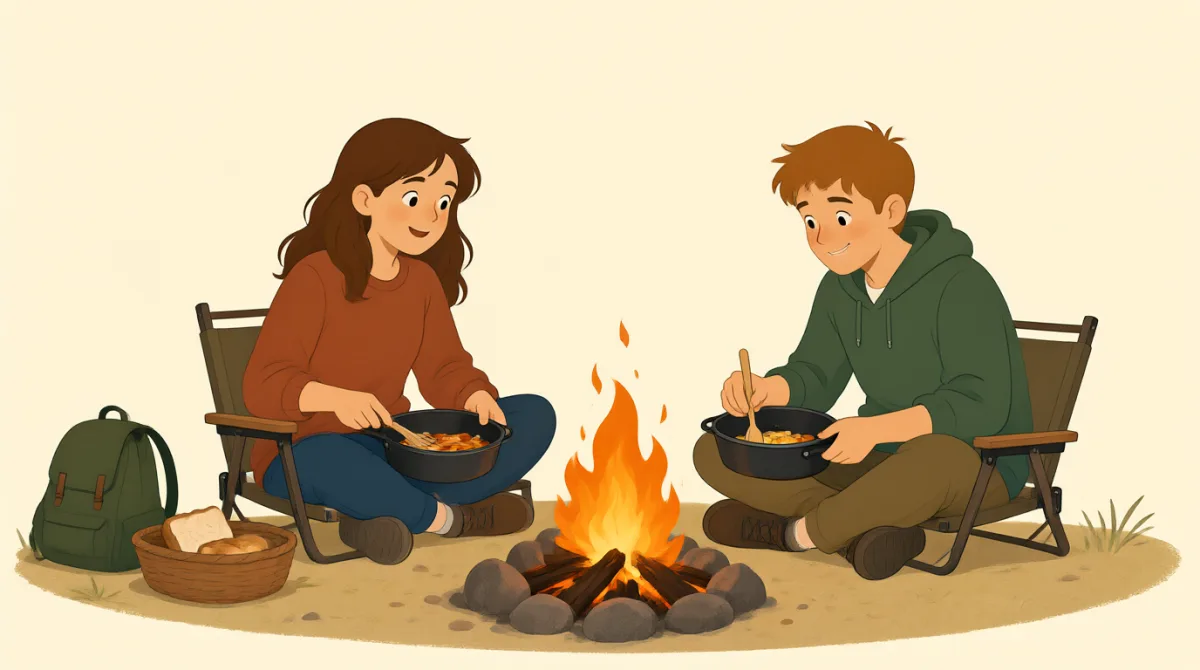

The fire is ready. What should we cook for dinner?
النار جاهزة. ماذا ينبغي أن نُعِدّ للعشاء؟

Let’s cook sausages and potatoes. I brought some bread, too.
لنُعِدّ النقانق والبطاطا. أحضرتُ بعض الخبز أيضًا.
Great! Can you put the potatoes in the pan?
رائع! هل يمكنك وضع البطاطا في المقلاة؟
Sure. We should cook them slowly so they don’t burn.
بالتأكيد. ينبغي أن نطهوها على نار هادئة كي لا تحترق.
I’ll turn the sausages. They smell really good.
سأقلّب النقانق. رائحتها شهية جدًا.
Dinner will be ready soon. What do you want to do tomorrow?
سيصبح العشاء جاهزًا قريبًا. ماذا تريدين أن تفعلي غدًا؟
I’d like to hike by the lake and take some pictures.
أودّ التنزّه سيرًا بمحاذاة البحيرة والتقاط بعض الصور.
Sounds good. Let’s eat, then plan our morning.
فكرة رائعة. لنتناول الطعام، ثم نخطط لصباحنا.
المفردات8
- cook for dinnerيُعِدّ العشاء
This means to prepare food for the evening meal. You can ask, “What should we cook for dinner?”
تعني هذه العبارة إعداد الطعام لوجبة المساء. يمكنك أن تسأل: “What should we cook for dinner?” (ماذا ينبغي أن نُعِدّ للعشاء؟)
- broughtأحضرَ
“Brought” is the past form of “bring.” Use it to say you carried something with you, such as food on a camping trip.
“Brought” هي صيغة الماضي من “bring”. تُستخدم لتقول إنك أحضرت شيئًا معك، مثل الطعام في رحلة تخييم.
- put the potatoes in the panضع البطاطا في المقلاة
This means to place the potatoes inside the pan. You can use “put [something] in [a container]” when giving a simple instruction.
تعني هذه العبارة وضع البطاطا داخل المقلاة. يمكنك استخدام “put [something] in [a container]” عند إعطاء تعليمات بسيطة.
- cook them slowlyاطهها على نار هادئة
This means to heat the food gently over time. You can use this phrase when food needs to cook without burning.
تعني هذه العبارة تسخين الطعام برفق وعلى مهل. يمكنك استخدامها عندما يحتاج الطعام إلى الطهي من دون أن يحترق.
- turn the sausagesقلّب النقانق
This means to move or flip the sausages so they cook on the other side. It is useful when cooking food in a pan or over a fire.
تعني هذه العبارة تحريك النقانق أو قلبها كي تنضج من الجهة الأخرى. وهي مفيدة عند طهي الطعام في مقلاة أو على النار.
- burnيحترق
Food burns when it gets too hot or cooks for too long. You can say, “Watch the food so it doesn’t burn.”
يحترق الطعام إذا ارتفعت حرارته أكثر من اللازم أو طُهي مدة طويلة. يمكنك أن تقول: “Watch the food so it doesn’t burn.” (راقب الطعام كي لا يحترق.)
- by the lakeبمحاذاة البحيرة
This means near or beside the lake. Use “by” to describe a place next to something.
تعني هذه العبارة بالقرب من البحيرة أو بجانبها. تُستخدم “by” لوصف مكان يقع بمحاذاة شيء ما.
- take some picturesالتقط بعض الصور
This means to use a camera or phone to make photographs. You can say, “I’d like to take some pictures” when talking about plans.
تعني هذه العبارة استخدام كاميرا أو هاتف لالتقاط الصور. يمكنك قول: “I’d like to take some pictures” (أودّ التقاط بعض الصور) عند الحديث عن خططك.
الجمل الأساسية8
- 1
What should we cook for dinner?
ماذا ينبغي أن نُعِدّ للعشاء؟
Use this question to ask for ideas about what to prepare for an evening meal. You can replace “dinner” with another meal or occasion.
استخدم هذا السؤال لطلب أفكار عمّا يمكن إعداده لوجبة المساء. يمكنك استبدال “dinner” بوجبة أو مناسبة أخرى.
- 2
I brought some bread, too.
أحضرتُ بعض الخبز أيضًا.
This sentence tells someone that you brought an additional item. Use “I brought [something], too” to mention something you have with you.
تخبر هذه الجملة شخصًا بأنك أحضرت شيئًا إضافيًا. استخدم “I brought [something], too” لذكر شيء معك.
- 3
Can you put the potatoes in the pan?
هل يمكنك وضع البطاطا في المقلاة؟
This is a polite way to ask someone to do a task. Replace “the potatoes” and “the pan” with other things and places.
هذه طريقة مهذبة لطلب قيام شخص بمهمة. استبدل “the potatoes” و“the pan” بأشياء وأماكن أخرى.
- 4
We should cook them slowly so they don’t burn.
ينبغي أن نطهوها على نار هادئة كي لا تحترق.
Use “We should” to make a suggestion, and “so” to explain the reason. You can use this pattern to give practical advice.
استخدم “We should” لتقديم اقتراح، و“so” لشرح السبب. يمكنك استخدام هذا النمط لتقديم نصيحة عملية.
- 5
I’ll turn the sausages.
سأقلّب النقانق.
Use “I’ll” to offer to do something now or soon. Replace “turn the sausages” with another helpful task.
استخدم “I’ll” لعرض القيام بشيء الآن أو بعد قليل. استبدل “turn the sausages” بمهمة أخرى تساعد بها.
- 6
What do you want to do tomorrow?
ماذا تريد أن تفعل غدًا؟
Use this question to ask someone about their plans for the next day. You can replace “tomorrow” with another time.
استخدم هذا السؤال للاستفسار عن خطط شخص ما لليوم التالي. يمكنك استبدال “tomorrow” بوقت آخر.
- 7
I’d like to hike by the lake and take some pictures.
أودّ التنزّه سيرًا بمحاذاة البحيرة والتقاط بعض الصور.
Use “I’d like to” to talk about something you want to do. Add two activities with “and” to describe your plans.
استخدم “I’d like to” للحديث عن شيء ترغب في فعله. أضف نشاطين باستخدام “and” لوصف خططك.
- 8
Let’s eat, then plan our morning.
لنتناول الطعام، ثم نخطط لصباحنا.
Use “Let’s” to suggest doing something together. “Then” shows the order of the activities: eat first and plan afterward.
استخدم “Let’s” لاقتراح القيام بشيء معًا. تشير “Then” إلى ترتيب الأنشطة: نتناول الطعام أولًا ثم نخطط بعد ذلك.