Child Touching/Damaging Items in Store
孩子在商店觸控/損壞物品
A parent apologizes to a store employee because their child has touched, disarranged, or slightly damaged merchandise.
家長因為孩子觸控、弄亂或輕微損壞了商店裡的商品而向店員道歉。
對話6
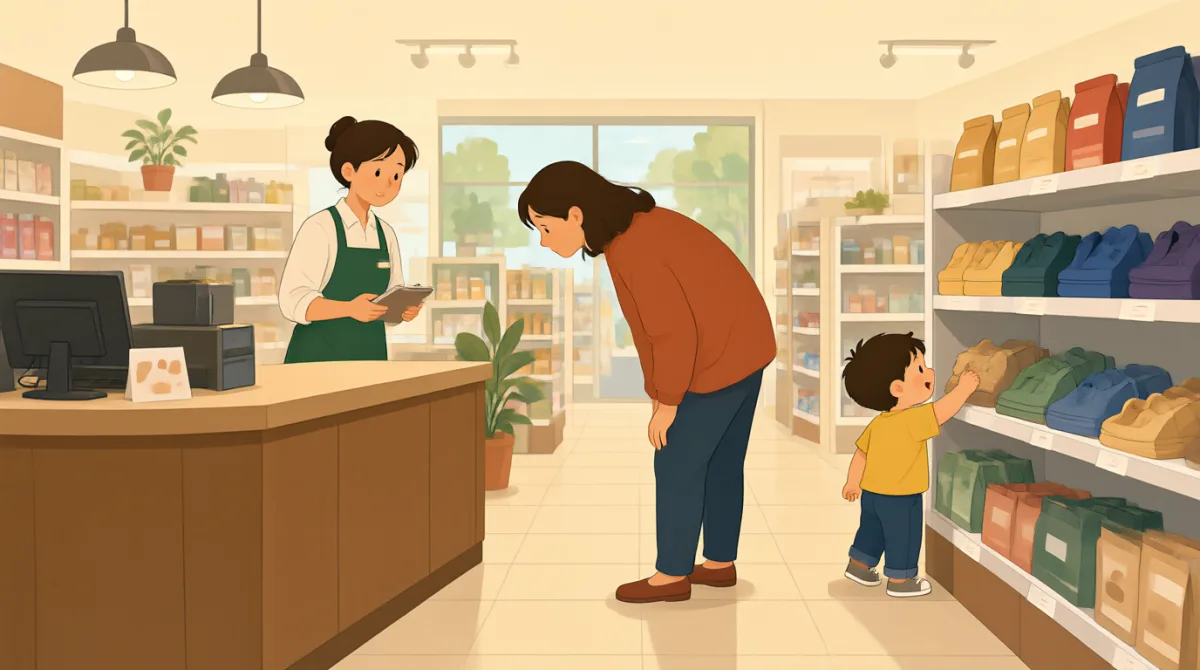

Oh, dear! I am so sorry about that. My little one just pulled a few things off the shelf.
哦,天哪!我真抱歉。我的小傢伙剛剛從貨架上扯下了一些東西。

No problem at all, ma'am. It happens! Let me just get these tidied up for you.
沒關係,女士。這種事常有!我來幫您把這些收拾好。
Are you sure? He also sort of crumpled this box a little bit. I'd be happy to pay for it.
你確定嗎?他還把這個盒子弄皺了一點。我很樂意為此付錢。
Don't worry about it. It's just a packaging box, not the item itself. Accidents happen, especially with kids around.
不用擔心。這只是一個包裝盒,不是商品本身。意外總會發生,尤其是有孩子在的時候。
Thank you so much. I'll make sure he stays right beside me for the rest of our shopping.
非常感謝您。我會確保在接下來的購物中,他一直待在我身邊。
Sounds good. Enjoy the rest of your day!
好的。祝您今天愉快!
詞彙7
- dear天哪
An exclamation like 'Oh, dear!' to show surprise or mild concern, often used when something goes wrong.
像“'Oh, dear!'”這樣的感嘆語用於表達驚訝或輕微的擔憂,通常在出了點問題時使用。
- sorry抱歉
Used to apologize for something, like 'I am so sorry,' meaning you feel bad about a mistake or inconvenience.
用於為某件事道歉,例如“'I am so sorry'”,表示你為自己的錯誤或給別人帶來的不便感到難過。
- pulled扯下
To pull something off means to remove it quickly, like taking items from a shelf; useful for describing actions in stores.
“'To pull something off'”表示把某物迅速弄下來,比如從貨架上拿下物品;這個短語適合用來描述在商店裡的動作。
- tidied up收拾整齊
To tidy up means to clean or organize things neatly; it's a polite way to offer help in fixing a mess.
“'To tidy up'”表示把東西清理乾淨或整理整齊;這是禮貌地提出幫忙收拾殘局的一種說法。
- crumpled弄皺的
To crumple something means to crush or wrinkle it, like making paper or a box look messy; common for describing minor damage.
“'To crumple something'”表示把某物壓皺或弄皺,比如讓紙張或盒子看起來凌亂;這個詞常用於描述輕微的損壞。
- packaging包裝
Packaging refers to the box or wrapper around a product; it's not the main item, so damage to it might not cost extra.
“'Packaging'”指包裹產品的盒子或包裝紙;它不是商品本身,所以包裝受損可能不需要額外賠償。
- accidents意外
An accident is an unexpected event that causes harm or mess; saying 'accidents happen' reassures others it's not a big deal.
“'An accident'”指造成損害或弄亂東西的意外事件;說“'accidents happen'”是在安慰別人,表示這沒什麼大不了的。
關鍵句7
- 1
Oh, dear! I am so sorry about that.
天哪!我真抱歉。
This is a polite way to start an apology, showing surprise and regret. Use it when something minor goes wrong, like a child making a mess; the structure 'I am so sorry about that' emphasizes strong apology.
這是開始道歉的一種禮貌說法,表達驚訝和歉意。孩子把東西弄亂等小意外發生時可以這樣說;“'I am so sorry about that'”這個結構加強了道歉的語氣。
- 2
No problem at all, ma'am.
完全沒關係,女士。
A friendly response to an apology, meaning it's okay and no issue. 'Ma'am' is polite for women; useful in service situations to reassure the apologizer and end the conversation positively.
這是對道歉的友好回應,意思是沒事,不要緊。“'Ma'am'”是對女性的禮貌稱呼;在服務場合中,它可以讓道歉的人安心,並以積極的方式結束對話。
- 3
It happens!
這種事常有!
This casual phrase means such things are common and not surprising. It's reassuring and short; use it to comfort someone apologizing for everyday mishaps, especially with children.
這個隨意的短語表示這類事情很常見,並不令人意外。它簡短而安慰人,特別適合用來安慰因孩子造成日常小麻煩而道歉的人。
- 4
Don't worry about it.
不用擔心。
Tells someone to stop feeling bad, meaning it's not important. Simple and common in English; great for responding to offers to pay or fix minor issues, showing understanding.
這句話告訴對方不要再感到難過,意思是這件事並不重要。它在英語中簡單而常見,適合回應對方提出賠償或處理小問題的表示,體現理解和體諒。
- 5
Accidents happen, especially with kids around.
意外總會發生,尤其是有孩子在的時候。
Explains that mistakes are normal, particularly with children. The phrase 'accidents happen' is idiomatic; use it to forgive and normalize situations involving kids in public places.
這句話說明犯錯是很正常的,尤其是在有孩子的情況下。“'accidents happen'”是一個習語,可以用來寬慰對方,並讓公共場所中涉及孩子的這類情況顯得很平常。
- 6
Thank you so much.
非常感謝您。
A strong way to express gratitude, more emphatic than 'thank you.' Use it after someone is kind or forgiving; the 'so much' adds warmth, common in polite interactions.
這是表達感謝的一種更強烈的說法,比“thank you”更強調感激之情。在別人對你很友善或寬容之後可以這樣說;“'so much'”增添了溫暖的語氣,常用於禮貌交流。
- 7
I'll make sure he stays right beside me.
我會確保他一直待在我身邊。
Promises to prevent future problems by keeping close control. 'Make sure' means to ensure something happens; useful for showing responsibility after an apology in family scenarios.
這句話是在承諾透過讓孩子待在身邊來避免以後再出問題。“'Make sure'”表示確保某事發生;在道歉之後的家庭場景中,這種說法有助於表現出責任感。