Inquiring about Holiday Hours
詢問節假日營業時間
A customer asks an employee or checks a sign for special operating hours during a public holiday or seasonal event.
顧客向店員詢問或檢視告示牌,瞭解公共假日或季節性活動期間的特殊營業時間。
對話8
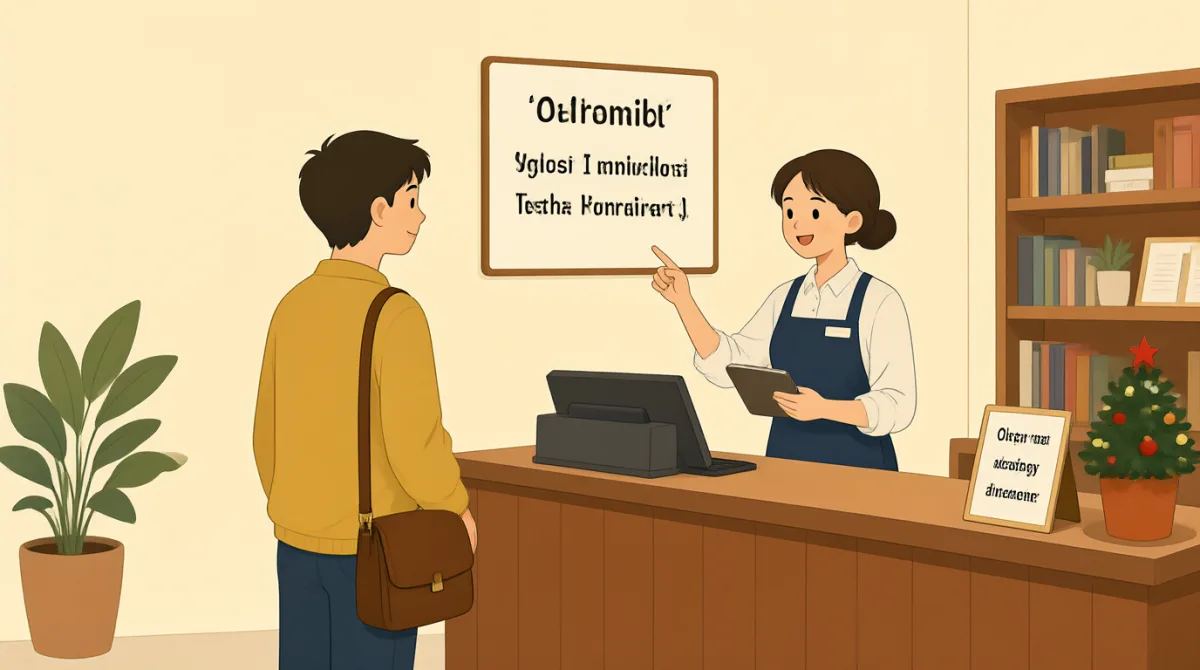

Excuse me, I was wondering if you're open on Christmas Day?
打擾一下,我想知道聖誕節那天你們營業嗎?" を行い、その後に行う"

Hi there! No, we'll actually be closed on Christmas Day itself.
你好!不,聖誕節當天我們實際上會停業。
Oh, alright. How about Christmas Eve? Do you have special hours then?
哦,好的。那平安夜呢?那天你們有特殊的營業時間嗎?
Yes, on Christmas Eve, we'll be open from 9 AM to 5 PM. We'll be closing a bit earlier than usual.
是的,平安夜我們從早上9點營業到下午5點。我們會比平時早一點關門。
Got it. So, normal hours resume on December 26th?
明白了。那12月26號恢復正常營業時間嗎?
That's right! We'll be back to our regular schedule on the 26th. Anything else I can help you with?
沒錯!26號我們會恢復正常營業。還有什麼我能幫您的嗎?
No, that's all. Thanks for the information!
沒有了,就這些。謝謝您的資訊!
You're welcome! Happy holidays!
不客氣!節日快樂!
詞彙7
- open營業
Means a store or business is available for customers to enter and shop. Use it to ask if a place is operating, like 'Are you open today?'
指商店或商家對顧客開放,顧客可以進店購物。可以用它詢問某個地方是否營業,比如 “Are you open today?”(你們今天營業嗎?)
- closed關閉;停業
The opposite of open; means a business is not operating and customers cannot enter. Common in announcements like 'The store is closed on holidays.'
和 open 意思相反,指商家沒有營業,顧客不能進店。常見於告示,比如 “The store is closed on holidays.”(這家商店節假日不營業。)
- wondering想知道;想請教
A polite way to say you are curious or thinking about something. Use it to soften questions, like 'I was wondering if you have this item?'
一種禮貌地表達好奇或詢問的說法。可以用來讓問題聽起來更委婉,比如 “I was wondering if you have this item?”(我想請問你們有這件商品嗎?)
- special hours特殊營業時間
Refers to different operating times on certain days, like holidays. Useful for asking about changes, as in 'Do you have special hours on weekends?'
指某些日子(例如節假日)不同於平常的營業時間。詢問營業時間變動時很實用,比如 “Do you have special hours on weekends?”(你們週末營業時間有變化嗎?)
- resume恢復;重新開始
Means to start again after a pause. In business, it means returning to normal operations, like 'Classes resume next week.'
指暫停後重新開始。在商業場景中,表示恢復正常營業,比如 “Classes resume next week.”(課程下週恢復。)
- regular schedule正常營業時間
The usual or standard timetable for opening and closing. Use it to confirm normal times, such as 'What is your regular schedule?'
指平常開門和關門的時間安排。可以用來確認平時的營業時間,比如 “What is your regular schedule?”(你們平時的營業時間是怎樣的?)
- happy holidays節日快樂
A friendly greeting used during holiday seasons like Christmas. It's a polite way to end a conversation, similar to 'Merry Christmas.'
聖誕節等節日期間使用的友好問候語,也可以禮貌地用來結束對話,類似於 “Merry Christmas.”(聖誕快樂。)
關鍵句8
- 1
Excuse me, I was wondering if you're open on Christmas Day?
打擾一下,我想請問你們聖誕節當天營業嗎?
This is a polite way to start a question about availability. 'I was wondering' makes it indirect and courteous. Use it when asking about store hours on specific days to sound natural and respectful.
這是一種禮貌的提問開場方式。“I was wondering”讓問題聽起來更委婉、客氣。詢問商店在特定日期的營業時間時,可以用這個表達,聽起來既自然又有禮貌。
- 2
No, we'll actually be closed on Christmas Day itself.
不,聖誕節當天我們確實會停業。
A clear negative response with 'actually' for emphasis and 'itself' to specify the exact day. Useful for service workers to explain closures; the contraction 'we'll' is common in spoken English.
這是一個清楚的否定回答。“actually”用於強調,“itself”則明確指出就是當天。服務人員可以用這句話說明店鋪停業;口語中常用縮寫 “we'll”。
- 3
How about Christmas Eve? Do you have special hours then?
那平安夜呢?那天你們有特殊營業時間嗎?
This follows up on a previous answer by suggesting an alternative. 'How about' introduces a new option politely. Great for conversations where you need more details on different dates.
這句話是在前一個回答之後提出另一個選擇。“How about”可以禮貌地引出新的選項。需要進一步瞭解不同日期的安排時,這個說法很實用。
- 4
Yes, on Christmas Eve, we'll be open from 9 AM to 5 PM.
是的,平安夜我們從早上9點營業到下午5點。
Provides specific time information using 'from...to' for ranges. 'We'll be open' is future tense for planned hours. Use this pattern to describe schedules clearly.
這句話用 “from...to” 表示一段時間。“We'll be open”用將來時說明計劃好的營業時間。介紹營業安排時,可以用這個句型把時間說清楚。
- 5
So, normal hours resume on December 26th?
那麼,12月26日會恢復正常營業時間嗎?
A confirming question using 'so' to summarize and 'resume' for restarting normal operations. The rising intonation at the end makes it a yes/no question. Ideal for verifying details in inquiries.
這是一個確認問題,用 “so” 概括前面的資訊,並用 “resume” 表示恢復正常運營。句尾語調上揚,表示這是一個是非疑問句。詢問時可以用它確認細節。
- 6
That's right! We'll be back to our regular schedule on the 26th.
沒錯!26號我們會恢復正常營業時間。
Agrees with the customer using 'That's right' for confirmation. 'Back to' means returning to normal. This is a helpful response in customer service to reassure and close the topic.
用 “That's right” 肯定並確認顧客的理解。“Back to”表示回到正常狀態。這是在顧客服務中讓顧客放心並結束相關話題的實用回答。
- 7
Anything else I can help you with?
還有什麼我能幫您的嗎?
A standard polite offer for more assistance. It's open-ended and uses 'can' for possibility. Use it at the end of interactions to show good service and invite further questions.
這是禮貌地詢問是否還需要其他幫助的常用說法。問題比較開放,並用 “can” 表示可能性。在對話結束時使用,可以體現良好的服務態度,也方便對方繼續提問。
- 8
You're welcome! Happy holidays!
不客氣!節日快樂!
A courteous reply to thanks, with 'Happy holidays' as a seasonal farewell. 'You're welcome' is the common response to 'thank you.' Perfect for ending positive exchanges during festive times.
這句話禮貌地回應感謝,並用 “Happy holidays” 作為節日問候和道別語。“You're welcome”是回應 “thank you” 的常見說法。節日期間用它結束愉快的交流很合適。