Inquiring about Holiday Hours
สอบถามเวลาเปิดทำการช่วงวันหยุด
A customer asks an employee or checks a sign for special operating hours during a public holiday or seasonal event.
ลูกค้าสอบถามพนักงานหรือดูป้ายประกาศเกี่ยวกับเวลาเปิดทำการพิเศษในช่วงวันหยุดนักขัตฤกษ์หรือเทศกาลตามฤดูกาล
บทสนทนา8
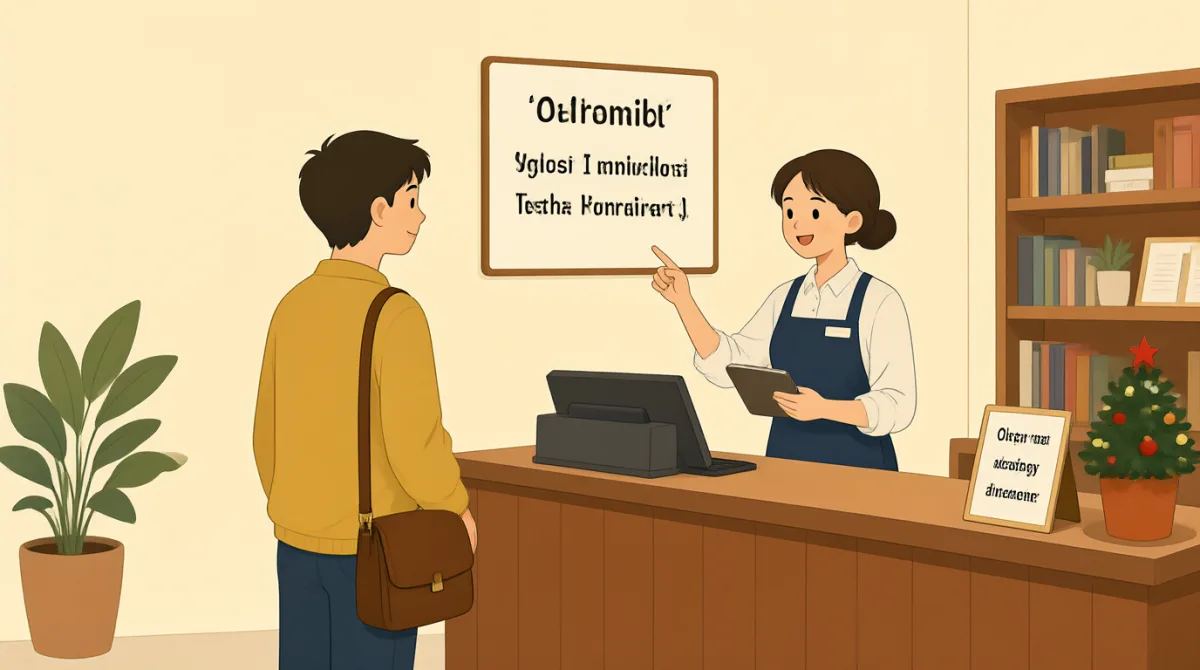

Excuse me, I was wondering if you're open on Christmas Day?
ขอโทษนะคะ อยากทราบว่าร้านเปิดวันคริสต์มาสไหมคะ

Hi there! No, we'll actually be closed on Christmas Day itself.
สวัสดีครับ ร้านปิดวันคริสต์มาสครับ
Oh, alright. How about Christmas Eve? Do you have special hours then?
อ๋อ เข้าใจแล้วค่ะ แล้ววันคริสต์มาสอีฟล่ะคะ มีเวลาเปิดทำการพิเศษไหมคะ
Yes, on Christmas Eve, we'll be open from 9 AM to 5 PM. We'll be closing a bit earlier than usual.
มีครับ วันคริสต์มาสอีฟร้านเปิดตั้งแต่ 9 โมงเช้าถึง 5 โมงเย็นครับ เราจะปิดเร็วกว่าปกตินิดหน่อยครับ
Got it. So, normal hours resume on December 26th?
เข้าใจแล้วค่ะ ถ้าอย่างนั้นวันที่ 26 ธันวาคมก็กลับมาเปิดตามเวลาปกติใช่ไหมคะ
That's right! We'll be back to our regular schedule on the 26th. Anything else I can help you with?
ใช่ครับ วันที่ 26 เราจะกลับมาเปิดตามเวลาปกติครับ มีอะไรให้ช่วยอีกไหมครับ
No, that's all. Thanks for the information!
ไม่มีแล้วค่ะ ขอบคุณที่แจ้งข้อมูลนะคะ
You're welcome! Happy holidays!
ยินดีครับ สุขสันต์วันหยุดนะครับ
คำศัพท์7
- openเปิด
Means a store or business is available for customers to enter and shop. Use it to ask if a place is operating, like 'Are you open today?'
หมายถึงร้านค้าหรือธุรกิจเปิดให้ลูกค้าเข้ามาใช้บริการหรือซื้อของ ใช้ถามว่าสถานที่นั้นเปิดให้บริการหรือไม่ เช่น 'Are you open today?' (วันนี้ร้านเปิดไหมคะ/ครับ)
- closedปิด
The opposite of open; means a business is not operating and customers cannot enter. Common in announcements like 'The store is closed on holidays.'
ตรงข้ามกับ open หมายถึงธุรกิจไม่ได้เปิดให้บริการและลูกค้าเข้าไปไม่ได้ มักใช้ในประกาศ เช่น 'The store is closed on holidays.' (ร้านปิดช่วงวันหยุด)
- wonderingสงสัย / อยากทราบ
A polite way to say you are curious or thinking about something. Use it to soften questions, like 'I was wondering if you have this item?'
เป็นวิธีพูดอย่างสุภาพว่าเราสนใจหรือกำลังคิดสงสัยเกี่ยวกับบางเรื่อง ใช้ทำให้คำถามฟังนุ่มนวลขึ้น เช่น 'I was wondering if you have this item?' (อยากทราบว่ามีสินค้าชิ้นนี้ไหมคะ/ครับ)
- special hoursเวลาเปิดทำการพิเศษ
Refers to different operating times on certain days, like holidays. Useful for asking about changes, as in 'Do you have special hours on weekends?'
หมายถึงเวลาเปิดหรือปิดที่เปลี่ยนไปในบางวัน เช่น วันหยุด ใช้ถามเกี่ยวกับการเปลี่ยนแปลงของเวลาเปิดทำการได้ เช่น 'Do you have special hours on weekends?' (วันหยุดสุดสัปดาห์มีเวลาเปิดทำการพิเศษไหมคะ/ครับ)
- resumeกลับมาเริ่มอีกครั้ง
Means to start again after a pause. In business, it means returning to normal operations, like 'Classes resume next week.'
หมายถึงเริ่มต้นอีกครั้งหลังจากหยุดพัก ในบริบทธุรกิจหมายถึงกลับมาเปิดดำเนินการตามปกติ เช่น 'Classes resume next week.' (ชั้นเรียนจะกลับมาเปิดสอนอีกครั้งในสัปดาห์หน้า)
- regular scheduleเวลาทำการปกติ
The usual or standard timetable for opening and closing. Use it to confirm normal times, such as 'What is your regular schedule?'
หมายถึงกำหนดเวลาเปิดและปิดตามปกติ ใช้ยืนยันเวลาทำการทั่วไปได้ เช่น 'What is your regular schedule?' (เวลาทำการปกติของร้านเป็นอย่างไรคะ/ครับ)
- happy holidaysสุขสันต์วันหยุด
A friendly greeting used during holiday seasons like Christmas. It's a polite way to end a conversation, similar to 'Merry Christmas.'
คำทักทายอย่างเป็นมิตรที่ใช้ในช่วงเทศกาล เช่น คริสต์มาส เป็นคำกล่าวลาอย่างสุภาพ คล้ายกับ 'Merry Christmas.' (สุขสันต์วันคริสต์มาส)
ประโยคสำคัญ8
- 1
Excuse me, I was wondering if you're open on Christmas Day?
ขอโทษนะคะ อยากทราบว่าร้านเปิดวันคริสต์มาสไหมคะ
This is a polite way to start a question about availability. 'I was wondering' makes it indirect and courteous. Use it when asking about store hours on specific days to sound natural and respectful.
ประโยคนี้เป็นวิธีเริ่มถามเกี่ยวกับการเปิดให้บริการอย่างสุภาพ 'I was wondering' ทำให้คำถามฟังอ้อมค้อมและนุ่มนวล ใช้ถามเวลาเปิดทำการของร้านในวันใดวันหนึ่งโดยเฉพาะ เพื่อให้ฟังเป็นธรรมชาติและให้เกียรติอีกฝ่าย
- 2
No, we'll actually be closed on Christmas Day itself.
ไม่ครับ ร้านปิดในวันคริสต์มาสครับ
A clear negative response with 'actually' for emphasis and 'itself' to specify the exact day. Useful for service workers to explain closures; the contraction 'we'll' is common in spoken English.
เป็นคำตอบปฏิเสธที่ชัดเจน โดยใช้ 'actually' เพื่อเน้นย้ำ และ 'itself' เพื่อระบุวันนั้นโดยเฉพาะ พนักงานบริการใช้บอกว่าร้านปิดได้บ่อย ส่วนคำย่อ 'we'll' ก็พบได้ทั่วไปในการพูดภาษาอังกฤษ
- 3
How about Christmas Eve? Do you have special hours then?
แล้ววันคริสต์มาสอีฟล่ะคะ มีเวลาเปิดทำการพิเศษไหมคะ
This follows up on a previous answer by suggesting an alternative. 'How about' introduces a new option politely. Great for conversations where you need more details on different dates.
ประโยคนี้ถามต่อจากคำตอบก่อนหน้า โดยเสนอทางเลือกอื่น 'How about' ใช้เกริ่นถึงตัวเลือกใหม่อย่างสุภาพ เหมาะกับบทสนทนาที่ต้องการทราบรายละเอียดเพิ่มเติมเกี่ยวกับวันต่าง ๆ
- 4
Yes, on Christmas Eve, we'll be open from 9 AM to 5 PM.
มีครับ วันคริสต์มาสอีฟร้านเปิดตั้งแต่ 9 โมงเช้าถึง 5 โมงเย็นครับ
Provides specific time information using 'from...to' for ranges. 'We'll be open' is future tense for planned hours. Use this pattern to describe schedules clearly.
ประโยคนี้ให้ข้อมูลเวลาอย่างเจาะจง โดยใช้ 'from...to' เพื่อบอกช่วงเวลา 'We'll be open' เป็นรูปอนาคตที่ใช้พูดถึงเวลาเปิดทำการที่วางแผนไว้ ใช้รูปแบบนี้เพื่อบอกตารางเวลาให้ชัดเจน
- 5
So, normal hours resume on December 26th?
ถ้าอย่างนั้น เวลาทำการปกติจะกลับมาเริ่มอีกครั้งในวันที่ 26 ธันวาคมใช่ไหมคะ
A confirming question using 'so' to summarize and 'resume' for restarting normal operations. The rising intonation at the end makes it a yes/no question. Ideal for verifying details in inquiries.
เป็นคำถามเพื่อยืนยันข้อมูล โดยใช้ 'so' เพื่อสรุปสิ่งที่เข้าใจ และใช้ 'resume' ในความหมายว่ากลับมาเริ่มดำเนินการตามปกติ น้ำเสียงสูงขึ้นท้ายประโยคทำให้เป็นคำถามที่ตอบว่าใช่หรือไม่ก็ได้ เหมาะสำหรับตรวจสอบรายละเอียดที่สอบถาม
- 6
That's right! We'll be back to our regular schedule on the 26th.
ใช่ครับ วันที่ 26 เราจะกลับมาเปิดตามเวลาปกติครับ
Agrees with the customer using 'That's right' for confirmation. 'Back to' means returning to normal. This is a helpful response in customer service to reassure and close the topic.
เป็นการยืนยันกับลูกค้าโดยใช้ 'That's right' ส่วน 'Back to' หมายถึงกลับไปเป็นแบบปกติ พนักงานบริการใช้ตอบเพื่อให้ลูกค้ามั่นใจและปิดประเด็นสนทนาได้
- 7
Anything else I can help you with?
มีอะไรให้ช่วยอีกไหมครับ
A standard polite offer for more assistance. It's open-ended and uses 'can' for possibility. Use it at the end of interactions to show good service and invite further questions.
เป็นประโยคสุภาพมาตรฐานที่ใช้เสนอความช่วยเหลือเพิ่มเติม เป็นคำถามปลายเปิดและใช้ 'can' เพื่อพูดถึงความเป็นไปได้ ใช้ท้ายการสนทนาเพื่อแสดงการบริการที่ดีและเปิดโอกาสให้อีกฝ่ายถามเพิ่มเติม
- 8
You're welcome! Happy holidays!
ยินดีครับ สุขสันต์วันหยุดนะครับ
A courteous reply to thanks, with 'Happy holidays' as a seasonal farewell. 'You're welcome' is the common response to 'thank you.' Perfect for ending positive exchanges during festive times.
เป็นคำตอบอย่างสุภาพเมื่อมีคนกล่าวขอบคุณ และใช้ 'Happy holidays' เป็นคำกล่าวลาในช่วงเทศกาล 'You're welcome' เป็นคำตอบทั่วไปเมื่อมีคนพูดว่า 'thank you.' เหมาะสำหรับจบบทสนทนาในช่วงเทศกาลอย่างเป็นมิตร