Quick Inquiry at Store Entrance
店門口快速詢問
A customer walks up to a store that looks closed or dormant and quickly asks an employee or passerby if it's open.
顧客走到一家看起來關門或沉寂的商店,迅速向店員或路人詢問是否營業。
對話6
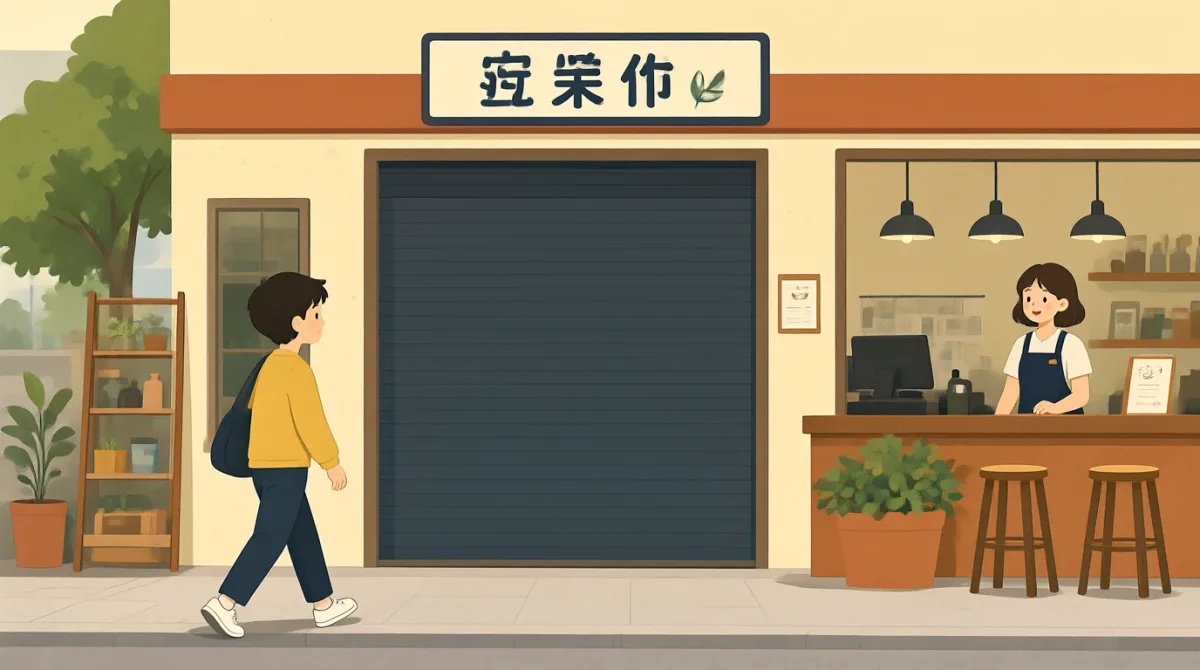

Excuse me, is this place open?
不好意思,這地方開門了嗎?

Not yet. We open in about five minutes.
還沒呢。我們五分鐘後開門。
Oh, okay. It looked a bit dark inside. What time do you usually close?
哦,好的。裡面看起來有點暗。你們通常幾點關門?
We close at 8 PM tonight.
我們今晚八點關門。
Got it. Thanks!
明白了。謝謝!
No problem! You're welcome to come in soon.
不客氣!你很快就可以進來了。
詞彙7
- excuse me不好意思
A polite way to get someone's attention before asking a question, like '不好意思' in Chinese. Use it when interrupting someone.
這是在提問前禮貌地引起別人注意的說法,類似中文裡的“不好意思”。打斷別人時可以這樣說。
- open營業
For a store or business, it means ready for customers to enter and shop. Opposite of 'closed'. Example: 'Is the store open?'
說商店或商家“open”,意思是已經開始營業,顧客可以進店購物。它的反義詞是“closed”。例如:“Is the store open?”(這家店營業了嗎?)
- not yet還沒
Means something hasn't happened but will soon. It's a common response to 'Is it open?' like '还没呢' in Chinese.
表示某件事還沒有發生,但很快就會發生。回答“Is it open?”時,常會用到這個說法。
- close關門;停止營業
When a store stops business for the day. Use as a verb: 'We close at 8 PM.' Opposite of 'open'.
指商店當天停止營業。作動詞使用,例如:“We close at 8 PM.”(我們晚上八點關門。)它的反義詞是“open”。
- usually通常
Means most of the time or normally. Helps describe regular habits, like store hours: 'We usually close at 6 PM.'
表示大多數時候或平時。可以用來描述日常習慣,比如商店的營業時間:“We usually close at 6 PM.”(我們通常下午六點關門。)
- got it明白了
Informal way to say 'I understand' or 'Okay, I see.' Useful in casual conversations to show you've received information.
這是表示“我明白了”或“好的,我知道了”的非正式說法。在日常對話中很實用,可以表示你已經聽懂了對方提供的資訊。
- no problem沒關係;不客氣
A friendly response to 'thank you,' meaning 'it's okay' or 'you're welcome.' Common in service situations.
這是對“謝謝”的友好回應,意思是“沒關係”或“不客氣”。在服務場合很常見。
關鍵句7
- 1
Excuse me, is this place open?
不好意思,這裡開門了嗎?
This is a polite way to ask if a store is currently open for business. 'This place' is casual for 'this store.' Use it when approaching a business that looks closed. Grammar: Question form with 'is' for present state.
這是禮貌詢問商店現在是否營業的說法。“This place”是“this store”(這家店)的口語說法。走到一家看起來關著門的店前時,可以這樣問。語法上,這是用“is”詢問當前狀態的疑問句。
- 2
Not yet. We open in about five minutes.
還沒呢。我們大約五分鐘後開門。
Responds to a question about opening time. 'Not yet' means it hasn't happened. 'In about five minutes' gives a short future time. Useful for customer service; 'about' makes it approximate and natural.
這是對營業時間的詢問作出的回答。“Not yet”表示還沒有發生;“in about five minutes”表示大約五分鐘後。這個說法適合服務場合;“about”讓時間聽起來是大概的,也更自然。
- 3
Oh, okay. It looked a bit dark inside.
哦,好的。裡面看起來有點暗。
Shows understanding and explains observation. 'Oh, okay' is a filler for transition. 'Looked' is past tense for recent observation. 'A bit' softens 'dark.' Practical for commenting on why something seems closed.
這句話表示聽懂了對方的話,並說明自己剛才觀察到的情況。“Oh, okay”可以用來承接話題;“looked”用過去時描述剛才的觀察;“a bit”則讓“dark”的語氣更委婉。可以用它解釋為什麼覺得店好像沒開門。
- 4
What time do you usually close?
你們通常幾點關門?
Asks for normal closing hours. 'What time' is for specific times. 'Usually' indicates regular schedule. Useful question for planning visits; 'do you' is present simple for habits.
這是在詢問平時的關門時間。“What time”用於詢問具體時間;“usually”表示通常、平時。計劃什麼時候來店裡時,可以這樣問。“do you”加一般現在時用於詢問習慣。
- 5
We close at 8 PM tonight.
我們今晚八點關門。
Gives specific closing time. 'Tonight' specifies the day. Present simple 'close' for scheduled events. Helpful response in stores; teaches time-telling in context.
這句話給出了具體的關門時間。“Tonight”說明是今晚。描述按計劃進行的事時,可以用一般現在時“close”。在商店裡回答營業時間時很實用,也能幫助你在實際語境中學習時間表達。
- 6
Got it. Thanks!
明白了。謝謝!
Casual way to acknowledge info and show gratitude. 'Got it' means understood. Short and polite ending to conversation. Use in everyday interactions to wrap up politely.
這是承認自己聽懂了資訊並表示感謝的隨意說法。“Got it”表示明白了。這種簡短又禮貌的表達適合結束日常對話。
- 7
No problem! You're welcome to come in soon.
不客氣!你很快就可以進來了。
Friendly reply to thanks, inviting future action. 'No problem' equals 'you're welcome.' 'You're welcome to' means permission given. Useful for positive customer service; builds rapport.
這是對感謝的友好回應,也表示對方稍後可以進店。“No problem”相當於“you're welcome”;“You're welcome to”表示允許對方做某事。顧客服務中用這樣的說法很實用,也能讓交流更親切。