Polite Exchange & Closing Door
禮貌交流並關門
After the person or people have entered, you release the button. There might be a final 'You're welcome' or a nod before the doors close and the elevator starts moving.
在被等待的人或人們進入後,你鬆開按鈕。在門關閉、電梯開始移動前,可能會有最後一句“不客氣”或一次點頭。
對話9
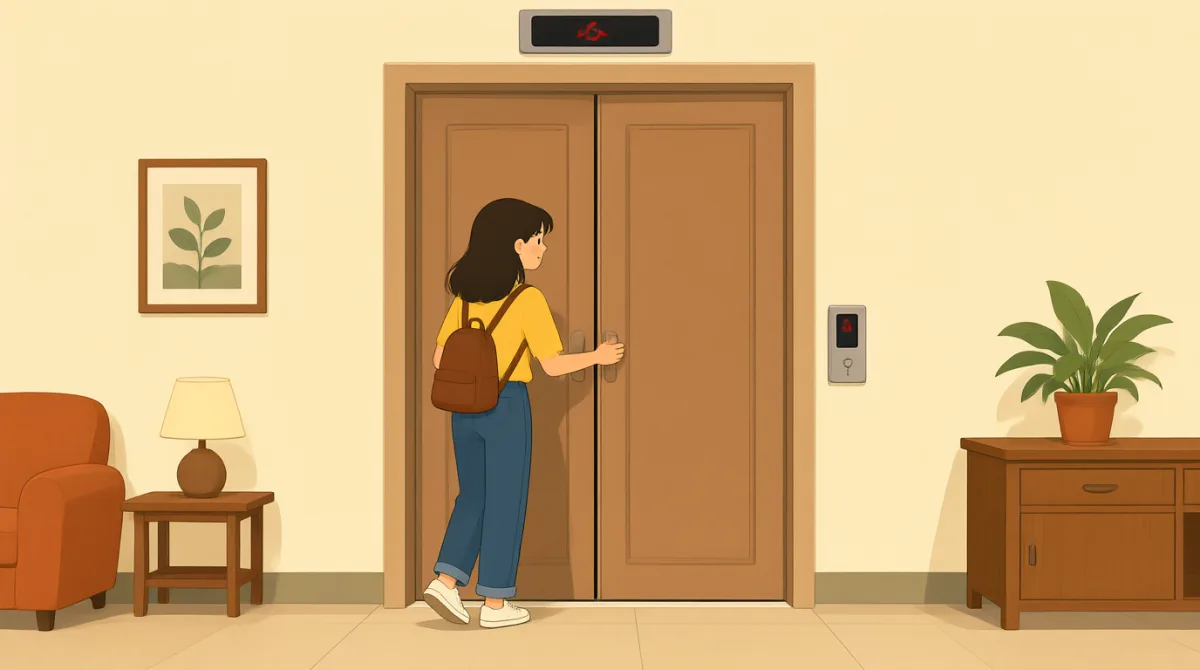

(Holding the door button) Come on in.
(按著開門鍵) 快進來。

Oh, thanks so much! I really appreciate it.
哦,太感謝你了!我非常感謝。
No problem at all.
一點問題都沒有。
Which floor are you going to?
你到幾樓?
Fifteenth. You?
十五樓。你呢?
Me too! What a coincidence.
我也是!真是巧合。
Small world. (Releases door button as she steps in)
世界真小。(在她走進電梯後鬆開開門鍵)
Thanks again!
再次感謝!
You're welcome.
不客氣。
詞彙6
- appreciate感激
To feel grateful for something someone does for you. Use it to show strong thanks, like 'I appreciate your help.' It's polite in everyday situations.
指對別人為你做的事心懷感激。可以用它來表達由衷的謝意,比如 'I appreciate your help.'(我很感謝你的幫助。)在日常場合使用很禮貌。
- coincidence巧合
When two things happen at the same time by chance, not planned. Say it when something surprising matches, like going to the same floor.
指兩件事碰巧同時發生,並不是事先安排好的。遇到令人驚訝的相同之處時,比如兩個人要去同一層,就可以這麼說。
- floor樓層
A level or story in a building, like the ground floor or 15th floor. Ask 'Which floor?' in elevators to know where someone is going.
指建築物中的一層,比如一樓或十五樓。在電梯裡可以問 'Which floor?'(幾樓?),瞭解別人要去哪裡。
- no problem沒關係
A casual way to say it's easy or no trouble at all. Use it instead of 'you're welcome' to respond to thanks in friendly situations.
一種隨意的說法,表示這不費事或完全不麻煩。在友好的場合回應感謝時,可以用它代替 'you're welcome'。
- you're welcome不客氣
The standard polite response when someone says 'thank you.' It's a common phrase to use after helping someone, like holding a door.
別人說 'thank you' 時常見的禮貌回應。幫過別人之後,比如幫忙擋住電梯門,就可以這麼說。
- small world世界真小
An expression meaning the world feels small because of unexpected connections, like meeting someone in the same place. Use it for coincidences.
這個表達表示意外的聯絡讓人覺得世界很小,比如在同一個地方遇見某人。可以用它來談巧合。
關鍵句6
- 1
Come on in.
快進來。
A friendly invitation to enter, used when holding an elevator or door for someone. It's casual and shows courtesy; the grammar is imperative with 'come on' for encouragement.
幫別人擋著電梯門或房門時,可以用這句話友好地邀請對方進來。語氣隨和,也體現了禮貌;這裡用祈使句,並用 'come on' 來鼓勵對方。
- 2
Oh, thanks so much! I really appreciate it.
哦,太感謝你了!我真的很感激。
A way to express strong gratitude quickly. Useful in polite exchanges; 'thanks so much' intensifies thanks, and 'appreciate it' adds sincerity. Use after someone helps you.
這句話可以簡短地表達由衷的感謝,適合禮貌交流。'thanks so much' 加強了感謝的語氣,'appreciate it' 則讓謝意顯得更加真誠。別人幫了你之後可以這樣說。
- 3
No problem at all.
完全沒關係。
Responds to thanks by saying it's no trouble. 'At all' emphasizes it's easy. This is a common, informal pattern for everyday courtesy in English conversations.
用來回應感謝,表示這點事不麻煩。'At all' 強調事情很容易做到。這是英語日常交談中常見、隨和的禮貌表達。
- 4
Which floor are you going to?
你要去幾樓?
Asks about someone's destination in a building. The question form 'which + noun + are you going to' is useful for elevators; practice it to start small talk.
詢問別人要去建築物裡的哪一層。'which + noun + are you going to' 這個問句結構很適合在電梯裡使用;練習一下,用它開啟簡短的閒聊吧。
- 5
Me too! What a coincidence.
我也是!真巧。
Agrees with someone and notes a lucky chance. 'Me too' is short for 'me as well'; exclamatory 'what a' expresses surprise. Great for building rapport in shared situations.
先表示和對方一樣,再說這真是個巧合。'Me too' 是 'me as well' 的簡短說法;感嘆句 'what a' 用來表達驚訝。在有共同之處的場合,這句話很適合拉近彼此的距離。
- 6
You're welcome.
不客氣。
The basic reply to 'thank you.' It's simple and always polite; use it at the end of helpful interactions like this elevator scenario to close politely.
這是回應 'thank you' 的基本說法。簡單而且始終禮貌;在這樣的電梯情境中,幫過別人之後可以用它禮貌地結束交流。