Approaching & Requesting Hold
走近並請求按住
You are rushing towards the elevator, and someone inside notices you and holds the door. You might say 'Can you hold that?' or just 'Thanks!' as you approach.
你正衝向電梯,裡面的人注意到你並按住了門。你可能會在接近時說“能等一下嗎?”或只是“謝謝!”
對話4
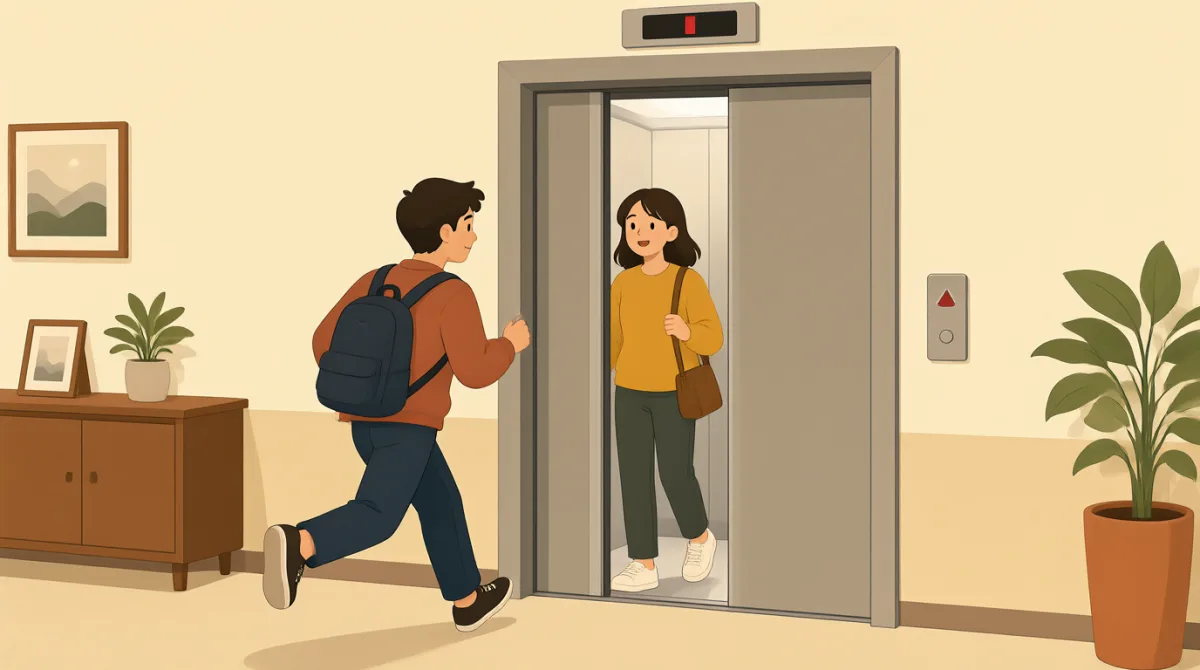

Oh, can you possibly hold that for just a second?
哦,你能幫我按住一下嗎?

Sure, no problem! Coming right up.
當然,沒問題!馬上就來。
Thanks so much, really appreciate it!
非常感謝,真的很感激!
Anytime. Don't worry about it.
隨時都可以。別擔心。
詞彙5
- hold按住;保持開啟
To hold something means to keep it open or in place. In this context, 'hold the door' means to press the button to keep the elevator door from closing so someone can enter.
Hold something 的意思是把某物保持在開啟狀態或固定位置。在這裡,'hold the door' 是指按住按鈕,讓電梯門不要關上,好讓別人進來。
- possibly可能;也許
Possibly is used to make a polite request, similar to 'if possible.' It softens the question to sound more courteous, like asking nicely without demanding.
Possibly 用來讓請求聽起來更禮貌,意思類似於 'if possible'。它能緩和語氣,讓問題聽起來更客氣,而不是在命令對方。
- second一會兒;片刻
Here, 'second' means a very short time, like one moment. It's common in requests to ask for a brief delay, as in 'wait just a second.'
這裡的 'second' 指很短的一段時間,也就是片刻。請求別人稍等時經常會用到,比如 'wait just a second'。
- appreciate感激;感謝
To appreciate means to be grateful for someone's help or kindness. It's a polite way to express thanks, often used in formal or sincere situations.
Appreciate 的意思是感激某人的幫助或好意。這是一種禮貌的表達感謝的方式,常用於比較正式或真誠的場合。
- anytime隨時;什麼時候都行
Anytime means 'at any time' or 'you're welcome anytime.' It's a casual response to thanks, showing the help was no big deal and offered willingly.
Anytime 的意思是“隨時”或“什麼時候都行”。這是對感謝的隨意回應,表示幫忙不是什麼大事,而且自己很樂意幫忙。
關鍵句4
- 1
Oh, can you possibly hold that for just a second?
哦,能不能麻煩你幫我按住一下?
This is a polite request to keep the elevator door open briefly. Use it when you're approaching quickly and need a moment. The structure uses 'can you' for asking permission, with 'possibly' and 'just a second' to make it softer and less demanding. It's useful in everyday courtesy situations like elevators or doors.
這是一個禮貌的請求,請對方暫時別讓電梯門關上。趕著走近電梯、需要一點時間時可以這樣說。句型用 'can you' 來提出請求,再加上 'possibly' 和 'just a second',讓語氣更委婉、不那麼像在要求對方。日常生活中請別人幫忙開門或按住電梯門時都很實用。
- 2
Sure, no problem!
當然,沒問題!
This is a friendly agreement to help. 'Sure' means yes enthusiastically, and 'no problem' shows it's easy to do. Use this to respond positively to requests. It's informal and common in casual interactions, helping build rapport.
這是友好地答應幫忙。'Sure' 表示爽快地答應,'no problem' 則表示這件事很容易做到。別人提出請求時,可以這樣積極回應。這種說法很隨意,在日常交流中很常見,也能讓對話顯得親切。
- 3
Thanks so much, really appreciate it!
太感謝了,真的很感激!
This expresses strong gratitude after receiving help. 'Thanks so much' is emphatic thanks, and 'really appreciate it' adds sincerity. Use it right after someone assists you. It's a key phrase for polite thanks in service or favor scenarios, with simple present tense for ongoing feelings.
這是在得到幫助後表達由衷的感謝。'Thanks so much' 是語氣強烈的感謝,'really appreciate it' 則讓感謝聽起來更加真誠。別人剛幫完忙時可以馬上這樣說。這是服務或請人幫忙時很實用的禮貌表達,用一般現在時表達持續的感激之情。
- 4
Anytime. Don't worry about it.
隨時都可以,別放在心上。
This is a casual way to say 'you're welcome' and dismiss any need for thanks. 'Anytime' means happy to help again, and 'don't worry about it' means no need to feel obligated. Use it to respond to thanks humbly. It's practical for everyday politeness, using imperative for reassurance.
這是隨意地表示“不客氣”,同時告訴對方不用覺得欠了人情。'Anytime' 表示以後也很樂意幫忙,'don't worry about it' 則表示不必在意。可以用這句話謙和地回應感謝。它適合日常禮貌交流,用祈使句來安慰對方。