Acknowledging & Entering
確認並進入
You are the person being waited for. After someone holds the door, you quickly step in, offering a more immediate or slightly more elaborate 'thank you' upon entering.
你是被等待的人。在有人按住門後,你迅速走進電梯,在進入時提供更即時或稍微更詳細的“謝謝”。
對話6
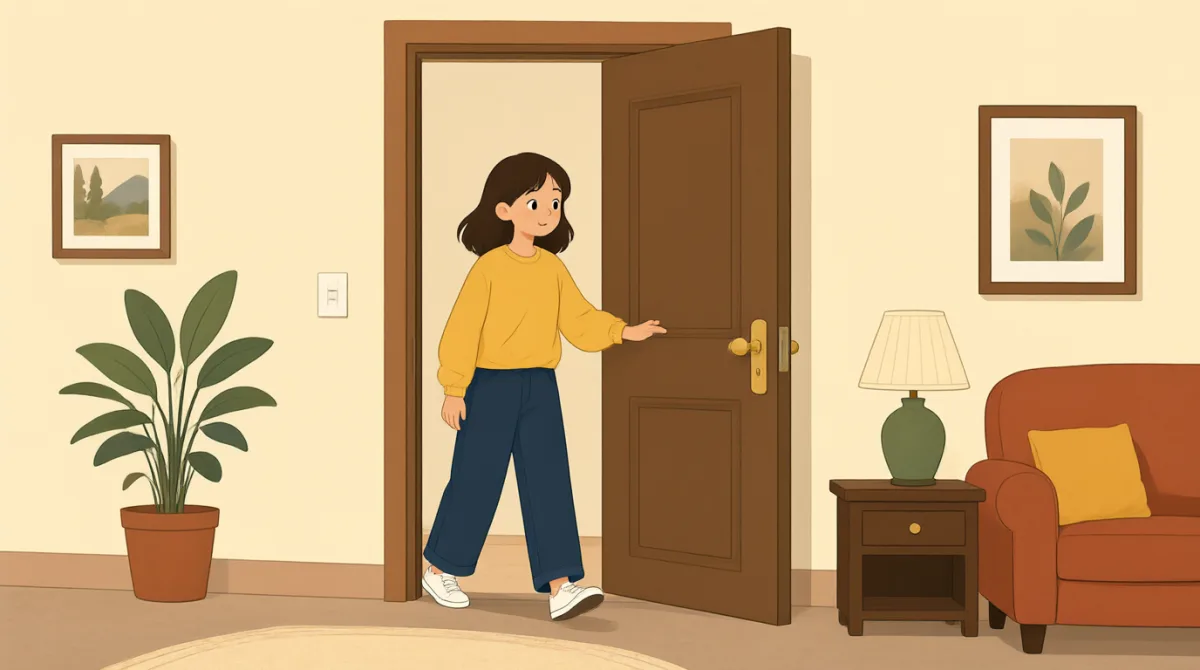

Hold on! It's closing.
等一下!門要關了。

Oh, thank you so much! I really appreciate that.
哦,太謝謝你了!我真的很感激。
No problem at all. Just made it!
沒問題。剛好趕上!
You're a lifesaver. I thought I was going to miss it.
你真是救星。我還以為要錯過了呢。
Glad I could help. Which floor are you heading to?
很高興能幫上忙。你到哪一層?
The third, please. Thanks again!
三樓,謝謝!
詞彙6
- hold on等一下
A polite way to say 'wait a moment' or 'don't close yet', often used when you need someone to pause an action like closing an elevator door.
一種禮貌地說“稍等一下”或“先別關”的方式,常用於需要別人暫停某個動作時,比如別讓電梯門關上。
- appreciate感激
To feel grateful for someone's help or kindness; it's a more formal way to express thanks than just 'thank you'.
對別人的幫助或好意心懷感激;比單說“thank you”更正式一些。
- no problem沒問題
A casual response to 'thank you', meaning it's not a big deal or you're welcome; very common in everyday conversations.
回應“thank you”的隨意說法,表示小事一樁或不客氣;在日常對話中很常見。
- lifesaver救星
An informal expression for someone who helps you out of a difficult situation, like saving time by holding a door; used to show strong gratitude.
非正式說法,指幫你擺脫困境的人,比如按住電梯門幫你省下時間;用來表達強烈的謝意。
- heading to要去
Means 'going to' or 'on the way to' a place; useful for asking about someone's destination in polite small talk.
意思是“去”或“正在前往”某個地方;在禮貌的閒聊中詢問對方要去哪裡時很實用。
- floor樓層
A level or story in a building, like the ground floor or third floor; essential for directions in elevators or buildings.
建築物中的一層,比如一樓或三樓;在電梯或建築物裡問路時很重要。
關鍵句6
- 1
Hold on! It's closing.
等一下!門要關了。
This is a quick, urgent request to stop something from happening, like a door closing. 'Hold on' is an imperative for 'wait', and 'it's closing' describes the present continuous action. Use it in situations where you need immediate help to catch something.
這是一個簡短而急切的請求,用來阻止某件事發生,比如電梯門關上。“Hold on”是表示“等一下”的祈使句,“it's closing”則描述正在發生的動作。需要別人馬上幫忙,好趕上某樣東西時可以這樣說。
- 2
Oh, thank you so much! I really appreciate that.
哦,太謝謝你了!我真的很感激。
A polite and enthusiastic way to express gratitude. 'Thank you so much' intensifies thanks, and 'I really appreciate that' adds sincerity using the verb 'appreciate' in simple present. Useful after someone does a small favor to make the interaction warmer.
這是禮貌又熱情的表達謝意的方式。“Thank you so much”加強了感謝的語氣,而“I really appreciate that”用一般現在時的動詞“appreciate”進一步表達真誠的謝意。別人幫了一個小忙後,這樣說能讓交流更親切。
- 3
No problem at all. Just made it!
一點兒也不麻煩。剛好趕上!
A friendly response to thanks, meaning it's easy and no trouble. 'No problem at all' is idiomatic for 'you're welcome', and 'just made it' uses past tense to describe narrowly succeeding. Great for casual, reassuring replies in daily encounters.
這是對感謝的友好回應,表示這不費事,也沒什麼。“No problem at all”是表達“不客氣”的慣用說法;“just made it”用過去時表示險些沒趕上,但最終趕上了。日常遇到這種情況時,可以用它來輕鬆地回應對方。
- 4
You're a lifesaver. I thought I was going to miss it.
你真是救星。我還以為要錯過了呢。
An exaggerated compliment for help that avoids inconvenience. 'You're a lifesaver' is a fixed expression, and 'I thought I was going to miss it' uses past continuous for unrealized expectation with 'going to' for future in the past. Use it to show relief and build rapport.
這是對幫助你避免麻煩的人表達誇張的讚美。“You're a lifesaver”是固定表達;“I thought I was going to miss it”用過去時表達當時以為事情會發生的預期,其中“going to”表示過去視角下的將來。可以用這句話表達鬆了口氣,也能拉近彼此距離。
- 5
Glad I could help. Which floor are you heading to?
很高興能幫上忙。你要去幾樓?
Shows happiness in assisting and shifts to practical help. 'Glad I could help' uses 'glad' with modal 'could' for ability, and the question uses 'which' for choices and 'heading to' preposition phrase. Ideal for continuing polite conversation in shared spaces like elevators.
這句話表達了幫上忙後的愉快,也自然地轉向實際幫助。“Glad I could help”用“glad”搭配情態動詞“could”表達很高興自己能幫上忙;問句用“which”詢問具體選擇,並用“heading to”表示前往。適合在電梯等共享空間裡繼續禮貌地交談。
- 6
The third, please. Thanks again!
三樓,謝謝。再謝謝你一次!
A direct request for a specific floor with politeness. 'The third' specifies using ordinal number, 'please' softens the request, and 'thanks again' reinforces gratitude. Commonly used when entering elevators to ask for button pressing.
這是禮貌地直接說出想去的樓層。“The third”用序數詞指明樓層,“please”讓請求聽起來更客氣,而“thanks again”則再次表達謝意。進入電梯後請別人幫忙按樓層按鈕時,常會這樣說。