Polite Exchange & Closing Door
विनम्र बातचीत और दरवाज़ा बंद करना
After the person or people have entered, you release the button. There might be a final 'You're welcome' or a nod before the doors close and the elevator starts moving.
व्यक्ति या सभी लोगों के अंदर आ जाने के बाद आप बटन छोड़ देते हैं। दरवाज़े बंद होने और लिफ़्ट चलने से पहले आख़िरी बार 'आपका स्वागत है' कहा जा सकता है या सिर हिलाकर इशारा किया जा सकता है।
संवाद9
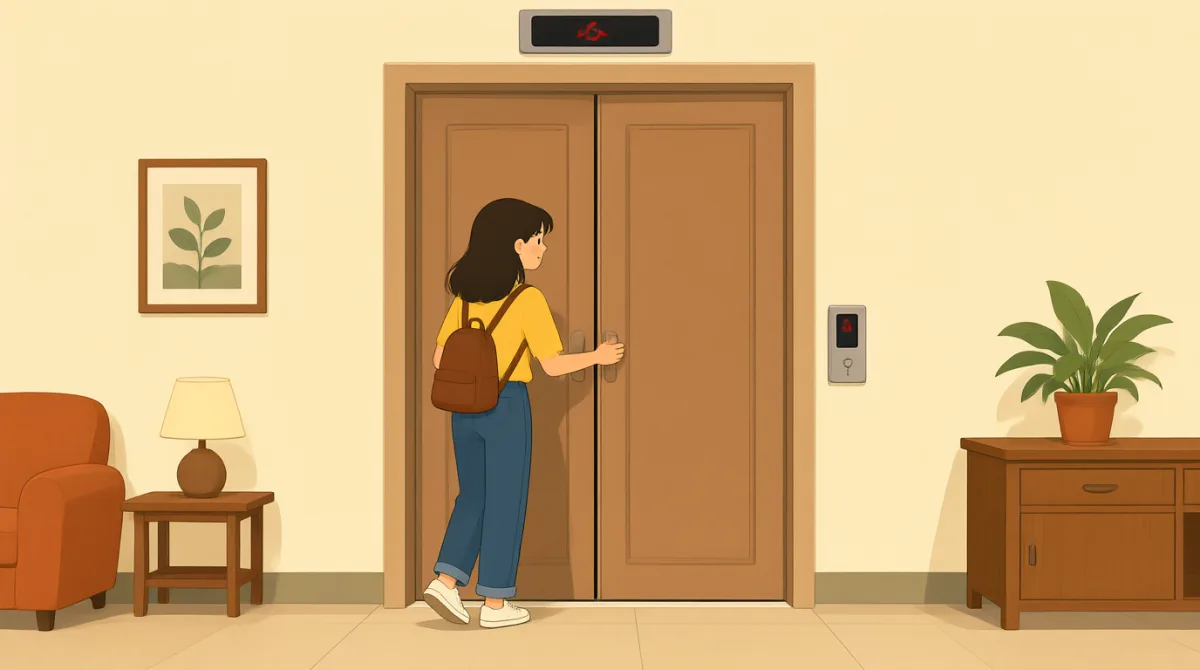

(Holding the door button) Come on in.
(दरवाज़े का बटन दबाए हुए) आइए।

Oh, thanks so much! I really appreciate it.
ओह, बहुत-बहुत धन्यवाद! मैं सचमुच आपकी आभारी हूँ।
No problem at all.
कोई बात नहीं।
Which floor are you going to?
आप किस मंज़िल पर जा रहे हैं?
Fifteenth. You?
पंद्रहवीं मंज़िल पर। आप?
Me too! What a coincidence.
मैं भी! क्या संयोग है।
Small world. (Releases door button as she steps in)
दुनिया सचमुच छोटी है। (उसके अंदर आते ही दरवाज़े का बटन छोड़ता है)
Thanks again!
एक बार फिर धन्यवाद!
You're welcome.
आपका स्वागत है।
शब्दावली6
- appreciateआभारी होना
To feel grateful for something someone does for you. Use it to show strong thanks, like 'I appreciate your help.' It's polite in everyday situations.
किसी के आपके लिए कुछ करने पर कृतज्ञ महसूस करना। गहरा धन्यवाद जताने के लिए इसका इस्तेमाल करें, जैसे 'I appreciate your help.' (मैं आपकी मदद के लिए आभारी हूँ।) रोज़मर्रा की स्थितियों में यह विनम्र लगता है।
- coincidenceसंयोग
When two things happen at the same time by chance, not planned. Say it when something surprising matches, like going to the same floor.
जब दो बातें बिना किसी योजना के, अचानक एक साथ हो जाती हैं। कोई हैरान करने वाली बात मेल खाए—जैसे आपका और किसी दूसरे का एक ही मंज़िल पर जाना—तो यह शब्द कहें।
- floorमंज़िल
A level or story in a building, like the ground floor or 15th floor. Ask 'Which floor?' in elevators to know where someone is going.
किसी इमारत का एक तल, जैसे भूतल या पंद्रहवीं मंज़िल। यह जानने के लिए कि कोई कहाँ जा रहा है, लिफ़्ट में पूछें 'Which floor?' (किस मंज़िल पर?)।
- no problemकोई बात नहीं
A casual way to say it's easy or no trouble at all. Use it instead of 'you're welcome' to respond to thanks in friendly situations.
यह कहने का अनौपचारिक तरीका कि कोई परेशानी नहीं हुई। दोस्ताना स्थिति में धन्यवाद के जवाब में 'you're welcome' (आपका स्वागत है) की जगह इसका इस्तेमाल करें।
- you're welcomeआपका स्वागत है
The standard polite response when someone says 'thank you.' It's a common phrase to use after helping someone, like holding a door.
जब कोई 'thank you' (धन्यवाद) कहे, तो जवाब में कहे जाने वाला सामान्य विनम्र वाक्यांश। किसी की मदद करने के बाद, जैसे दरवाज़ा थामने पर, इसे कहना आम है।
- small worldदुनिया छोटी है
An expression meaning the world feels small because of unexpected connections, like meeting someone in the same place. Use it for coincidences.
यह वाक्यांश बताता है कि अचानक बने मेल या जुड़ाव के कारण दुनिया छोटी लगती है—जैसे किसी एक ही जगह पर किसी से मिलना। संयोग की बात होने पर इसका इस्तेमाल करें।
मुख्य वाक्य6
- 1
Come on in.
आइए।
A friendly invitation to enter, used when holding an elevator or door for someone. It's casual and shows courtesy; the grammar is imperative with 'come on' for encouragement.
किसी के लिए लिफ़्ट या दरवाज़ा थामते समय अंदर आने का दोस्ताना निमंत्रण। यह सहज होने के साथ-साथ शिष्टता भी दिखाता है। व्याकरण की दृष्टि से यह 'come on' का इस्तेमाल करके प्रोत्साहित करने वाला आदेशात्मक वाक्य है।
- 2
Oh, thanks so much! I really appreciate it.
ओह, बहुत-बहुत धन्यवाद! मैं सचमुच आपकी आभारी हूँ।
A way to express strong gratitude quickly. Useful in polite exchanges; 'thanks so much' intensifies thanks, and 'appreciate it' adds sincerity. Use after someone helps you.
दिल से आभार जताने का एक छोटा-सा तरीका। विनम्र बातचीत में यह उपयोगी है; 'thanks so much' धन्यवाद को ज़ोर देकर कहता है और 'appreciate it' सच्ची कृतज्ञता जताता है। किसी की मदद के बाद इसका इस्तेमाल करें।
- 3
No problem at all.
कोई बात नहीं।
Responds to thanks by saying it's no trouble. 'At all' emphasizes it's easy. This is a common, informal pattern for everyday courtesy in English conversations.
धन्यवाद के जवाब में कहा जाता है कि कोई परेशानी नहीं हुई। 'At all' इस बात पर ज़ोर देता है कि यह काम आसान था। रोज़मर्रा की अंग्रेज़ी बातचीत में शिष्टता जताने का यह आम, अनौपचारिक तरीका है।
- 4
Which floor are you going to?
आप किस मंज़िल पर जा रहे हैं?
Asks about someone's destination in a building. The question form 'which + noun + are you going to' is useful for elevators; practice it to start small talk.
यह किसी से पूछता है कि इमारत में उसकी मंज़िल कौन-सी है। 'which + noun + are you going to' वाला प्रश्न-रूप लिफ़्ट में काम आता है; बातचीत शुरू करने के लिए इसका अभ्यास करें।
- 5
Me too! What a coincidence.
मैं भी! क्या संयोग है।
Agrees with someone and notes a lucky chance. 'Me too' is short for 'me as well'; exclamatory 'what a' expresses surprise. Great for building rapport in shared situations.
यह किसी की बात से सहमति जताता है और एक दिलचस्प संयोग की ओर ध्यान दिलाता है। 'Me too' का छोटा रूप 'me as well' है; विस्मयादिबोधक 'what a' हैरानी जताता है। एक जैसी स्थिति में अपनापन बढ़ाने के लिए यह बहुत अच्छा वाक्यांश है।
- 6
You're welcome.
आपका स्वागत है।
The basic reply to 'thank you.' It's simple and always polite; use it at the end of helpful interactions like this elevator scenario to close politely.
'thank you' का सामान्य जवाब। यह सरल और हमेशा विनम्र है; इस लिफ़्ट वाली स्थिति की तरह, मददगार बातचीत के अंत में विनम्रता से विदा लेने के लिए इसका इस्तेमाल करें।