Polite Exchange & Closing Door
تبادل مهذّب وإغلاق الباب
After the person or people have entered, you release the button. There might be a final 'You're welcome' or a nod before the doors close and the elevator starts moving.
بعد أن يدخل الشخص أو الأشخاص، ترفع إصبعك عن الزر. وقد تقول «على الرحب والسعة» أخيرًا أو تومئ برأسك قبل أن يُغلق الباب ويبدأ المصعد بالحركة.
حوار9
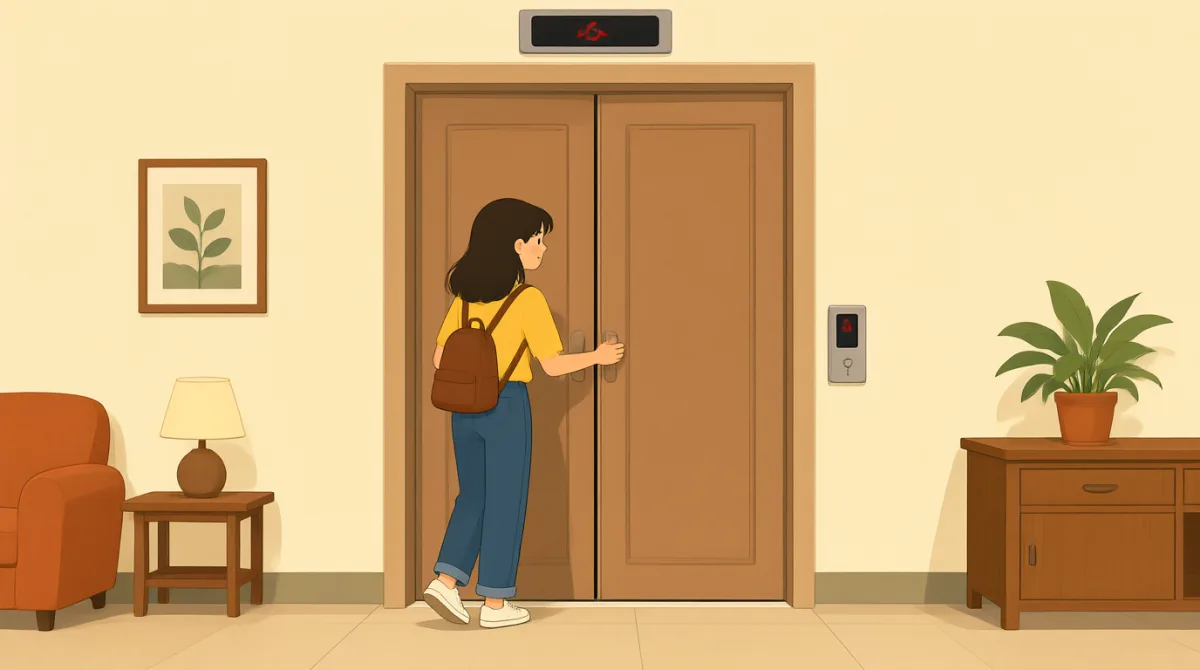

(Holding the door button) Come on in.
(وهو يضغط على زر إبقاء الباب مفتوحًا) تفضّلي بالدخول.

Oh, thanks so much! I really appreciate it.
أوه، شكرًا جزيلًا! أنا ممتنة حقًا.
No problem at all.
لا مشكلة إطلاقًا.
Which floor are you going to?
إلى أي طابق أنت ذاهب؟
Fifteenth. You?
الخامس عشر. وأنتِ؟
Me too! What a coincidence.
وأنا أيضًا! يا لها من مصادفة.
Small world. (Releases door button as she steps in)
الدنيا صغيرة. (يرفع إصبعه عن زر الباب بينما تدخل)
Thanks again!
شكرًا مرة أخرى!
You're welcome.
على الرحب والسعة.
المفردات6
- appreciateيُقدّر
To feel grateful for something someone does for you. Use it to show strong thanks, like 'I appreciate your help.' It's polite in everyday situations.
أن تشعر بالامتنان لشيء يفعله شخص من أجلك. تُستخدم للتعبير عن الشكر بصدق، مثل 'I appreciate your help.' (أُقدّر مساعدتك). وهي مهذّبة في المواقف اليومية.
- coincidenceمصادفة
When two things happen at the same time by chance, not planned. Say it when something surprising matches, like going to the same floor.
أن يحدث أمران في الوقت نفسه من دون تخطيط. تُقال عندما يتطابق أمران على نحو مفاجئ، مثل أن يتجه شخصان إلى الطابق نفسه.
- floorطابق
A level or story in a building, like the ground floor or 15th floor. Ask 'Which floor?' in elevators to know where someone is going.
مستوى أو دور في مبنى، مثل الطابق الأرضي أو الطابق الخامس عشر. اسأل 'Which floor?' (أي طابق؟) في المصعد لتعرف إلى أين يتجه شخص ما.
- no problemلا مشكلة
A casual way to say it's easy or no trouble at all. Use it instead of 'you're welcome' to respond to thanks in friendly situations.
تعبير غير رسمي للقول إن الأمر سهل ولا يسبب أي إزعاج. يُستخدم ردًا على الشكر بدلًا من 'you're welcome' في المواقف الودية.
- you're welcomeعلى الرحب والسعة
The standard polite response when someone says 'thank you.' It's a common phrase to use after helping someone, like holding a door.
الرد المهذّب الشائع عندما يقول أحدهم 'thank you.' وهو تعبير مألوف يُقال بعد مساعدة شخص، مثل إبقاء الباب مفتوحًا له.
- small worldالدنيا صغيرة
An expression meaning the world feels small because of unexpected connections, like meeting someone in the same place. Use it for coincidences.
تعبير يعني أن الدنيا تبدو صغيرة بسبب روابط غير متوقعة، مثل لقاء شخص في المكان نفسه. يُستخدم للتعليق على المصادفات.
الجمل الأساسية6
- 1
Come on in.
تفضّل بالدخول.
A friendly invitation to enter, used when holding an elevator or door for someone. It's casual and shows courtesy; the grammar is imperative with 'come on' for encouragement.
دعوة ودّية للدخول، تُقال عند إبقاء باب المصعد أو الباب مفتوحًا لشخص. وهي عفوية وتُظهر المجاملة؛ تركيبها أمر باستخدام 'come on' للتشجيع.
- 2
Oh, thanks so much! I really appreciate it.
أوه، شكرًا جزيلًا! أنا ممتنة حقًا.
A way to express strong gratitude quickly. Useful in polite exchanges; 'thanks so much' intensifies thanks, and 'appreciate it' adds sincerity. Use after someone helps you.
طريقة سريعة للتعبير عن الامتنان الشديد. تفيد في التبادل المهذّب؛ فعبارة 'thanks so much' تقوّي الشكر، وعبارة 'appreciate it' تضيف إليه صدقًا. استخدمها بعد أن يساعدك أحد.
- 3
No problem at all.
لا مشكلة إطلاقًا.
Responds to thanks by saying it's no trouble. 'At all' emphasizes it's easy. This is a common, informal pattern for everyday courtesy in English conversations.
تردّ بها على الشكر لتقول إن الأمر لم يكن مزعجًا. وتؤكد 'at all' أن الأمر سهل. هذا أسلوب شائع وغير رسمي للمجاملة في المحادثات اليومية بالإنجليزية.
- 4
Which floor are you going to?
إلى أي طابق أنت ذاهب؟
Asks about someone's destination in a building. The question form 'which + noun + are you going to' is useful for elevators; practice it to start small talk.
سؤال عن وجهة شخص داخل مبنى. صيغة السؤال 'which + noun + are you going to' (أيّ + اسم + أنت ذاهب إليه) مفيدة في المصعد؛ تدرّب عليها لبدء حديث قصير.
- 5
Me too! What a coincidence.
وأنا أيضًا! يا لها من مصادفة.
Agrees with someone and notes a lucky chance. 'Me too' is short for 'me as well'; exclamatory 'what a' expresses surprise. Great for building rapport in shared situations.
توافق بها شخصًا وتعلّق على مصادفة سعيدة. وعبارة 'Me too' اختصار لـ 'me as well' (وأنا كذلك)، أما 'what a' في صيغة التعجب فتعبّر عن المفاجأة. وهي مفيدة لتوطيد الألفة في المواقف المشتركة.
- 6
You're welcome.
على الرحب والسعة.
The basic reply to 'thank you.' It's simple and always polite; use it at the end of helpful interactions like this elevator scenario to close politely.
الرد الأساسي على 'thank you.' وهو بسيط ومهذّب دائمًا؛ استخدمه لإنهاء المواقف التي تساعد فيها أحدًا، مثل هذا الموقف في المصعد، بطريقة لائقة.