Initial Hold & First Thanks
按住電梯門並收到初次感謝
You are inside the elevator, see someone approaching, and press the 'door open' button. The person sees you holding it and offers a quick 'thanks'.
你正在電梯裡,看到有人走近,於是按下開門鍵。那個人看到你按住了電梯門,並快速道謝。
對話4
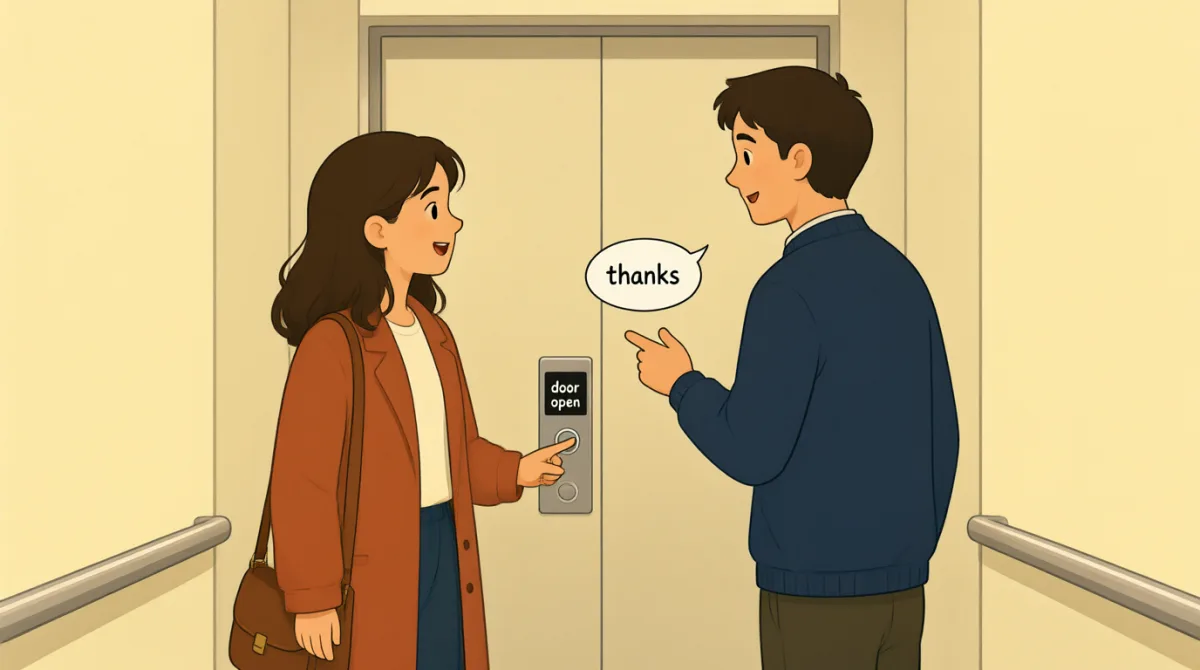

(From inside the elevator, seeing someone approach) Oh, just a second!
(從電梯裡,看到有人走近)哦,等一下!

(Approaching the elevator) Oh, thanks! You didn't have to.
(走近電梯)哦,謝謝!你不用這麼麻煩的。
No problem at all! Glad I caught you.
沒問題!很高興能等你。
Appreciate it. Just made it.
多謝。我剛趕上。
詞彙7
- second一會兒
Here, 'a second' means a very short time, like 'wait a moment'. Use it to politely ask someone to wait briefly, e.g., 'Hold on a second!'
這裡的 “a second” 表示非常短的一段時間,就像“等一下”。你可以用它禮貌地請對方稍等片刻,例如:“Hold on a second!”
- thanks謝謝
A casual way to say 'thank you'. It's very common in quick, everyday situations to show appreciation.
這是說 “thank you” 的一種隨意表達。在快速、日常的場合中,它非常常見,用來表達感謝。
- didn't have to沒必要這樣做
This phrase politely downplays someone's help, meaning 'you weren't obligated to do that'. It's a modest response to thanks, showing humility.
這個短語用來禮貌地淡化對方提供的幫助,意思是“你其實沒必要這麼做”。這是對別人道謝時一種謙遜的回應。
- no problem沒問題
Means 'it's not difficult' or 'happy to help'. Use it to respond to thanks in a friendly, casual way.
意思是“這不麻煩”或“很樂意幫忙”。你可以用它以友好、隨意的方式回應別人的感謝。
- appreciate感激
To feel grateful for something. 'Appreciate it' is a common, slightly more formal way to say thanks than 'thanks'.
表示對某件事心懷感激。 “Appreciate it” 是一種比 “thanks” 稍微正式一些的常見感謝說法。
- caught趕上了
In this context, 'caught you' means 'saw you in time' or 'managed to wait for you'. It's idiomatic for arriving just before something happens, like an elevator closing.
在這個語境中, “caught you” 的意思是“及時看到你了”或“設法等到你了”。這個習語常用於表示在某件事發生前及時趕到,比如在電梯門關上前趕到。
- made it趕上了
Means 'arrived in time' or 'just succeeded'. Use it when you barely catch something, like a bus or elevator.
意思是“及時到達”或“勉強成功”。當你差一點就錯過公交車或電梯等東西時,可以使用這個短語。
關鍵句5
- 1
Oh, just a second!
哦,等一下!
This is a polite way to ask someone to wait a moment. It's useful for quick interruptions in daily life. The 'Oh' adds a natural, surprised tone; no special grammar, just casual spoken English.
這是請對方稍等片刻的一種禮貌說法。日常生活中需要短暫打斷別人時,這句話很實用。 “Oh” 增添了自然、驚訝的語氣;這裡沒有特殊語法,只是隨意的口語表達。
- 2
Oh, thanks! You didn't have to.
哦,謝謝!你不用這麼麻煩的。
A quick thank you followed by a modest comment. Useful when someone helps you unexpectedly. 'Didn't have to' uses past tense to soften the thanks; practice this for polite social interactions.
這句話先快速道謝,然後謙遜地表示對方其實不必幫忙。當別人出乎意料地幫助你時,這種說法很實用。 “Didn't have to” 使用過去時來讓感謝聽起來更委婉;你可以練習在禮貌的社交場合中使用它。
- 3
No problem at all!
完全沒問題!
Responds to thanks by saying it's easy to help. Very common in American English for casual courtesy. 'At all' emphasizes it's no trouble; great for building friendly conversations.
這句話透過表示幫忙很容易來回應別人的感謝。在美式英語中,它是日常禮貌用語裡非常常見的說法。 “At all” 強調一點兒麻煩都沒有,很適合用來營造友好的對話氛圍。
- 4
Glad I caught you.
還好我等到你了。
Means happy to have waited in time. Useful after helping someone enter quickly. 'Caught' is an idiom; the sentence uses present perfect 'I caught' for a recent action, showing relief.
意思是很高興自己及時等到了對方。在幫助別人快速進入電梯後,可以使用這句話。 “Caught” 是一個習語;這句話用 “I caught” 表示最近完成的動作,並傳達出鬆了一口氣的感覺。
- 5
Appreciate it. Just made it.
謝謝你。我剛好趕上。
Short thanks plus confirmation of arriving in time. Practical for rushed situations. 'Appreciate it' is informal; 'just made it' uses simple past for a completed action; combine for efficient politeness.
這是簡短的感謝,後面接著確認自己及時趕到了。在匆忙的場合中,這種說法很實用。 “Appreciate it” 是非正式的表達; “just made it” 用一般過去時表示已經完成的動作。把兩者結合起來,就能簡潔而禮貌地表達感謝。