Holding for Multiple People
為多人按住
You hold the elevator door for one person, and then realize there are more people behind them also coming. You continue to hold the door, and multiple 'thank yous' might be exchanged.
你為一個人按住電梯門,然後發現後面還有更多人也正走過來。你繼續按住門,可能會有多句“謝謝”進行交流。
對話8
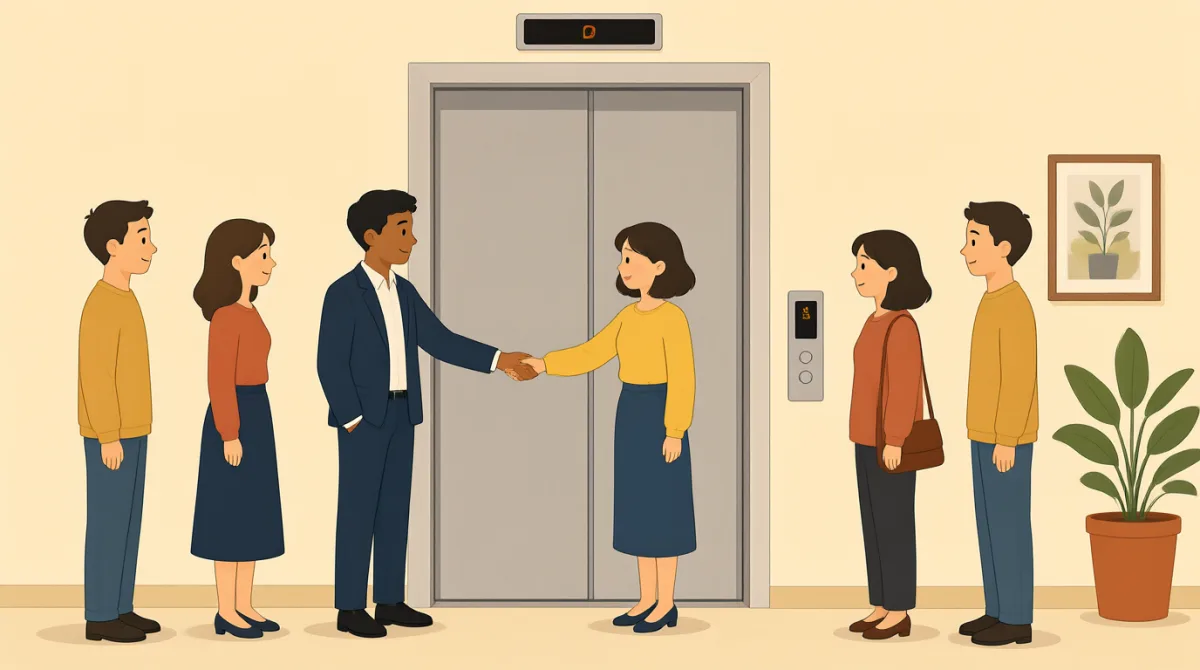

Oh, looks like someone's coming. I'll hold it.
哦,好像有人過來了。我按住。

Thank you so much!
太謝謝你了!
No problem! Oh, more coming too. I'll just keep it open for a sec.
不客氣!哦,還有人過來。我再按住一會兒。

Appreciate it!
謝謝啦!
Yes, really, thank you for waiting.
對啊,真的,謝謝你等我們。
No worries at all. Everyone make it in?
沒關係。都進來了嗎?
Yep, we're all good. Which floor are you going to?
嗯,我們都好了。你到幾樓?
Just 5, but I can hit whatever you need.
就5樓,但你們要到哪兒我都可以按。
詞彙6
- hold按住
To hold something means to keep it in position, like holding an elevator door open so others can enter. It's a polite action in public spaces.
Hold 指把某樣東西保持在某個位置,比如按住電梯門,讓別人進來。在公共場合這樣做很禮貌。
- coming過來
Coming is the present participle of 'come,' used here to mean approaching or arriving soon, like someone walking towards the elevator.
Coming 是 come 的現在分詞,這裡表示正在靠近或馬上就要到,比如有人正朝電梯走來。
- No problem沒關係
A casual way to say 'you're welcome' or 'it's okay,' showing it's not a bother. Common in friendly, everyday responses.
這是回應感謝時的一種隨意說法,意思是“不客氣”或“沒關係”,表示這點小事不麻煩。日常友好的對話裡很常見。
- appreciate感激
To appreciate means to feel grateful for something. 'Appreciate it!' is a quick way to thank someone for their help.
Appreciate 指對某件事心懷感激。“Appreciate it!” 是簡短地感謝別人幫忙的一種說法。
- No worries別客氣
An informal expression meaning 'don't worry' or 'it's fine,' often used to reassure someone that everything is okay.
這是一個非正式表達,意思是“別擔心”或“沒關係”,常用來讓對方放心,表示一切都好。
- hit按
In this context, 'hit' means to press a button, like hitting the floor button in an elevator. It's slang for activating something quickly.
在這裡,'hit' 指按按鈕,比如按電梯裡的樓層按鈕。這是口語說法,表示快速啟動某個操作。
關鍵句7
- 1
Oh, looks like someone's coming. I'll hold it.
哦,好像有人過來了。我按住門。
This sentence uses 'looks like' to express an observation, and 'I'll hold it' is a future action for politeness. Useful for offering help in public, like holding doors; practice the contraction 'I'll' for natural speech.
'looks like' 用來描述自己觀察到的情況,而 'I'll hold it' 表示接下來會做的事,也顯得很禮貌。在公共場合主動幫忙,比如替別人按住門時,這句話很實用。記住,口語中常把 'I will' 縮寫成 'I'll'。
- 2
Thank you so much!
太謝謝你了!
A strong expression of gratitude, emphasizing thanks with 'so much.' It's very common in quick polite exchanges and shows enthusiasm; use it when someone does a small favor for you.
這是很熱情的感謝說法,用 'so much' 加強語氣。在簡短禮貌的交流中很常見;別人順手幫了你一個小忙時,就可以這樣說。
- 3
No problem! Oh, more coming too. I'll just keep it open for a sec.
沒關係!哦,還有人也過來了。我再按一會兒。
Starts with a casual response to thanks, then observes more people with 'more coming too.' 'For a sec' means for a second (short time). Useful for continuing courtesy; note the informal 'sec' for everyday talk.
先用隨意的方式回應感謝,再用 'more coming too' 表示還有人過來。'For a sec' 意思是“等一會兒”。這句話適合繼續替別人提供方便;注意,'sec' 是日常口語中對“秒”的非正式說法。
- 4
Appreciate it!
太感謝了!
A short, informal thank you meaning 'I appreciate your help.' It's practical for busy situations like elevators; use it to sound natural and friendly without full sentences.
這是簡短、隨意的感謝,意思是“我很感謝你的幫助”。在電梯這種忙碌的場合很實用,不用說完整句子也能表達得自然又友好。
- 5
Yes, really, thank you for waiting.
對,真的謝謝你等我們。
Emphasizes thanks with 'really' and specifies the action 'for waiting.' Good for reinforcing gratitude in groups; the structure 'thank you for + verb-ing' explains the reason, which is a common pattern.
'really' 加強了感謝的語氣,'for waiting' 則說明感謝對方做了什麼。多人一起時,這樣說能再次表達謝意。'thank you for + verb-ing' 是很常見的句型,用來說明感謝的原因。
- 6
No worries at all. Everyone make it in?
完全沒關係。大家都進來了嗎?
Reassures with 'no worries at all,' then asks a question using 'make it in' for entering successfully. Useful to check on others politely; note the question form without 'did' for informal speech.
先用 'no worries at all' 表示完全沒關係,再用 'make it in' 詢問大家是不是都順利進來了。你可以用這句話友好地確認大家的情況。注意,這種非正式問法省略了 'did'。
- 7
Just 5, but I can hit whatever you need.
就5樓,不過你們要去幾樓我都可以幫忙按。
Answers a question simply with 'just' meaning 'only,' and offers help with 'I can hit whatever you need' using 'hit' for pressing buttons. Practical for elevator small talk; shows courtesy by prioritizing others.
這裡用 'just' 簡單回答,意思是“就”或“只有”;然後用 'I can hit whatever you need' 主動表示可以幫忙按按鈕。'hit' 在這裡指按按鈕。這句話適合電梯裡的閒聊,也體現了替別人著想。