Polite Exchange & Closing Door
พูดคุยอย่างสุภาพและปิดประตูลิฟต์
After the person or people have entered, you release the button. There might be a final 'You're welcome' or a nod before the doors close and the elevator starts moving.
หลังจากอีกฝ่ายหรือทุกคนเข้ามาในลิฟต์แล้ว คุณก็ปล่อยปุ่มไว้ อาจมีคำพูดปิดท้ายว่า 'ยินดีครับ/ค่ะ' หรือพยักหน้าให้กันก่อนประตูลิฟต์จะปิดและเริ่มเคลื่อนที่
บทสนทนา9
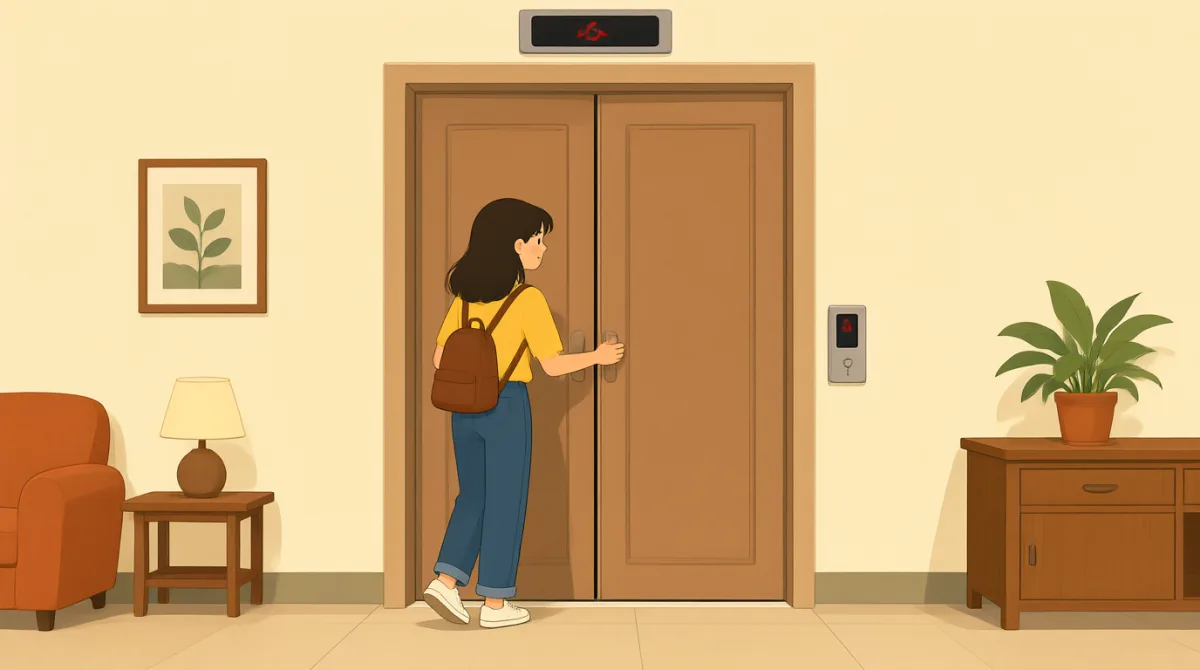

(Holding the door button) Come on in.
(กดปุ่มค้างไว้) เชิญเข้ามาเลยครับ

Oh, thanks so much! I really appreciate it.
อ๋อ ขอบคุณมากเลยค่ะ ซาบซึ้งจริง ๆ ค่ะ
No problem at all.
ไม่เป็นไรเลยครับ
Which floor are you going to?
จะไปชั้นไหนคะ
Fifteenth. You?
ชั้นสิบห้าครับ แล้วคุณล่ะครับ
Me too! What a coincidence.
ฉันก็เหมือนกันค่ะ บังเอิญจังเลย
Small world. (Releases door button as she steps in)
โลกกลมจริง ๆ นะครับ (ปล่อยปุ่มประตูตอนที่เธอก้าวเข้ามา)
Thanks again!
ขอบคุณอีกครั้งนะคะ
You're welcome.
ยินดีครับ
คำศัพท์6
- appreciateซาบซึ้ง
To feel grateful for something someone does for you. Use it to show strong thanks, like 'I appreciate your help.' It's polite in everyday situations.
รู้สึกขอบคุณในสิ่งที่ใครบางคนทำให้ ใช้เพื่อแสดงความขอบคุณอย่างจริงใจ เช่น 'I appreciate your help.' เป็นคำพูดสุภาพที่ใช้ได้ในชีวิตประจำวัน
- coincidenceความบังเอิญ
When two things happen at the same time by chance, not planned. Say it when something surprising matches, like going to the same floor.
เหตุการณ์สองอย่างเกิดขึ้นพร้อมกันโดยบังเอิญ ไม่ได้วางแผนไว้ ใช้พูดเมื่อมีเรื่องที่ตรงกันอย่างน่าประหลาดใจ เช่น ไปชั้นเดียวกัน
- floorชั้น
A level or story in a building, like the ground floor or 15th floor. Ask 'Which floor?' in elevators to know where someone is going.
ระดับหรือชั้นของอาคาร เช่น ชั้นล่างหรือชั้น 15 เวลาอยู่ในลิฟต์ ให้ถามว่า 'Which floor?' เพื่อถามว่าอีกฝ่ายจะไปชั้นไหน
- no problemไม่เป็นไร
A casual way to say it's easy or no trouble at all. Use it instead of 'you're welcome' to respond to thanks in friendly situations.
คำพูดสบาย ๆ ที่หมายถึงว่าเป็นเรื่องเล็กน้อยหรือไม่ได้ลำบากอะไร ใช้ตอบรับคำขอบคุณแทน 'you're welcome' ในสถานการณ์ที่เป็นกันเอง
- you're welcomeยินดี
The standard polite response when someone says 'thank you.' It's a common phrase to use after helping someone, like holding a door.
คำตอบสุภาพที่ใช้เมื่อมีคนพูดว่า 'thank you' เป็นวลีที่ใช้กันทั่วไปหลังจากช่วยเหลือใครสักคน เช่น ช่วยเปิดประตูค้างไว้
- small worldโลกกลมจริง ๆ
An expression meaning the world feels small because of unexpected connections, like meeting someone in the same place. Use it for coincidences.
สำนวนที่หมายถึงโลกรู้สึกแคบลงเพราะได้พบความเชื่อมโยงที่ไม่คาดคิด เช่น เจอใครสักคนในสถานที่เดียวกัน ใช้พูดถึงเรื่องบังเอิญ
ประโยคสำคัญ6
- 1
Come on in.
เชิญเข้ามาเลยครับ/ค่ะ
A friendly invitation to enter, used when holding an elevator or door for someone. It's casual and shows courtesy; the grammar is imperative with 'come on' for encouragement.
เป็นคำเชื้อเชิญอย่างเป็นมิตรให้เข้ามา ใช้ตอนเปิดประตูลิฟต์หรือประตูค้างไว้ให้อีกฝ่าย ฟังดูเป็นกันเองและแสดงความมีน้ำใจ รูปประโยคเป็นคำสั่ง โดยใช้ 'come on' เพื่อกระตุ้นให้อีกฝ่ายเข้ามา
- 2
Oh, thanks so much! I really appreciate it.
อ๋อ ขอบคุณมากเลยค่ะ ซาบซึ้งจริง ๆ ค่ะ
A way to express strong gratitude quickly. Useful in polite exchanges; 'thanks so much' intensifies thanks, and 'appreciate it' adds sincerity. Use after someone helps you.
ใช้แสดงความขอบคุณอย่างจริงใจและกระชับ เหมาะกับการพูดคุยอย่างสุภาพ 'thanks so much' ช่วยเน้นความขอบคุณ ส่วน 'appreciate it' เพิ่มความจริงใจ ใช้พูดหลังจากมีคนช่วยเหลือ
- 3
No problem at all.
ไม่เป็นไรเลยครับ/ค่ะ
Responds to thanks by saying it's no trouble. 'At all' emphasizes it's easy. This is a common, informal pattern for everyday courtesy in English conversations.
ใช้ตอบรับคำขอบคุณโดยบอกว่าไม่ได้ลำบากอะไร 'at all' เน้นว่าเป็นเรื่องง่าย ๆ เป็นรูปแบบไม่เป็นทางการที่ใช้กันทั่วไปเพื่อแสดงน้ำใจในบทสนทนาภาษาอังกฤษในชีวิตประจำวัน
- 4
Which floor are you going to?
จะไปชั้นไหนคะ
Asks about someone's destination in a building. The question form 'which + noun + are you going to' is useful for elevators; practice it to start small talk.
ใช้ถามจุดหมายของอีกฝ่ายในอาคาร รูปคำถาม 'which + noun + are you going to' เหมาะกับการใช้ในลิฟต์ ลองฝึกพูดเพื่อเริ่มบทสนทนาสั้น ๆ
- 5
Me too! What a coincidence.
ฉันก็เหมือนกันค่ะ บังเอิญจังเลย
Agrees with someone and notes a lucky chance. 'Me too' is short for 'me as well'; exclamatory 'what a' expresses surprise. Great for building rapport in shared situations.
ใช้ตอบว่าเห็นตรงกันกับอีกฝ่าย พร้อมพูดถึงความบังเอิญที่น่ายินดี 'Me too' เป็นรูปย่อของ 'me as well' ส่วน 'what a' ในประโยคอุทานใช้แสดงความประหลาดใจ เหมาะสำหรับสร้างความรู้สึกเป็นกันเองเมื่อมีเรื่องบางอย่างที่เหมือนกัน
- 6
You're welcome.
ยินดีครับ/ค่ะ
The basic reply to 'thank you.' It's simple and always polite; use it at the end of helpful interactions like this elevator scenario to close politely.
เป็นคำตอบพื้นฐานเมื่อมีคนพูดว่า 'thank you' สั้น ๆ และสุภาพเสมอ ใช้ปิดท้ายการช่วยเหลือ เช่น ในสถานการณ์ในลิฟต์นี้ เพื่อจบบทสนทนาอย่างสุภาพ