Asking at the Front Desk
สอบถามที่เคาน์เตอร์ประชาสัมพันธ์
Emma arrives at the hospital to visit her friend Leo. She asks the receptionist where his room is.
เอ็มมามาถึงโรงพยาบาลเพื่อมาเยี่ยมเลโอเพื่อนของเธอ เธอถามพนักงานต้อนรับว่าห้องของเขาอยู่ที่ไหน
บทสนทนา9
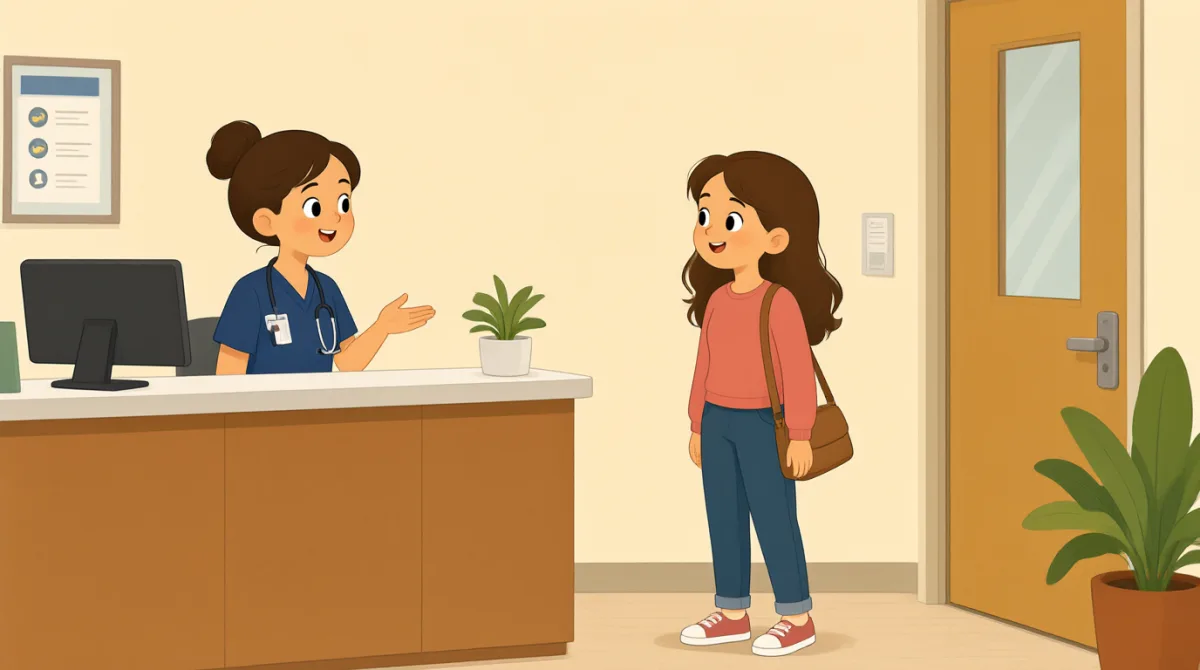

Hi, I’m here to visit my friend Leo. Could you tell me where his room is?
สวัสดีค่ะ ฉันมาเยี่ยมเลโอเพื่อนของฉันค่ะ ช่วยบอกได้ไหมคะว่าห้องของเขาอยู่ที่ไหน

Of course. Do you know which floor he’s on?
ได้ค่ะ ทราบไหมคะว่าเขาอยู่ชั้นไหน
I’m not sure. He came in yesterday, and I don’t have his room number.
ไม่แน่ใจค่ะ เขาเข้ามาเมื่อวานนี้ และฉันไม่มีเลขห้องของเขาค่ะ
That’s okay. What’s his last name? I can look it up for you.
ไม่เป็นไรค่ะ เขานามสกุลอะไรคะ เดี๋ยวฉันค้นหาให้ค่ะ
Miller. Is there a room for visitors to wait here?
มิลเลอร์ค่ะ มีห้องให้ญาติหรือผู้มาเยี่ยมนั่งรอที่นี่ไหมคะ
Yes, there are chairs by the window. One moment while I check.
มีค่ะ มีเก้าอี้อยู่ข้างหน้าต่าง รอสักครู่นะคะ ฉันขอตรวจสอบก่อน
He’s in room 214 on the second floor. Take the elevator on your left.
เขาอยู่ห้อง 214 ชั้นสองค่ะ ขึ้นลิฟต์ทางซ้ายมือได้เลยค่ะ
Thank you. Do I need to sign in before I go up?
ขอบคุณค่ะ ฉันต้องลงชื่อก่อนขึ้นไปไหมคะ
Yes, please sign in here and wear this visitor badge.
ต้องค่ะ กรุณาลงชื่อที่นี่ แล้วติดบัตรผู้มาเยี่ยมใบนี้ด้วยนะคะ
คำศัพท์7
- visit my friendมาเยี่ยมเพื่อน
To go and spend time with a friend. You can say this when you explain why you are at a place.
หมายถึงการไปหาและใช้เวลากับเพื่อน คุณพูดวลีนี้ได้เมื่ออธิบายว่ามาทำอะไรที่สถานที่แห่งหนึ่ง
- which floorชั้นไหน
The level of a building where someone or something is. Ask “Which floor?” to find out where a room is.
หมายถึงชั้นของอาคารที่คนหรือสิ่งของอยู่ ถามว่า “Which floor?” เพื่อถามว่าห้องอยู่ชั้นไหน
- look it upค้นหาข้อมูล
To find information by checking a list or computer. Here, the receptionist checks Leo’s room number.
หมายถึงการหาข้อมูลโดยตรวจดูรายชื่อหรือค้นจากคอมพิวเตอร์ ในบทสนทนานี้ พนักงานต้อนรับตรวจสอบเลขห้องของเลโอ
- wait hereรอที่นี่
To stay in this place until something happens. You can use it to ask where you can sit while you wait.
หมายถึงอยู่ที่นี่จนกว่าจะมีบางอย่างเกิดขึ้น ใช้ถามได้ว่าระหว่างรอคุณนั่งรอที่ไหนได้บ้าง
- on your leftทางซ้ายมือของคุณ
On the left-hand side as you face or move forward. Use this phrase to follow directions.
หมายถึงด้านซ้ายเมื่อคุณหันหน้าไปข้างหน้าหรือเดินไปข้างหน้า ใช้วลีนี้เพื่อบอกหรือทำตามเส้นทาง
- sign inลงชื่อ
To write your name or details when you arrive. Visitors may need to sign in before going into a hospital.
หมายถึงเขียนชื่อหรือข้อมูลของคุณเมื่อมาถึง ผู้มาเยี่ยมอาจต้องลงชื่อก่อนเข้าไปในโรงพยาบาล
- visitor badgeบัตรผู้มาเยี่ยม
A card or name tag that shows you are visiting. You may need to wear it while you are in the hospital.
หมายถึงบัตรหรือป้ายชื่อที่แสดงว่าคุณมาเยี่ยม คุณอาจต้องติดบัตรนี้ไว้ขณะอยู่ในโรงพยาบาล
ประโยคสำคัญ8
- 1
Could you tell me where his room is?
ช่วยบอกได้ไหมคะว่าห้องของเขาอยู่ที่ไหน
This is a polite way to ask for directions or information. You can reuse “Could you tell me where… is?” to ask about another place.
นี่เป็นวิธีสุภาพในการถามทางหรือขอข้อมูล คุณนำ “Could you tell me where… is?” ไปใช้ถามถึงสถานที่อื่นได้
- 2
Do you know which floor he’s on?
ทราบไหมคะว่าเขาอยู่ชั้นไหน
This question asks what level of the building someone is on. Replace “he” with another person or “it” to ask about a room or office.
คำถามนี้ถามว่าคนคนนั้นอยู่บนชั้นไหนของอาคาร เปลี่ยน “he” เป็นบุคคลอื่น หรือใช้ “it” เพื่อถามถึงห้องหรือสำนักงานได้
- 3
I’m not sure.
ฉันไม่แน่ใจค่ะ
Use this short phrase when you do not know something. You can say it before explaining what information you are missing.
ใช้วลีสั้น ๆ นี้เมื่อคุณไม่รู้คำตอบ คุณพูดวลีนี้ก่อนอธิบายได้ว่าคุณยังขาดข้อมูลอะไร
- 4
What’s his last name?
เขานามสกุลอะไรคะ
This asks for someone’s family name. You can use “What’s [person’s] last name?” when giving or checking information.
ประโยคนี้ใช้ถามนามสกุลของใครสักคน คุณใช้ “What’s [person’s] last name?” เมื่อต้องการให้หรือสอบถามข้อมูลได้
- 5
Is there a room for visitors to wait here?
มีห้องให้ผู้มาเยี่ยมนั่งรอที่นี่ไหมคะ
This is a polite way to ask if visitors have a place to wait. You can replace “a room” with “a place” or name another location.
นี่เป็นวิธีสุภาพในการถามว่าผู้มาเยี่ยมมีที่นั่งรอหรือไม่ เปลี่ยน “a room” เป็น “a place” หรือระบุสถานที่อื่นได้
- 6
He’s in room 214 on the second floor.
เขาอยู่ห้อง 214 ชั้นสองค่ะ
This sentence gives both a room number and a floor. Reuse the pattern “He’s in room [number] on the [floor].”
ประโยคนี้บอกทั้งเลขห้องและชั้น คุณนำรูปแบบ “He’s in room [number] on the [floor].” ไปใช้ได้
- 7
Take the elevator on your left.
ขึ้นลิฟต์ทางซ้ายมือได้เลยค่ะ
This gives a simple direction. You can change “the elevator” to another place or thing, such as “the stairs.”
ประโยคนี้ใช้บอกทางง่าย ๆ คุณเปลี่ยน “the elevator” เป็นสถานที่หรือสิ่งอื่นได้ เช่น “the stairs.”
- 8
Do I need to sign in before I go up?
ฉันต้องลงชื่อก่อนขึ้นไปไหมคะ
This asks if something must be done before going upstairs. You can reuse “Do I need to… before I…?” to ask about steps or rules.
ประโยคนี้ใช้ถามว่าต้องทำอะไรบางอย่างก่อนขึ้นไปชั้นบนหรือไม่ คุณนำรูปแบบ “Do I need to… before I…?” ไปใช้ถามเกี่ยวกับขั้นตอนหรือกฎได้