Asking About Local Honey
สอบถามเรื่องน้ำผึ้งท้องถิ่น
Mia asks Grace where her honey comes from and how it tastes. She buys a jar after hearing how Grace uses it at home.
มีอาถามเกรซว่าน้ำผึ้งของเธอมาจากไหนและมีรสชาติอย่างไร หลังจากฟังเกรซเล่าว่าใช้มันที่บ้านอย่างไร มีอาก็ซื้อน้ำผึ้งไปหนึ่งขวด
บทสนทนา9
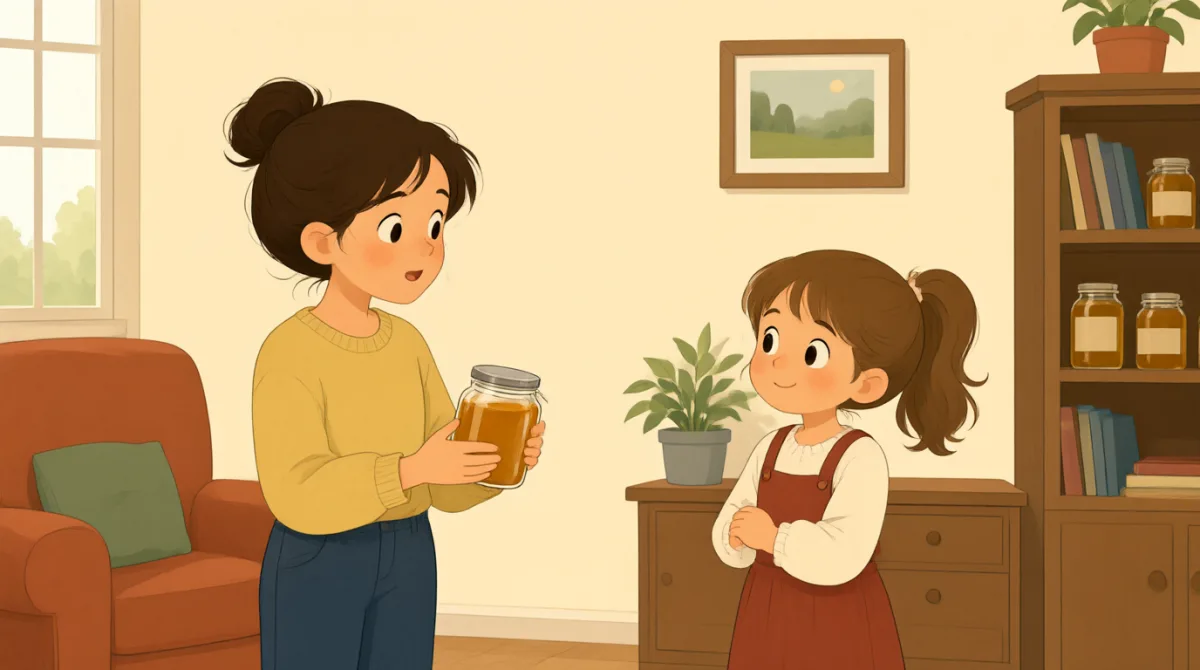

Hi, Grace. Is this honey made here at the market?
สวัสดี เกรซ น้ำผึ้งนี้ผลิตที่ตลาดนี้หรือเปล่าคะ

Yes, it comes from my family’s hives just outside town.
ใช่ค่ะ มาจากรังผึ้งของครอบครัวฉันที่อยู่นอกเมืองไปนิดเดียว
That sounds lovely. Is it sweet, or does it taste different?
ฟังดูดีจังค่ะ หวานไหมคะ หรือรสชาติแตกต่างออกไป
It’s sweet, with a light flower taste. Would you like to try a little?
หวานค่ะ มีกลิ่นรสดอกไม้อ่อน ๆ อยากลองชิมสักนิดไหมคะ
Sure, thank you. Oh, it’s smooth and not too sweet.
ได้ค่ะ ขอบคุณนะคะ อ้อ เนื้อเนียนดี แล้วก็ไม่หวานเกินไป
I stir it into tea or spread it on toast at home.
ที่บ้านฉันจะคนใส่ชา หรือไม่ก็ทาบนขนมปังปิ้งค่ะ
I’d like to try it in my tea. How much is one jar?
ฉันอยากลองใส่ในชาดูค่ะ ขวดหนึ่งราคาเท่าไหร่คะ
It’s eight dollars. I’ll wrap it up for you.
แปดดอลลาร์ค่ะ เดี๋ยวฉันห่อให้เลยนะคะ
Here you go. Thanks, Grace. I’m glad I stopped by.
นี่ค่ะ ขอบคุณนะคะ เกรซ ดีใจจังที่แวะมาค่ะ
คำศัพท์8
- comes fromมาจาก
This tells where something is made or produced. You can ask, “Where does this honey come from?”
ใช้บอกว่าสิ่งนั้นทำหรือผลิตมาจากที่ไหน คุณถามได้ว่า “Where does this honey come from?” (น้ำผึ้งนี้มาจากไหนคะ)
- just outside townอยู่นอกเมืองไปนิดเดียว
This means a place very close to the town, but not inside it. Use it to describe where something is located.
หมายถึงสถานที่ที่อยู่ใกล้เมืองมาก แต่ไม่ได้อยู่ในตัวเมือง ใช้บอกตำแหน่งที่ตั้งของสิ่งต่าง ๆ ได้
- taste differentมีรสชาติแตกต่างออกไป
This means to have a flavor that is not the same as another food or drink. You can ask, “Does it taste different?”
หมายถึงมีรสชาติไม่เหมือนอาหารหรือเครื่องดื่มอย่างอื่น คุณถามได้ว่า “Does it taste different?” (รสชาติต่างออกไปไหมคะ)
- try a littleลองชิมสักนิด
This means to taste a small amount of something. You can say this when offering food or drink.
หมายถึงชิมสิ่งนั้นในปริมาณเล็กน้อย ใช้ตอนเสนออาหารหรือเครื่องดื่มให้ใครลองได้
- spread it on toastทาบนขนมปังปิ้ง
This means to put something like honey or jam over toast. Replace “it” with another spread you enjoy.
หมายถึงปาดของอย่างน้ำผึ้งหรือแยมลงบนขนมปังปิ้ง คุณเปลี่ยน “it” เป็นของทาที่ชอบอย่างอื่นได้
- stir it into teaคนใส่ชา
This means to mix something into tea with a spoon. You can use this phrase for honey, sugar, or milk.
หมายถึงใช้ช้อนคนสิ่งหนึ่งให้เข้ากับชา ใช้สำนวนนี้กับน้ำผึ้ง น้ำตาล หรือนมได้
- wrap it upห่อให้
This means to put something in paper or another covering, often after someone buys it. A shop worker might say this before handing over an item.
หมายถึงห่อของด้วยกระดาษหรือวัสดุอื่น ซึ่งมักทำหลังจากมีคนซื้อของ พนักงานร้านอาจพูดคำนี้ก่อนส่งของให้ลูกค้า
- stopped byแวะมา
This means visited a place briefly. You can say, “I’m glad I stopped by,” when you enjoyed a short visit.
หมายถึงไปเยี่ยมสถานที่หนึ่งในช่วงเวลาสั้น ๆ คุณพูดว่า “I’m glad I stopped by,” (ดีใจที่แวะมาค่ะ) ได้เมื่อรู้สึกดีที่ได้แวะไป
ประโยคสำคัญ7
- 1
Is this honey made here at the market?
น้ำผึ้งนี้ผลิตที่ตลาดนี้หรือเปล่าคะ
Use this question to ask whether a product is made locally. You can replace “honey” with another product, such as “cheese” or “bread.”
ใช้คำถามนี้ถามว่าสินค้าผลิตในท้องถิ่นหรือไม่ คุณเปลี่ยน “honey” เป็นสินค้าอื่น เช่น “cheese” หรือ “bread” ได้
- 2
Would you like to try a little?
อยากลองชิมสักนิดไหมคะ
Use this friendly question when offering someone a small taste. You can replace “try” with another suitable action, such as “taste.”
ใช้คำถามเป็นกันเองนี้ตอนเสนอให้ใครลองชิมเล็กน้อย คุณเปลี่ยน “try” เป็นคำกริยาอื่นที่เหมาะสม เช่น “taste” ได้
- 3
Oh, it’s smooth and not too sweet.
อ้อ เนื้อเนียนดี แล้วก็ไม่หวานเกินไป
This sentence describes the texture and flavor of food. Replace “smooth” and “sweet” with other simple words, such as “soft” or “salty.”
ประโยคนี้บรรยายเนื้อสัมผัสและรสชาติของอาหาร คุณเปลี่ยน “smooth” และ “sweet” เป็นคำง่าย ๆ คำอื่น เช่น “soft” หรือ “salty” ได้
- 4
I stir it into tea or spread it on toast at home.
ที่บ้านฉันจะคนใส่ชา หรือไม่ก็ทาบนขนมปังปิ้งค่ะ
Use this sentence to explain how you use a food or ingredient. You can name another food and say what you mix it into or spread it on.
ใช้ประโยคนี้อธิบายว่าคุณใช้วัตถุดิบหรืออาหารอย่างไร คุณจะเอ่ยชื่ออาหารอื่น แล้วบอกว่าผสมลงในอะไรหรือทาบนอะไรได้
- 5
How much is one jar?
ขวดหนึ่งราคาเท่าไหร่คะ
This is a simple way to ask the price of one item. Replace “jar” with the item or container you want to buy.
นี่เป็นวิธีง่าย ๆ ในการถามราคาของหนึ่งชิ้น คุณเปลี่ยน “jar” เป็นชื่อของที่อยากซื้อหรือภาชนะที่ใส่ได้
- 6
I’ll wrap it up for you.
เดี๋ยวฉันห่อให้เลยนะคะ
A seller can use this sentence to say they will prepare an item for a customer to take away. You can replace “wrap” with another action, such as “bag.”
ผู้ขายใช้ประโยคนี้บอกว่าจะเตรียมสินค้าให้ลูกค้านำกลับไป คุณเปลี่ยน “wrap” เป็นการกระทำอย่างอื่น เช่น “bag” ได้
- 7
I’m glad I stopped by.
ดีใจจังที่แวะมาค่ะ
Use this sentence to say you are happy you visited a place. Replace “stopped by” with another short visit, such as “came in.”
ใช้ประโยคนี้บอกว่าคุณดีใจที่ได้ไปเยือนสถานที่หนึ่ง คุณเปลี่ยน “stopped by” เป็นสำนวนที่หมายถึงการแวะไปช่วงสั้น ๆ เช่น “came in” ได้