Meeting a Neighbor
พบเพื่อนบ้าน
Emma meets her neighbor, Mia, in the hallway while carrying a box. They introduce themselves and talk about the building.
เอ็มมาพบมีอา เพื่อนบ้านของเธอที่โถงทางเดิน ระหว่างที่กำลังถือกล่อง ทั้งคู่แนะนำตัวและคุยกันเรื่องอาคาร
บทสนทนา8
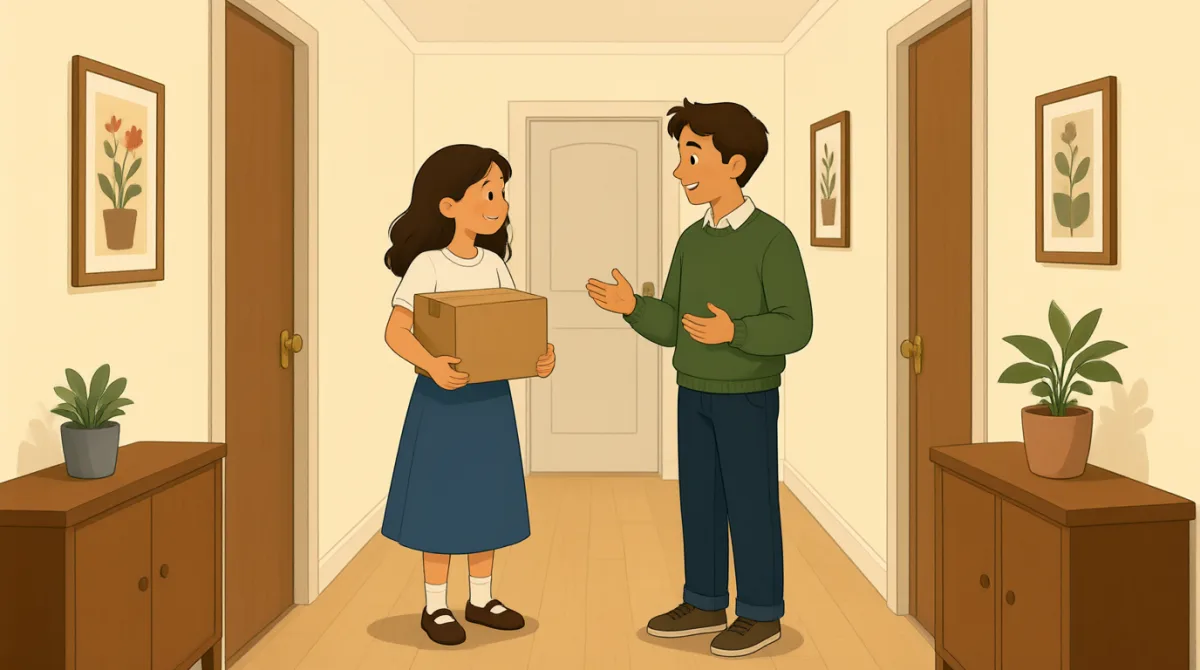

Hi! I’m your new neighbor. I’m Emma, and I’m trying to carry this box upstairs.
สวัสดี! ฉันเป็นเพื่อนบ้านคนใหม่ของคุณนะ ฉันชื่อเอ็มมา กำลังพยายามยกกล่องใบนี้ขึ้นไปข้างบนอยู่

Hi, Emma! I’m Mia. Let me hold the door for you.
สวัสดี เอ็มมา! ฉันชื่อมีอา ให้ฉันช่วยจับประตูให้นะ
Thanks! I just moved in today. Do you live on this floor?
ขอบคุณนะ! ฉันเพิ่งย้ายเข้ามาวันนี้เอง คุณอยู่ชั้นนี้หรือเปล่า
Yes, I live right next door. Welcome to the building!
ใช่ ฉันอยู่ห้องติดกันเลย ยินดีต้อนรับสู่อาคารนี้นะ!
That’s great. Is it usually quiet here at night?
ดีจัง ปกติตอนกลางคืนที่นี่เงียบไหม
Yes, it’s pretty quiet. The laundry room is downstairs, near the lobby.
ใช่ ค่อนข้างเงียบเลย ห้องซักรีดอยู่ชั้นล่าง ใกล้กับโถงล็อบบี้
Good to know! Is there a grocery store nearby?
ดีเลยที่รู้ไว้! แถวนี้มีร้านขายของชำไหม
There’s one two blocks away. I can show you later if you like.
มีร้านหนึ่งอยู่ห่างไปสองช่วงตึก ถ้าต้องการ ไว้ฉันพาไปทีหลังได้นะ
คำศัพท์8
- new neighborเพื่อนบ้านคนใหม่
A person who has recently moved into a home near yours. You can use this phrase when introducing yourself to people who live nearby.
คนที่เพิ่งย้ายมาอยู่บ้านใกล้กับบ้านของคุณ ใช้คำนี้ตอนแนะนำตัวกับคนที่อยู่แถวบ้านได้
- hold the doorช่วยจับประตูไว้
To keep a door open for someone so they can pass through. You can offer to hold the door when someone is carrying something.
เปิดประตูค้างไว้ให้ใครสักคนเดินผ่านได้ คุณอาจเสนอตัวช่วยจับประตูเมื่อเห็นใครกำลังถือของอยู่
- moved inย้ายเข้ามาอยู่
Started living in a new home. Use “I just moved in” to tell someone you arrived at your new home recently.
เริ่มอาศัยอยู่ในบ้านหลังใหม่ ใช้ “I just moved in” เพื่อบอกใครสักคนว่าคุณเพิ่งย้ายเข้าบ้านใหม่ไม่นานนี้
- right next doorอยู่ห้องติดกันเลย
In the home immediately beside yours. Use this phrase to explain where you live in relation to someone else.
อยู่บ้านหรือห้องที่อยู่ติดกับของอีกฝ่ายพอดี ใช้คำนี้เพื่อบอกว่าบ้านของคุณอยู่ตรงไหนเมื่อเทียบกับบ้านของอีกคน
- pretty quietค่อนข้างเงียบ
Quite calm, with little noise. You can use it to describe a place or time that is not very noisy.
สงบและมีเสียงรบกวนน้อย ใช้บรรยายสถานที่หรือช่วงเวลาที่ไม่ค่อยมีเสียงดัง
- downstairsชั้นล่าง
On a lower floor of a building. Use it to give the location of a room or place below you.
อยู่บนชั้นที่ต่ำกว่าของอาคาร ใช้บอกตำแหน่งของห้องหรือสถานที่ที่อยู่ต่ำลงไปจากคุณ
- nearbyใกล้ ๆ
Not far away. You can ask if a shop or other place is nearby when you want to know if it is close.
อยู่ไม่ไกล คุณถามได้ว่าร้านค้าหรือสถานที่อื่น ๆ อยู่ใกล้ ๆ ไหม เมื่อต้องการรู้ว่าอยู่แถวนั้นหรือเปล่า
- two blocks awayห่างไปสองช่วงตึก
A short distance measured as two city blocks. Use this phrase to say how far a place is from where you are.
อยู่ห่างออกไปไม่ไกล โดยวัดระยะเป็นสองช่วงตึก ใช้คำนี้เพื่อบอกว่าสถานที่หนึ่งอยู่ไกลจากจุดที่คุณอยู่แค่ไหน
ประโยคสำคัญ8
- 1
I’m your new neighbor.
ฉันเป็นเพื่อนบ้านคนใหม่ของคุณ
This is a simple way to introduce yourself to someone who lives near you. You can replace “neighbor” with another role, such as “new coworker.”
ประโยคนี้เป็นวิธีง่าย ๆ ในการแนะนำตัวกับคนที่อยู่ใกล้บ้านคุณ คุณเปลี่ยน “neighbor” เป็นบทบาทอื่นได้ เช่น “new coworker”
- 2
Let me hold the door for you.
ให้ฉันช่วยจับประตูให้นะ
Use this friendly offer when someone needs help getting through a door. You can also say, “Let me carry that for you.”
ใช้ประโยคเสนอความช่วยเหลืออย่างเป็นกันเองนี้เมื่อมีคนต้องการความช่วยเหลือในการเดินผ่านประตู คุณอาจพูดว่า “Let me carry that for you.” ก็ได้
- 3
I just moved in today.
ฉันเพิ่งย้ายเข้ามาวันนี้เอง
This tells someone that you started living in a new home today. Replace “today” with another time to say when you moved.
ประโยคนี้บอกอีกฝ่ายว่าคุณเริ่มอยู่บ้านใหม่ในวันนี้ คุณเปลี่ยน “today” เป็นช่วงเวลาอื่นเพื่อบอกว่าคุณย้ายมาเมื่อไหร่ได้
- 4
Do you live on this floor?
คุณอยู่ชั้นนี้หรือเปล่า
This is a polite question to ask where someone lives in a building. You can also ask, “Do you live upstairs?”
นี่เป็นคำถามสุภาพที่ใช้ถามว่าอีกฝ่ายอยู่ชั้นไหนในอาคาร คุณอาจถามว่า “Do you live upstairs?” ก็ได้
- 5
Is it usually quiet here at night?
ปกติตอนกลางคืนที่นี่เงียบไหม
Use this question to ask whether a place is normally noisy or calm at night. Replace “at night” with another time, such as “in the morning.”
ใช้คำถามนี้เพื่อถามว่าปกติแล้วสถานที่แห่งหนึ่งเสียงดังหรือสงบในตอนกลางคืน คุณเปลี่ยน “at night” เป็นช่วงเวลาอื่นได้ เช่น “in the morning”
- 6
The laundry room is downstairs, near the lobby.
ห้องซักรีดอยู่ชั้นล่าง ใกล้กับโถงล็อบบี้
This sentence gives the location of a room in a building. Use the same pattern to explain where other places are.
ประโยคนี้บอกตำแหน่งของห้องหนึ่งในอาคาร คุณใช้รูปประโยคเดียวกันเพื่ออธิบายว่าสถานที่อื่นอยู่ตรงไหนได้
- 7
Is there a grocery store nearby?
แถวนี้มีร้านขายของชำไหม
This is a useful way to ask if a shop is close to you. Replace “grocery store” with another place, such as “a pharmacy.”
นี่เป็นวิธีที่มีประโยชน์ในการถามว่ามีร้านค้าอยู่ใกล้ ๆ ไหม คุณเปลี่ยน “grocery store” เป็นสถานที่อื่นได้ เช่น “a pharmacy.”
- 8
I can show you later if you like.
ถ้าต้องการ ไว้ฉันพาไปทีหลังได้นะ
Use this friendly offer to say you can help someone at a later time. You can replace “show you” with another action, such as “help you.”
ใช้ประโยคเสนอความช่วยเหลืออย่างเป็นกันเองนี้เพื่อบอกว่าคุณช่วยใครสักคนได้ในภายหลัง คุณเปลี่ยน “show you” เป็นการกระทำอื่นได้ เช่น “help you.”