Meeting a Neighbor
पड़ोसी से मुलाकात
Emma meets her neighbor, Mia, in the hallway while carrying a box. They introduce themselves and talk about the building.
एमा एक डिब्बा लेकर जा रही होती है, तभी गलियारे में उसकी पड़ोसी मिया से मुलाकात होती है। वे एक-दूसरे से परिचय करती हैं और इमारत के बारे में बात करती हैं।
संवाद8
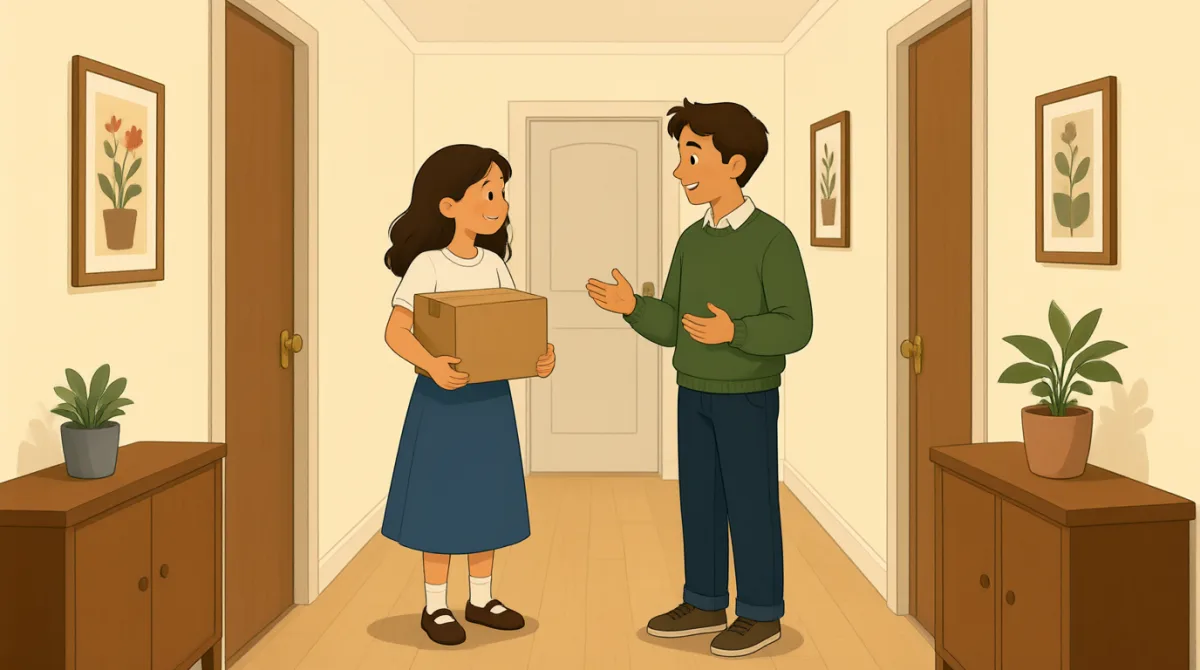

Hi! I’m your new neighbor. I’m Emma, and I’m trying to carry this box upstairs.
नमस्ते! मैं आपकी नई पड़ोसी हूँ। मैं एमा हूँ, और यह डिब्बा ऊपर ले जाने की कोशिश कर रही हूँ।

Hi, Emma! I’m Mia. Let me hold the door for you.
नमस्ते, एमा! मैं मिया हूँ। आइए, मैं आपके लिए दरवाज़ा पकड़ती हूँ।
Thanks! I just moved in today. Do you live on this floor?
धन्यवाद! मैं आज ही यहाँ रहने आई हूँ। क्या आप इसी मंज़िल पर रहती हैं?
Yes, I live right next door. Welcome to the building!
हाँ, मैं ठीक बगल वाले घर में रहती हूँ। इमारत में आपका स्वागत है!
That’s great. Is it usually quiet here at night?
यह तो बहुत अच्छी बात है। क्या यहाँ आम तौर पर रात में शांति रहती है?
Yes, it’s pretty quiet. The laundry room is downstairs, near the lobby.
हाँ, यहाँ काफ़ी शांति रहती है। कपड़े धोने का कमरा नीचे लॉबी के पास है।
Good to know! Is there a grocery store nearby?
यह जानकर अच्छा लगा! क्या पास में कोई किराने की दुकान है?
There’s one two blocks away. I can show you later if you like.
एक दुकान दो ब्लॉक दूर है। अगर आप चाहें तो मैं बाद में आपको वहाँ ले जा सकती हूँ।
शब्दावली8
- new neighborनई पड़ोसी
A person who has recently moved into a home near yours. You can use this phrase when introducing yourself to people who live nearby.
ऐसा व्यक्ति जो हाल ही में आपके घर के पास रहने आया हो। आस-पास रहने वाले लोगों से अपना परिचय देते समय आप इस वाक्यांश का इस्तेमाल कर सकते हैं।
- hold the doorदरवाज़ा पकड़े रखना
To keep a door open for someone so they can pass through. You can offer to hold the door when someone is carrying something.
किसी के लिए दरवाज़ा खुला रखना ताकि वह वहाँ से गुज़र सके। जब कोई कुछ सामान लेकर जा रहा हो, तो आप उसके लिए दरवाज़ा पकड़ने की पेशकश कर सकते हैं।
- moved inरहने आना
Started living in a new home. Use “I just moved in” to tell someone you arrived at your new home recently.
नए घर में रहना शुरू करना। किसी को यह बताने के लिए कि आप हाल ही में अपने नए घर आए हैं, “I just moved in” कहें।
- right next doorठीक बगल में
In the home immediately beside yours. Use this phrase to explain where you live in relation to someone else.
आपके घर के एकदम पास वाले घर में। किसी दूसरे व्यक्ति के घर के मुकाबले अपना घर कहाँ है, यह बताने के लिए इस वाक्यांश का इस्तेमाल करें।
- pretty quietकाफ़ी शांत
Quite calm, with little noise. You can use it to describe a place or time that is not very noisy.
शांत जगह, जहाँ शोर कम हो। किसी ऐसी जगह या समय का वर्णन करने के लिए इसका इस्तेमाल करें जहाँ बहुत शोर न हो।
- downstairsनीचे
On a lower floor of a building. Use it to give the location of a room or place below you.
इमारत की किसी निचली मंज़िल पर। अपने से नीचे किसी कमरे या जगह का पता बताने के लिए इसका इस्तेमाल करें।
- nearbyपास में
Not far away. You can ask if a shop or other place is nearby when you want to know if it is close.
ज़्यादा दूर नहीं। कोई दुकान या दूसरी जगह नज़दीक है या नहीं, यह जानने के लिए आप पूछ सकते हैं कि वह nearby है या नहीं।
- two blocks awayदो ब्लॉक दूर
A short distance measured as two city blocks. Use this phrase to say how far a place is from where you are.
शहर की दूरी मापने की इकाई के अनुसार दो ब्लॉक की दूरी पर। आप जहाँ हैं, वहाँ से कोई जगह कितनी दूर है, यह बताने के लिए इस वाक्यांश का इस्तेमाल करें।
मुख्य वाक्य8
- 1
I’m your new neighbor.
मैं आपकी नई पड़ोसी हूँ।
This is a simple way to introduce yourself to someone who lives near you. You can replace “neighbor” with another role, such as “new coworker.”
अपने पास रहने वाले किसी व्यक्ति से परिचय देने का यह एक आसान तरीका है। “neighbor” की जगह आप कोई दूसरी भूमिका बता सकते हैं, जैसे “new coworker।”
- 2
Let me hold the door for you.
आइए, मैं आपके लिए दरवाज़ा पकड़ती हूँ।
Use this friendly offer when someone needs help getting through a door. You can also say, “Let me carry that for you.”
जब किसी को दरवाज़े से गुज़रने में मदद चाहिए हो, तो यह दोस्ताना पेशकश करें। आप यह भी कह सकते हैं, “Let me carry that for you।”
- 3
I just moved in today.
मैं आज ही यहाँ रहने आई हूँ।
This tells someone that you started living in a new home today. Replace “today” with another time to say when you moved.
इससे आप किसी को बताते हैं कि आपने आज नए घर में रहना शुरू किया है। आप जिस समय रहने आए, वह बताने के लिए “today” की जगह कोई और समय रख सकते हैं।
- 4
Do you live on this floor?
क्या आप इसी मंज़िल पर रहती हैं?
This is a polite question to ask where someone lives in a building. You can also ask, “Do you live upstairs?”
किसी इमारत में कोई कहाँ रहता है, यह पूछने का यह एक विनम्र तरीका है। आप यह भी पूछ सकते हैं, “Do you live upstairs?”
- 5
Is it usually quiet here at night?
क्या यहाँ आम तौर पर रात में शांति रहती है?
Use this question to ask whether a place is normally noisy or calm at night. Replace “at night” with another time, such as “in the morning.”
किसी जगह पर रात में आम तौर पर शोर रहता है या शांति, यह पूछने के लिए इस सवाल का इस्तेमाल करें। “at night” की जगह कोई और समय रख सकते हैं, जैसे “in the morning।”
- 6
The laundry room is downstairs, near the lobby.
कपड़े धोने का कमरा नीचे लॉबी के पास है।
This sentence gives the location of a room in a building. Use the same pattern to explain where other places are.
इस वाक्य से इमारत के किसी कमरे की जगह बताई जाती है। दूसरी जगहों का पता बताने के लिए भी इसी ढाँचे का इस्तेमाल करें।
- 7
Is there a grocery store nearby?
क्या पास में कोई किराने की दुकान है?
This is a useful way to ask if a shop is close to you. Replace “grocery store” with another place, such as “a pharmacy.”
अपने पास कोई दुकान है या नहीं, यह पूछने का यह एक उपयोगी तरीका है। “grocery store” की जगह कोई और जगह रख सकते हैं, जैसे “a pharmacy।”
- 8
I can show you later if you like.
अगर आप चाहें तो मैं बाद में आपको वहाँ ले जा सकती हूँ।
Use this friendly offer to say you can help someone at a later time. You can replace “show you” with another action, such as “help you.”
किसी को बाद में मदद करने की पेशकश के लिए यह दोस्ताना तरीका है। “show you” की जगह कोई और काम रख सकते हैं, जैसे “help you।”