Too Scared for the Roller Coaster
กลัวเกินกว่าจะขึ้นรถไฟเหาะ
Leo is excited to ride the roller coaster, but Emma feels nervous when she sees how high it is. Mia encourages her, and Emma decides whether to get on.
ลีโอตื่นเต้นที่จะได้ขึ้นรถไฟเหาะ แต่เอมมารู้สึกประหม่าเมื่อเห็นว่ามันสูงแค่ไหน มีอาคอยให้กำลังใจเธอ แล้วเอมมาจะตัดสินใจว่าจะขึ้นหรือไม่
บทสนทนา8
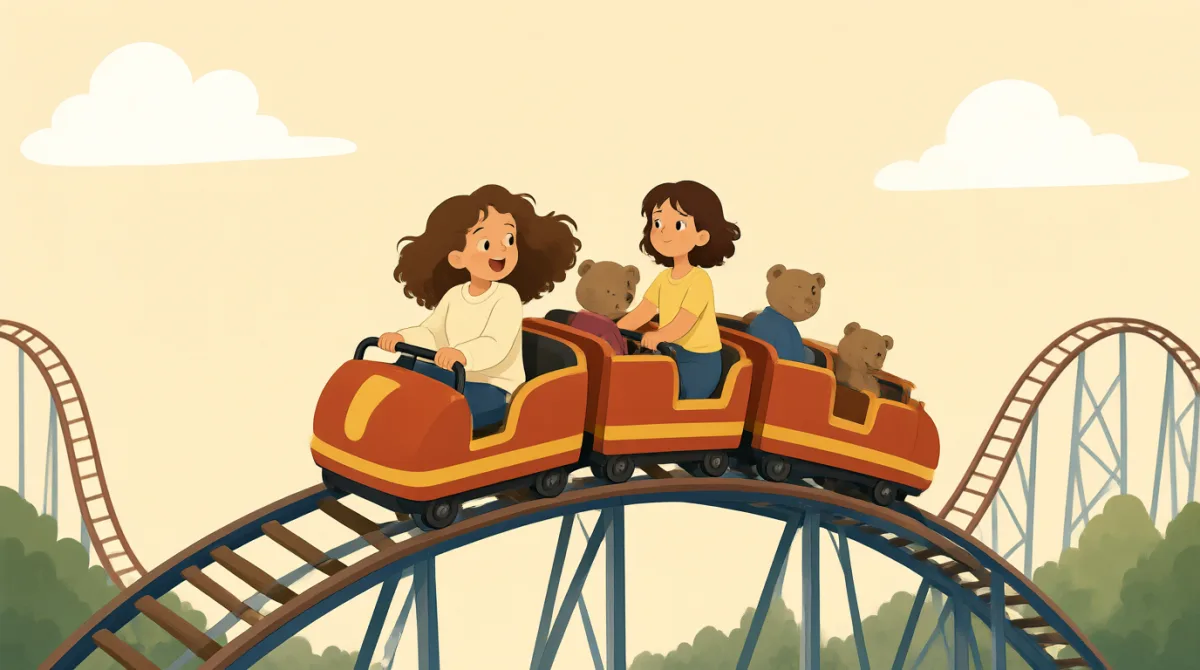

There it is! The roller coaster looks amazing. Let's get in line!
อยู่นั่นไง! รถไฟเหาะดูสุดยอดมาก ไปต่อแถวกันเถอะ!

Whoa, it's really high. I didn't think it would be this scary.
โห มันสูงจริง ๆ ฉันไม่คิดเลยว่ามันจะน่ากลัวขนาดนี้

That's okay, Emma. We can watch it go around once before you decide.
ไม่เป็นไรนะ เอ็มมา เราดูมันวิ่งรอบหนึ่งก่อนก็ได้ แล้วเธอค่อยตัดสินใจ
I rode one like this last summer. It was fast, but a lot of fun.
ฤดูร้อนที่แล้วฉันเคยขึ้นเครื่องเล่นแบบนี้ มันเร็วมาก แต่ก็สนุกสุด ๆ
Did you feel scared at the top? I don't like that big drop.
ตอนอยู่ข้างบนเธอกลัวไหม ฉันไม่ชอบตอนที่มันดิ่งลงแรง ๆ เลย
A little, but it was over quickly. You can sit beside Mia if you want.
นิดหน่อย แต่ก็ผ่านไปเร็ว เธอนั่งข้างมีอาได้นะถ้าอยากนั่ง
We don't have to ride it. We can try the gentle ride nearby instead.
เราไม่จำเป็นต้องขึ้นก็ได้ เราไปลองเครื่องเล่นเบา ๆ ที่อยู่ใกล้ ๆ แทนก็ได้
I want to try it, but I'll sit beside you, Mia. Let's get in line!
ฉันอยากลองนะ แต่ฉันจะนั่งข้างเธอ มีอา ไปต่อแถวกันเถอะ!
คำศัพท์6
- get in lineต่อแถว
To join the people waiting for something. You can say this when you are ready to wait for a ride or to buy something.
หมายถึงการไปเข้าคิวต่อจากคนที่กำลังรออยู่ ใช้พูดได้เมื่อพร้อมจะรอขึ้นเครื่องเล่นหรือรอซื้อของ
- really highสูงมาก
Very tall or far above the ground. Here, Emma uses it to describe the roller coaster.
หมายถึงสูงมากหรืออยู่ไกลจากพื้นดินมาก ในที่นี้เอมมาใช้บรรยายรถไฟเหาะ
- go aroundวิ่งไปรอบ ๆ
To move along a path and come back around. Here, it describes the roller coaster moving on its track.
หมายถึงเคลื่อนที่ไปตามเส้นทางแล้ววนกลับมา ในที่นี้ใช้บรรยายรถไฟเหาะที่เคลื่อนที่ไปตามราง
- a lot of funสนุกสุด ๆ
Very enjoyable. You can use this phrase to say that an activity was enjoyable.
หมายถึงสนุกมากหรือเพลิดเพลินมาก ใช้วลีนี้เพื่อบอกว่ากิจกรรมหนึ่งสนุก
- sit besideนั่งข้าง ๆ
To sit next to someone. You can use this phrase when choosing where to sit.
หมายถึงนั่งถัดจากใครบางคน ใช้วลีนี้เมื่อต้องเลือกว่าจะนั่งตรงไหน
- nearbyใกล้ ๆ
Close to where you are. Here, Mia uses it to describe a gentle ride close to the roller coaster.
หมายถึงอยู่ไม่ไกลจากสถานที่ที่คุณอยู่ ในที่นี้มีอาใช้บรรยายเครื่องเล่นเบา ๆ ที่อยู่ใกล้รถไฟเหาะ
ประโยคสำคัญ8
- 1
Let's get in line!
ไปต่อแถวกันเถอะ!
This is a friendly way to suggest joining a queue. Replace “in line” with another activity to make a suggestion, such as “Let's get started!”
นี่เป็นวิธีพูดอย่างเป็นกันเองเพื่อชวนไปเข้าคิว คุณสามารถแทนที่ “in line” ด้วยกิจกรรมอื่นเพื่อทำเป็นคำชวนได้ เช่น “Let's get started!”
- 2
I didn't think it would be this scary.
ฉันไม่คิดเลยว่ามันจะน่ากลัวขนาดนี้
Use this sentence when something feels more frightening than you expected. You can replace “scary” with another adjective, like “difficult” or “expensive.”
ใช้ประโยคนี้เมื่อบางสิ่งดูน่ากลัวกว่าที่คุณคาดไว้ คุณสามารถแทนที่ “scary” ด้วยคำคุณศัพท์อื่น เช่น “difficult” หรือ “expensive”
- 3
We can watch it go around once before you decide.
เราดูมันวิ่งรอบหนึ่งก่อนที่เธอจะตัดสินใจก็ได้
This offers someone time to observe before making a choice. Use “before you decide” when you want to give someone time to think.
ประโยคนี้ใช้เพื่อให้เวลาใครบางคนสังเกตก่อนตัดสินใจ ใช้ “before you decide” เมื่อต้องการให้ใครบางคนมีเวลาคิด
- 4
I rode one like this last summer.
ฤดูร้อนที่แล้วฉันเคยขึ้นเครื่องเล่นแบบนี้
This is a useful way to talk about a similar experience in the past. Replace “last summer” with another past time, such as “last week.”
นี่เป็นวิธีที่มีประโยชน์ในการพูดถึงประสบการณ์ที่คล้ายกันในอดีต คุณสามารถแทนที่ “last summer” ด้วยช่วงเวลาในอดีตอื่น เช่น “last week”
- 5
Did you feel scared at the top?
ตอนอยู่ข้างบนเธอกลัวไหม
Use this question to ask whether someone felt afraid at a particular moment or place. Change “scared” to another feeling, like “nervous” or “excited.”
ใช้คำถามนี้เพื่อถามว่าใครบางคนรู้สึกกลัวในช่วงเวลาหรือสถานที่ใดสถานที่หนึ่งหรือไม่ เปลี่ยน “scared” เป็นความรู้สึกอื่นได้ เช่น “nervous” หรือ “excited”
- 6
We don't have to ride it.
เราไม่จำเป็นต้องขึ้นก็ได้
This reassures someone that an activity is optional. You can use “We don't have to” before another verb, such as “wait” or “leave.”
ประโยคนี้ใช้เพื่อทำให้ใครบางคนสบายใจว่ากิจกรรมนั้นเลือกทำหรือไม่ทำก็ได้ คุณสามารถใช้ “We don't have to” นำหน้าคำกริยาอื่น เช่น “wait” หรือ “leave”
- 7
I want to try it, but I'll sit beside you, Mia.
ฉันอยากลองนะ แต่ฉันจะนั่งข้างเธอ มีอา
This sentence shows both a decision and a condition that makes someone feel more comfortable. Use “I want to…, but I'll…” to explain what you are willing to do.
ประโยคนี้แสดงทั้งการตัดสินใจและเงื่อนไขที่ทำให้ผู้พูดรู้สึกสบายใจขึ้น ใช้ “I want to…, but I'll…” เพื่ออธิบายสิ่งที่คุณยินดีจะทำ
- 8
Let's get in line!
ไปต่อแถวกันเถอะ!
This is a natural way to suggest joining a queue together. You can use “Let's” followed by a verb to make friendly suggestions.
นี่เป็นวิธีพูดอย่างเป็นธรรมชาติเพื่อชวนกันไปเข้าคิว คุณสามารถใช้ “Let's” ตามด้วยคำกริยาเพื่อทำคำชวนอย่างเป็นกันเอง