Too Scared for the Roller Coaster
ジェットコースターが怖い
Leo is excited to ride the roller coaster, but Emma feels nervous when she sees how high it is. Mia encourages her, and Emma decides whether to get on.
ジェットコースターに乗るのを楽しみにしているレオ。でも、高さを見たエマは不安になる。ミアに励まされ、エマは乗るかどうかを決める。
会話8
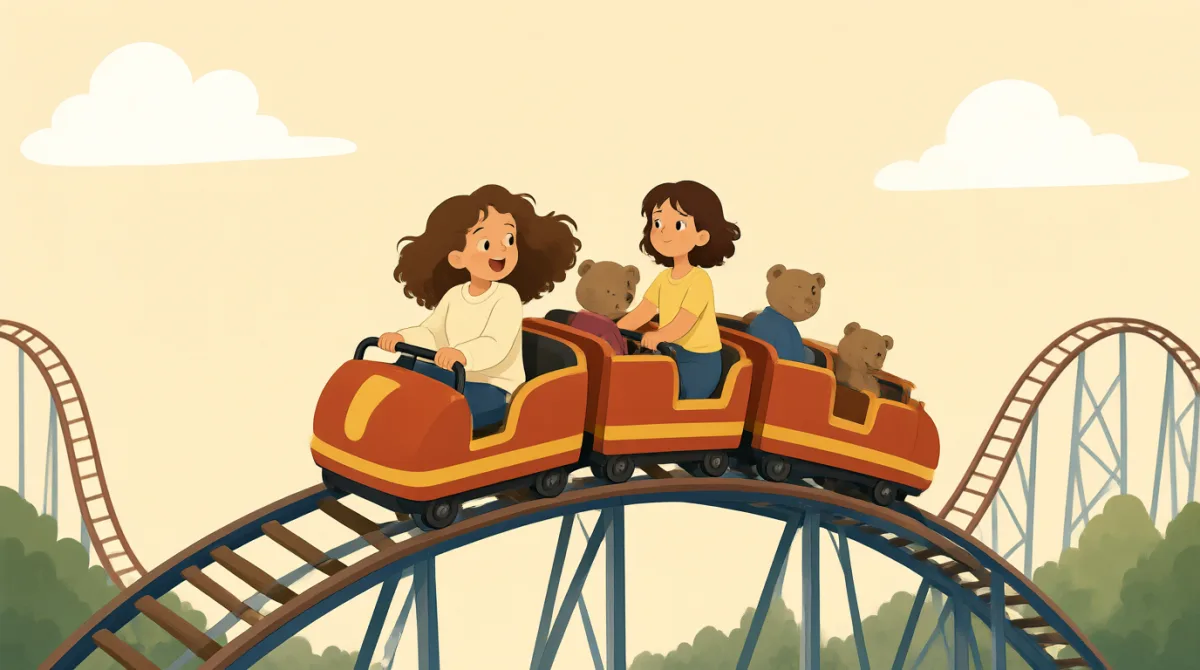

There it is! The roller coaster looks amazing. Let's get in line!
あった!ジェットコースター、すごく楽しそう。列に並ぼう!

Whoa, it's really high. I didn't think it would be this scary.
うわ、本当に高いね。こんなに怖いとは思わなかった。

That's okay, Emma. We can watch it go around once before you decide.
大丈夫だよ、エマ。決める前に一回、走ってるところを見てみよう。
I rode one like this last summer. It was fast, but a lot of fun.
去年の夏、これに似たのに乗ったよ。速かったけど、すごく楽しかった。
Did you feel scared at the top? I don't like that big drop.
てっぺんで怖かった?あの大きな落下は苦手なんだ。
A little, but it was over quickly. You can sit beside Mia if you want.
ちょっとね。でもすぐ終わったよ。よかったらミアの隣に座ってもいいよ。
We don't have to ride it. We can try the gentle ride nearby instead.
無理に乗らなくてもいいんだよ。代わりに近くにある穏やかな乗り物に乗ってみてもいいし。
I want to try it, but I'll sit beside you, Mia. Let's get in line!
乗ってみたいけど、ミアの隣に座るね。列に並ぼう!
語彙6
- get in line列に並ぶ
To join the people waiting for something. You can say this when you are ready to wait for a ride or to buy something.
何かを待っている人たちの列に加わることです。乗り物に乗るときや、買い物をするときに待つ準備ができたら使えます。
- really high本当に高い
Very tall or far above the ground. Here, Emma uses it to describe the roller coaster.
とても高い、または地面からかなり離れているという意味です。ここではエマがジェットコースターの高さを表しています。
- go aroundぐるっと回る
To move along a path and come back around. Here, it describes the roller coaster moving on its track.
道に沿って進み、ぐるりと回ることです。ここでは、ジェットコースターがレールの上を走る様子を表しています。
- a lot of funすごく楽しい
Very enjoyable. You can use this phrase to say that an activity was enjoyable.
とても楽しいという意味です。何かをして楽しかったことを伝えるときに使えます。
- sit beside隣に座る
To sit next to someone. You can use this phrase when choosing where to sit.
誰かの横に座ることです。どこに座るかを決めるときに使えます。
- nearby近くに
Close to where you are. Here, Mia uses it to describe a gentle ride close to the roller coaster.
今いる場所からあまり離れていないという意味です。ここではミアが、ジェットコースターの近くにある穏やかな乗り物を表しています。
重要な文8
- 1
Let's get in line!
Let's get in line!
This is a friendly way to suggest joining a queue. Replace “in line” with another activity to make a suggestion, such as “Let's get started!”
列に並ぼうと誘う、親しみやすい言い方です。“in line”を別の行動に置き換えると、何かを提案できます。たとえば、“Let's get started!”(始めよう!)と言えます。
- 2
I didn't think it would be this scary.
I didn't think it would be this scary.
Use this sentence when something feels more frightening than you expected. You can replace “scary” with another adjective, like “difficult” or “expensive.”
思っていたより怖く感じるときに使う文です。“scary”を“difficult”(難しい)や“expensive”(高い)など、別の形容詞に置き換えることもできます。
- 3
We can watch it go around once before you decide.
We can watch it go around once before you decide.
This offers someone time to observe before making a choice. Use “before you decide” when you want to give someone time to think.
相手が決める前に、様子を見る時間をあげる表現です。考える時間をあげたいときに“before you decide”を使えます。
- 4
I rode one like this last summer.
I rode one like this last summer.
This is a useful way to talk about a similar experience in the past. Replace “last summer” with another past time, such as “last week.”
過去にあった似た経験について話すときに便利な表現です。“last summer”を“last week”(先週)など、別の過去の時期に置き換えられます。
- 5
Did you feel scared at the top?
Did you feel scared at the top?
Use this question to ask whether someone felt afraid at a particular moment or place. Change “scared” to another feeling, like “nervous” or “excited.”
特定の場所や場面で相手が怖かったかどうかを尋ねる質問です。“scared”を“nervous”(緊張した)や“excited”(わくわくした)など、別の気持ちを表す言葉に変えられます。
- 6
We don't have to ride it.
We don't have to ride it.
This reassures someone that an activity is optional. You can use “We don't have to” before another verb, such as “wait” or “leave.”
ある行動を無理にしなくてもいいと伝え、相手を安心させる表現です。“We don't have to”の後に“wait”(待つ)や“leave”(出発する)など、別の動詞を続けることもできます。
- 7
I want to try it, but I'll sit beside you, Mia.
I want to try it, but I'll sit beside you, Mia.
This sentence shows both a decision and a condition that makes someone feel more comfortable. Use “I want to…, but I'll…” to explain what you are willing to do.
自分の決断と、より安心するための条件の両方を伝える文です。“I want to…, but I'll…”を使うと、何をしてみたいか、どんな条件ならできるかを説明できます。
- 8
Let's get in line!
Let's get in line!
This is a natural way to suggest joining a queue together. You can use “Let's” followed by a verb to make friendly suggestions.
一緒に列に並ぼうと誘う自然な言い方です。“Let's”の後に動詞を続けると、親しみやすく何かを提案できます。