Asking for Specific Department Hours
สอบถามเวลาเปิดทำการของแผนกเฉพาะ
Inside a larger store or mall, a customer asks an employee about the opening hours of a specific department or concession within the premises.
ภายในห้างสรรพสินค้าหรือร้านค้าขนาดใหญ่ ลูกค้าสอบถามพนักงานเกี่ยวกับเวลาเปิดทำการของแผนกหรือร้านค้าย่อยแห่งหนึ่งในสถานที่นั้น
บทสนทนา8
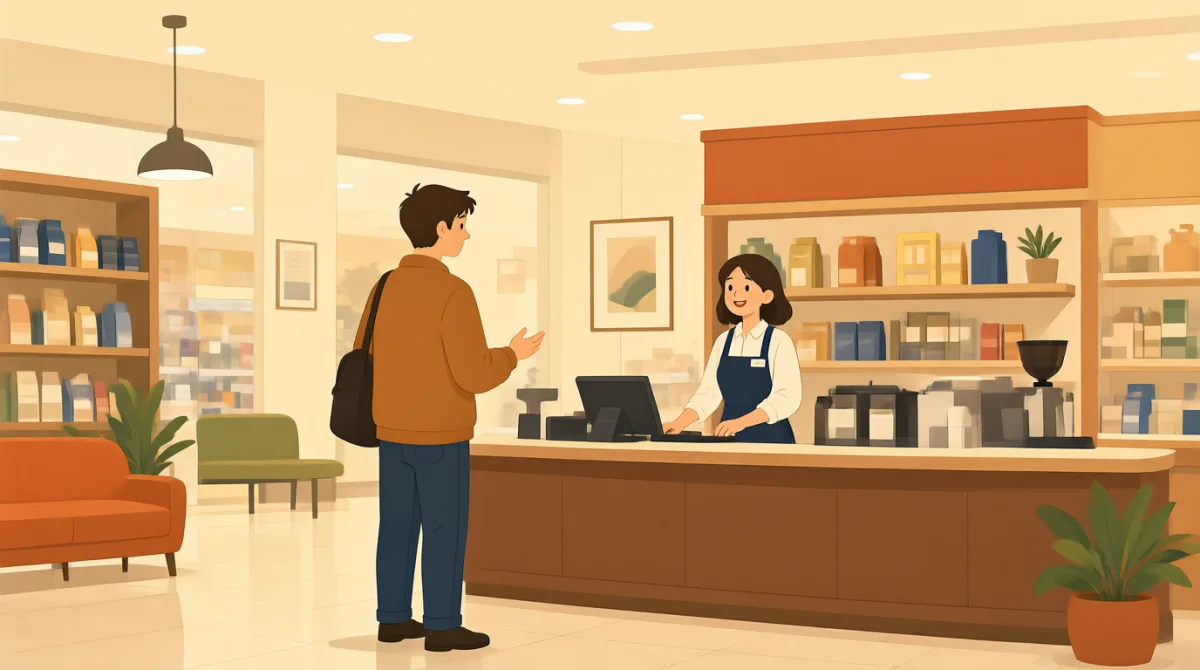

Excuse me, I'm looking for the electronics department. Do you know what time it opens today?
ขอโทษนะครับ ผมกำลังหาแผนกเครื่องใช้ไฟฟ้าอยู่ครับ ทราบไหมครับว่าวันนี้เปิดกี่โมง

Hello! The electronics department usually opens at 10 AM, just like the rest of the store.
สวัสดีค่ะ! ปกติแผนกเครื่องใช้ไฟฟ้าเปิดตอน 10 โมงเช้าค่ะ เวลาเดียวกับแผนกอื่น ๆ ในร้านเลย
Ah, okay. So, it's not open yet?
อ๋อ เข้าใจแล้วครับ งั้นตอนนี้ยังไม่เปิดใช่ไหมครับ
That's right. It's 9:30 AM now, so you'll have to wait about half an hour.
ใช่ค่ะ ตอนนี้ 9 โมงครึ่ง คุณต้องรอประมาณครึ่งชั่วโมงนะคะ
Got it. And do they have different closing hours from the main store?
เข้าใจแล้วครับ แล้วเวลาปิดของแผนกนี้ต่างจากเวลาปิดของร้านหลักไหมครับ
No, all departments, including electronics, close at 9 PM on weekdays and 7 PM on Sundays.
ไม่ค่ะ ทุกแผนก รวมถึงแผนกเครื่องใช้ไฟฟ้า ปิด 3 ทุ่มในวันธรรมดา และ 1 ทุ่มวันอาทิตย์ค่ะ
Perfect, thanks for the information!
เยี่ยมเลยครับ ขอบคุณสำหรับข้อมูลนะครับ!
You're welcome! Is there anything else I can help you with?
ยินดีค่ะ มีอะไรให้ช่วยอีกไหมคะ
คำศัพท์6
- departmentแผนก
A section of a store that sells specific items, like electronics or clothing. Use it when asking about a particular area in a big shop.
ส่วนหนึ่งของร้านที่ขายสินค้าประเภทใดประเภทหนึ่ง เช่น เครื่องใช้ไฟฟ้าหรือเสื้อผ้า ใช้คำนี้เมื่อถามถึงบริเวณเฉพาะในร้านขนาดใหญ่
- opensเปิดทำการ
The verb meaning when a place starts business for the day. It's the third person form of 'open' used with times, like 'The store opens at 9 AM.'
คำกริยาที่หมายถึงการเริ่มให้บริการหรือทำธุรกิจในแต่ละวัน เป็นรูปกริยาบุรุษที่สามของ 'open' ที่ใช้กับเวลา เช่น 'The store opens at 9 AM.' (ร้านเปิดตอน 9 โมงเช้า)
- usuallyปกติ
An adverb meaning most of the time or normally. It helps describe regular schedules, like 'The shop usually opens at 10 AM.'
คำกริยาวิเศษณ์ที่หมายถึงส่วนใหญ่หรือเป็นประจำ ใช้พูดถึงตารางเวลาทั่วไป เช่น 'The shop usually opens at 10 AM.' (ปกติร้านเปิดตอน 10 โมงเช้า)
- closing hoursเวลาปิดทำการ
The time when a store stops business for the day. Ask about it to know when something ends, like 'What are the closing hours?'
เวลาที่ร้านหยุดให้บริการในแต่ละวัน ถามคำนี้เพื่อให้รู้ว่าร้านปิดกี่โมง เช่น 'What are the closing hours?' (ร้านปิดกี่โมง)
- weekdaysวันธรรมดา
The days from Monday to Friday, not including weekends. It's useful for talking about work or store schedules.
วันจันทร์ถึงวันศุกร์ ไม่รวมวันสุดสัปดาห์ คำนี้มีประโยชน์เมื่อพูดถึงตารางงานหรือเวลาเปิดปิดของร้าน
- includingรวมถึง
A preposition meaning to include something in a group. Use it to specify parts, like 'All departments, including electronics.'
คำบุพบทที่หมายถึงการนับสิ่งหนึ่งรวมอยู่ในกลุ่ม ใช้ระบุส่วนต่าง ๆ เช่น 'All departments, including electronics.' (ทุกแผนก รวมถึงแผนกเครื่องใช้ไฟฟ้า)
ประโยคสำคัญ7
- 1
Excuse me, I'm looking for the electronics department. Do you know what time it opens today?
ขอโทษนะครับ ผมกำลังหาแผนกเครื่องใช้ไฟฟ้าอยู่ครับ ทราบไหมครับว่าวันนี้เปิดกี่โมง
This polite question combines asking for directions and hours. Use 'Excuse me' to get attention, and 'what time it opens' to inquire about opening time. Great for starting conversations in stores.
คำถามสุภาพนี้ผสมทั้งการถามทางและการถามเวลาเปิด ใช้ 'Excuse me' เพื่อเรียกความสนใจ และใช้ 'what time it opens' เพื่อถามว่าเปิดกี่โมง เหมาะสำหรับเริ่มบทสนทนาในร้านค้า
- 2
The electronics department usually opens at 10 AM, just like the rest of the store.
ปกติแผนกเครื่องใช้ไฟฟ้าเปิดตอน 10 โมงเช้า เวลาเดียวกับแผนกอื่น ๆ ในร้านเลย
This explains a typical schedule using 'usually' for habits and 'just like' for comparison. Useful for giving information about routines; note the time format '10 AM'.
ประโยคนี้บอกตารางเวลาทั่วไป โดยใช้ 'usually' เพื่อพูดถึงสิ่งที่ทำเป็นประจำ และ 'just like' เพื่อเปรียบเทียบ เหมาะสำหรับให้ข้อมูลเกี่ยวกับกิจวัตร สังเกตรูปแบบการบอกเวลา '10 AM' ด้วยนะคะ
- 3
Ah, okay. So, it's not open yet?
อ๋อ เข้าใจแล้วครับ งั้นตอนนี้ยังไม่เปิดใช่ไหมครับ
A confirmation question using 'So' to connect ideas and 'yet' for something expected but not happened. It's a natural way to check understanding in casual talk.
คำถามยืนยันความเข้าใจนี้ใช้ 'So' เพื่อเชื่อมความคิด และ 'yet' กับสิ่งที่คาดว่าจะเกิดขึ้นแต่ยังไม่เกิด เป็นวิธีถามเพื่อเช็กความเข้าใจที่เป็นธรรมชาติในการพูดคุยสบาย ๆ
- 4
It's 9:30 AM now, so you'll have to wait about half an hour.
ตอนนี้ 9 โมงครึ่ง คุณต้องรอประมาณครึ่งชั่วโมงนะคะ
This states current time and estimates wait using 'so' for result and 'about' for approximation. Practice telling time and suggesting waits in service situations.
ประโยคนี้บอกเวลาปัจจุบันและประมาณเวลาที่ต้องรอ โดยใช้ 'so' เพื่อบอกผล และ 'about' เพื่อบอกค่าประมาณ ฝึกบอกเวลาและแนะนำให้รอในสถานการณ์รับบริการได้เลยค่ะ
- 5
No, all departments, including electronics, close at 9 PM on weekdays and 7 PM on Sundays.
ไม่ค่ะ ทุกแผนก รวมถึงแผนกเครื่องใช้ไฟฟ้า ปิด 3 ทุ่มในวันธรรมดา และ 1 ทุ่มวันอาทิตย์ค่ะ
This denies a difference and lists times with 'including' and 'and' for connections. It's useful for explaining schedules; note plural 'departments' and days like 'weekdays'.
ประโยคนี้บอกว่าเวลาไม่ได้ต่างกัน แล้วแจกแจงเวลาโดยใช้ 'including' และ 'and' เพื่อเชื่อมข้อมูล เหมาะสำหรับอธิบายตารางเวลา สังเกตรูปพหูพจน์ 'departments' และคำเรียกวันอย่าง 'weekdays' ด้วยค่ะ
- 6
Perfect, thanks for the information!
เยี่ยมเลยครับ ขอบคุณสำหรับข้อมูลนะครับ!
A positive response showing satisfaction with 'Perfect' and thanks. Use it to end helpfully; 'information' is formal for details given.
คำตอบเชิงบวกที่แสดงความพอใจด้วย 'Perfect' และกล่าวขอบคุณ ใช้ปิดบทสนทนาอย่างสุภาพได้ ส่วน 'information' เป็นคำที่ค่อนข้างเป็นทางการ หมายถึงรายละเอียดที่ได้รับครับ
- 7
You're welcome! Is there anything else I can help you with?
ยินดีค่ะ มีอะไรให้ช่วยอีกไหมคะ
Standard polite reply to thanks, followed by an offer for more help. 'You're welcome' is idiomatic; the question uses 'anything else' to check for further needs.
คำตอบสุภาพที่ใช้ตอบรับคำขอบคุณ ตามด้วยการเสนอตัวช่วยเพิ่มเติม “You're welcome” เป็นสำนวน ส่วนคำถามใช้ “anything else” เพื่อสอบถามว่าต้องการความช่วยเหลือเพิ่มเติมไหม