Quick Inquiry at Store Entrance
สอบถามที่หน้าร้านอย่างรวดเร็ว
A customer walks up to a store that looks closed or dormant and quickly asks an employee or passerby if it's open.
ลูกค้าเดินมาที่ร้านซึ่งดูเหมือนปิดหรือยังไม่เปิด แล้วรีบถามพนักงานหรือคนที่เดินผ่านมาว่าร้านเปิดหรือยัง
บทสนทนา6
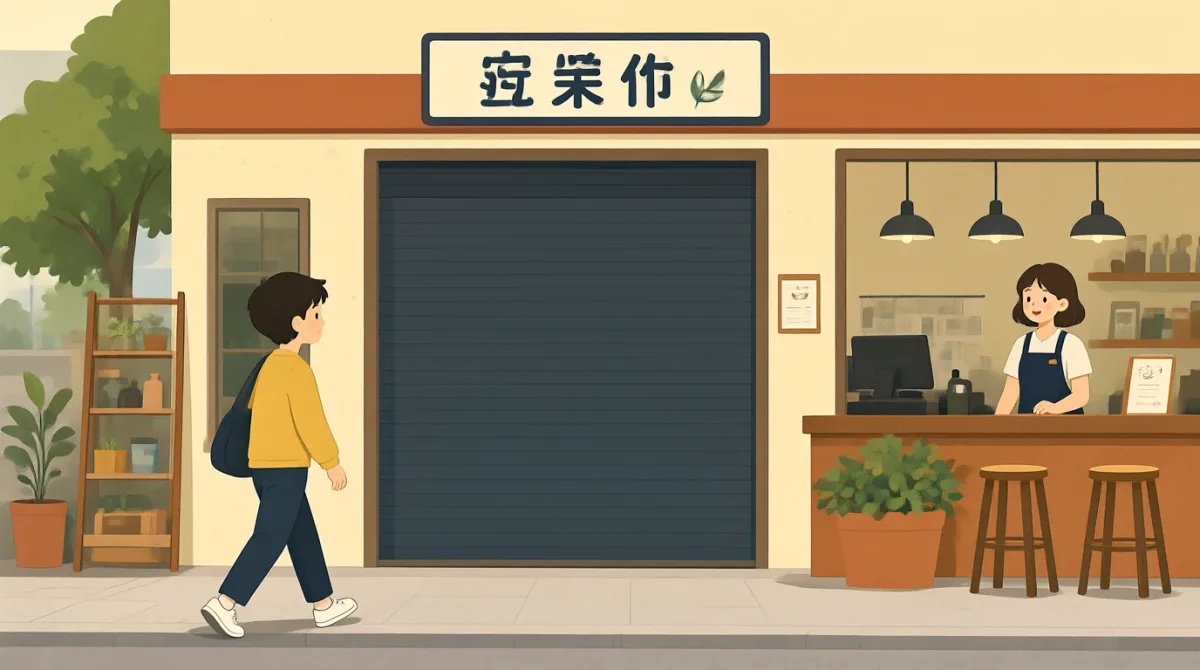

Excuse me, is this place open?
ขอโทษนะครับ ร้านเปิดหรือยังครับ

Not yet. We open in about five minutes.
ยังครับ อีกประมาณห้านาทีร้านถึงจะเปิดค่ะ
Oh, okay. It looked a bit dark inside. What time do you usually close?
อ๋อ เข้าใจแล้วครับ ข้างในดูมืดไปหน่อย ปกติปิดกี่โมงครับ
We close at 8 PM tonight.
คืนนี้เราปิดสองทุ่มค่ะ
Got it. Thanks!
เข้าใจแล้วครับ ขอบคุณครับ
No problem! You're welcome to come in soon.
ไม่เป็นไรค่ะ อีกสักครู่ก็เข้ามาได้เลยนะคะ
คำศัพท์7
- excuse meขอโทษนะครับ/คะ
A polite way to get someone's attention before asking a question, like '不好意思' in Chinese. Use it when interrupting someone.
คำสุภาพที่ใช้เรียกความสนใจของใครสักคนก่อนถามคำถาม ใช้เมื่อต้องการขัดจังหวะใครสักคนอย่างสุภาพ
- openเปิด
For a store or business, it means ready for customers to enter and shop. Opposite of 'closed'. Example: 'Is the store open?'
เมื่อพูดถึงร้านค้าหรือธุรกิจ หมายถึงพร้อมให้ลูกค้าเข้ามาใช้บริการหรือซื้อของ ตรงข้ามกับ 'closed' ตัวอย่าง: 'Is the store open?' (ร้านเปิดอยู่ไหม)
- not yetยัง
Means something hasn't happened but will soon. It's a common response to 'Is it open?' like '还没呢' in Chinese.
หมายถึงสิ่งนั้นยังไม่เกิดขึ้น แต่จะเกิดขึ้นในไม่ช้า มักใช้ตอบคำถามอย่าง 'Is it open?' (เปิดหรือยัง) ได้ เช่น 'ยังเลย'
- closeปิด
When a store stops business for the day. Use as a verb: 'We close at 8 PM.' Opposite of 'open'.
เมื่อร้านหยุดให้บริการในวันนั้น ใช้เป็นคำกริยา เช่น 'We close at 8 PM.' (เราปิดตอนสองทุ่ม) ตรงข้ามกับ 'open'
- usuallyโดยปกติ
Means most of the time or normally. Helps describe regular habits, like store hours: 'We usually close at 6 PM.'
หมายถึงส่วนใหญ่หรือเป็นประจำ ใช้พูดถึงกิจวัตรหรือเวลาเปิดปิดตามปกติของร้าน เช่น 'We usually close at 6 PM.' (ปกติเราปิดตอนหกโมงเย็น)
- got itเข้าใจแล้ว
Informal way to say 'I understand' or 'Okay, I see.' Useful in casual conversations to show you've received information.
วิธีพูดแบบไม่เป็นทางการเพื่อบอกว่า 'ฉันเข้าใจแล้ว' หรือ 'อ๋อ เข้าใจแล้ว' ใช้ในการสนทนาทั่วไปเพื่อแสดงว่าได้รับทราบข้อมูลแล้ว
- no problemไม่เป็นไร
A friendly response to 'thank you,' meaning 'it's okay' or 'you're welcome.' Common in service situations.
คำตอบที่เป็นมิตรเมื่อมีคนกล่าวขอบคุณ หมายถึง 'ไม่เป็นไร' หรือ 'ด้วยความยินดี' มักใช้ในสถานการณ์ให้บริการ
ประโยคสำคัญ7
- 1
Excuse me, is this place open?
ขอโทษนะครับ ร้านเปิดหรือยังครับ
This is a polite way to ask if a store is currently open for business. 'This place' is casual for 'this store.' Use it when approaching a business that looks closed. Grammar: Question form with 'is' for present state.
ประโยคสุภาพสำหรับถามว่าร้านเปิดให้บริการอยู่หรือยัง 'this place' เป็นคำเรียก 'ร้านนี้' แบบไม่เป็นทางการ ใช้เมื่อเดินเข้าไปถามที่ร้านซึ่งดูเหมือนปิด โครงสร้างเป็นคำถามที่ใช้ 'is' เพื่อถามสถานะในปัจจุบัน
- 2
Not yet. We open in about five minutes.
ยังครับ อีกประมาณห้านาทีร้านถึงจะเปิด
Responds to a question about opening time. 'Not yet' means it hasn't happened. 'In about five minutes' gives a short future time. Useful for customer service; 'about' makes it approximate and natural.
ใช้ตอบคำถามเกี่ยวกับเวลาเปิดร้าน 'Not yet' หมายถึงยังไม่เกิดขึ้น ส่วน 'in about five minutes' บอกช่วงเวลาในอนาคตอันใกล้ เหมาะกับการพูดคุยกับลูกค้า โดย 'about' ทำให้เวลาที่บอกเป็นการประมาณและฟังเป็นธรรมชาติ
- 3
Oh, okay. It looked a bit dark inside.
อ๋อ เข้าใจแล้วครับ ข้างในดูมืดไปหน่อย
Shows understanding and explains observation. 'Oh, okay' is a filler for transition. 'Looked' is past tense for recent observation. 'A bit' softens 'dark.' Practical for commenting on why something seems closed.
ใช้แสดงว่าเข้าใจแล้วและอธิบายสิ่งที่สังเกตเห็น 'Oh, okay' เป็นคำพูดเชื่อมบทสนทนา 'looked' ใช้รูปอดีตเพื่อพูดถึงสิ่งที่เพิ่งสังเกตเห็น ส่วน 'a bit' ช่วยลดความหนักของคำว่า 'dark' ใช้พูดอธิบายได้ว่าทำไมถึงคิดว่าร้านปิด
- 4
What time do you usually close?
ปกติปิดกี่โมงครับ
Asks for normal closing hours. 'What time' is for specific times. 'Usually' indicates regular schedule. Useful question for planning visits; 'do you' is present simple for habits.
ใช้ถามเวลาปิดตามปกติ 'What time' ใช้ถามเวลาที่เจาะจง และ 'usually' บอกว่าถามถึงตารางเวลาประจำ เป็นคำถามที่มีประโยชน์สำหรับวางแผนไปที่ร้าน ส่วน 'do you' ใช้กับ Present Simple เพื่อถามเกี่ยวกับสิ่งที่ทำเป็นประจำ
- 5
We close at 8 PM tonight.
คืนนี้เราปิดสองทุ่มค่ะ
Gives specific closing time. 'Tonight' specifies the day. Present simple 'close' for scheduled events. Helpful response in stores; teaches time-telling in context.
ใช้บอกเวลาปิดร้านที่แน่นอน 'tonight' ระบุว่าเป็นคืนนี้ ส่วน 'close' ใช้ Present Simple เมื่อพูดถึงตารางเวลาที่กำหนดไว้ เหมาะกับการตอบลูกค้าและช่วยให้เรียนรู้การบอกเวลาในบริบทจริง
- 6
Got it. Thanks!
เข้าใจแล้วครับ ขอบคุณครับ
Casual way to acknowledge info and show gratitude. 'Got it' means understood. Short and polite ending to conversation. Use in everyday interactions to wrap up politely.
วิธีพูดแบบไม่เป็นทางการเพื่อรับทราบข้อมูลและกล่าวขอบคุณ 'Got it' หมายถึงเข้าใจแล้ว เป็นคำตอบสั้น ๆ และสุภาพที่ช่วยปิดบทสนทนา ใช้ได้ในการพูดคุยทั่วไปเมื่อต้องการจบบทสนทนาอย่างสุภาพ
- 7
No problem! You're welcome to come in soon.
ไม่เป็นไรค่ะ อีกสักครู่ก็เข้ามาได้เลยนะคะ
Friendly reply to thanks, inviting future action. 'No problem' equals 'you're welcome.' 'You're welcome to' means permission given. Useful for positive customer service; builds rapport.
คำตอบเป็นมิตรเมื่อมีคนกล่าวขอบคุณ พร้อมเชื้อเชิญให้เข้ามาในภายหลัง 'No problem' มีความหมายว่า 'ไม่เป็นไร' หรือ 'ด้วยความยินดี' ส่วน 'You're welcome to' ใช้บอกว่าอีกฝ่ายได้รับอนุญาตให้ทำสิ่งนั้น เหมาะกับการบริการลูกค้าและช่วยสร้างความรู้สึกที่ดี