Offering to Let Someone Go First
เสนอให้คนอื่นไปก่อน
You are next in line, but you notice someone else seems to be in a greater hurry (e.g., heavily panting after a run) or has a child. You offer for them to go ahead of you.
คุณกำลังจะถึงคิว แต่สังเกตว่ามีคนอื่นดูรีบกว่ามาก (เช่น หอบหนักหลังวิ่งมา) หรือมีเด็กมาด้วย คุณจึงเสนอให้เขาไปก่อน
บทสนทนา7
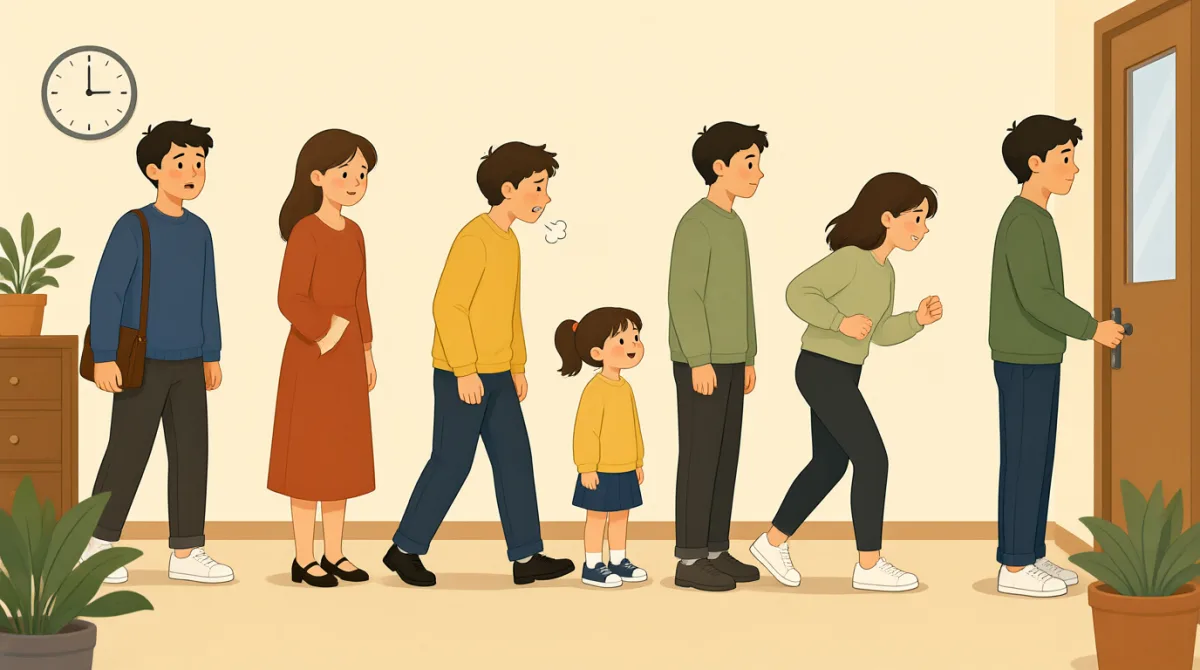

Excuse me, looks like you're really out of breath. Do you want to go ahead?
ขอโทษนะครับ ดูเหมือนคุณจะหอบมาก ให้คุณไปก่อนดีไหมครับ

Oh, that's very kind of you! I just finished a run.
โอ้ ใจดีจังเลยค่ะ! ฉันเพิ่งวิ่งเสร็จค่ะ
No problem at all. Go for it.
ไม่เป็นไรเลยครับ เชิญเลยครับ
Thanks so much! I really appreciate it.
ขอบคุณมากนะคะ ฉันซาบซึ้งจริง ๆ ค่ะ
You're welcome. Take your time.
ยินดีครับ ค่อย ๆ ทำได้เลยครับ
Just a second. All yours!
รอสักครู่นะคะ เชิญใช้ต่อได้เลยค่ะ
Thanks!
ขอบคุณครับ
คำศัพท์7
- out of breathหอบ
This phrase means someone is breathing heavily and quickly because they are tired or have been exercising. Use it to show empathy, like 'You look out of breath after running.'
วลีนี้หมายถึงหายใจแรงและเร็วเพราะเหนื่อยหรือเพิ่งออกกำลังกาย ใช้แสดงความเห็นอกเห็นใจได้ เช่น 'You look out of breath after running.' (คุณดูหอบหลังจากวิ่งมานะ)
- go aheadเชิญก่อน
This is a polite way to invite someone to do something before you, like letting them use something first. It's common in lines or queues to show courtesy.
วลีนี้เป็นวิธีสุภาพในการเชิญให้ใครทำบางอย่างก่อนเรา เช่น ให้เขาใช้สิ่งของก่อน มักใช้เวลาต่อแถวเพื่อแสดงความมีน้ำใจ
- kindใจดี
Kind means being nice and helpful to others. Use it to thank someone, as in 'That's very kind of you,' to express gratitude for their politeness.
Kind หมายถึงการมีน้ำใจและช่วยเหลือผู้อื่น ใช้ขอบคุณใครสักคนได้ เช่น 'That's very kind of you,' เพื่อแสดงความซาบซึ้งในความสุภาพของเขา
- appreciateซาบซึ้ง
To appreciate means to feel thankful for something. It's used in responses like 'I appreciate it' to show you value someone's help.
Appreciate หมายถึงรู้สึกขอบคุณในสิ่งที่ได้รับ มักใช้ในประโยคตอบกลับอย่าง 'I appreciate it' เพื่อแสดงว่าคุณเห็นคุณค่าความช่วยเหลือของอีกฝ่าย
- go for itเชิญเลย
This is an encouraging phrase meaning 'do it' or 'start now.' Use it casually to urge someone to proceed, like in offering something.
วลีนี้เป็นคำพูดให้กำลังใจ หมายถึง 'ทำเลย' หรือ 'เริ่มได้เลย' ใช้แบบกันเองเพื่อบอกให้อีกฝ่ายลงมือหรือทำต่อ เช่น ตอนเสนออะไรให้ใคร
- take your timeค่อย ๆ ทำ ไม่ต้องรีบ
This means 'don't hurry' or 'do it at your own pace.' It's polite to say when letting someone use something without pressure.
หมายถึง 'ไม่ต้องรีบ' หรือ 'ทำตามจังหวะของตัวเองได้เลย' เป็นคำพูดสุภาพที่ใช้เมื่อให้อีกฝ่ายใช้สิ่งของโดยไม่ต้องกดดัน
- all yoursเชิญใช้ต่อได้เลย
This phrase means 'it's your turn now' or 'you can have it all.' Use it after finishing with something to pass it to the next person.
วลีนี้หมายถึง 'ถึงตาคุณแล้ว' หรือ 'คุณใช้ได้เลย' ใช้หลังจากเราใช้สิ่งของเสร็จเพื่อส่งต่อให้อีกคน
ประโยคสำคัญ7
- 1
Excuse me, looks like you're really out of breath. Do you want to go ahead?
ขอโทษนะครับ ดูเหมือนคุณจะหอบมาก ให้คุณไปก่อนดีไหมครับ
This sentence is a polite way to start a conversation and offer help. 'Excuse me' gets attention, and the question uses 'go ahead' to let someone go first. Useful in public places to show kindness; note the casual observation before the offer.
ประโยคนี้เป็นวิธีสุภาพในการเริ่มคุยและเสนอความช่วยเหลือ 'Excuse me' ใช้เรียกความสนใจ ส่วนคำถามใช้ 'go ahead' เพื่อให้อีกฝ่ายไปก่อน เหมาะกับการแสดงน้ำใจในที่สาธารณะ และสังเกตว่ามีการพูดถึงอาการของอีกฝ่ายก่อนเสนอให้ไปก่อน
- 2
Oh, that's very kind of you! I just finished a run.
โอ้ ใจดีจังเลยค่ะ! ฉันเพิ่งวิ่งเสร็จค่ะ
Here, 'that's very kind of you' expresses thanks for politeness. 'I just finished a run' explains the situation simply. Use this to respond gratefully and share a bit about why you need help; 'just' emphasizes recent action.
'that's very kind of you' ใช้แสดงความขอบคุณที่อีกฝ่ายมีน้ำใจ ส่วน 'I just finished a run' อธิบายสถานการณ์อย่างง่าย ๆ ใช้ตอบรับด้วยความขอบคุณและบอกสั้น ๆ ว่าทำไมถึงต้องการความช่วยเหลือ โดย 'just' เน้นว่าเพิ่งทำสิ่งนั้นเสร็จ
- 3
No problem at all. Go for it.
ไม่เป็นไรเลยครับ เชิญเลยครับ
'No problem at all' means it's easy to help, downplaying the favor. 'Go for it' encourages action. This is a casual, friendly response when offering something; useful for everyday interactions to sound relaxed.
'No problem at all' หมายถึงการช่วยเหลือเป็นเรื่องง่าย ไม่ได้ลำบากอะไร ส่วน 'Go for it' เป็นการสนับสนุนให้อีกฝ่ายทำต่อ เป็นคำตอบที่เป็นกันเองและผ่อนคลายเมื่อเสนอความช่วยเหลือ เหมาะกับการใช้ในชีวิตประจำวัน
- 4
Thanks so much! I really appreciate it.
ขอบคุณมากนะคะ ฉันซาบซึ้งจริง ๆ ค่ะ
This shows strong gratitude. 'Thanks so much' is emphatic thanks, and 'I really appreciate it' adds sincerity. Use after receiving help; 'really' intensifies the feeling, common in polite English.
ประโยคนี้แสดงความขอบคุณอย่างมาก 'Thanks so much' เป็นการขอบคุณอย่างจริงใจและหนักแน่น ส่วน 'I really appreciate it' ช่วยเน้นความซาบซึ้ง ใช้เมื่อได้รับความช่วยเหลือ โดย 'really' เพิ่มน้ำหนักให้ความรู้สึก ซึ่งพบได้บ่อยในภาษาอังกฤษที่สุภาพ
- 5
You're welcome. Take your time.
ยินดีครับ ค่อย ๆ ทำได้เลยครับ
'You're welcome' is the standard reply to 'thank you.' 'Take your time' reassures no rush. Useful in service situations; it makes the interaction smooth and considerate.
'You're welcome' เป็นคำตอบมาตรฐานเมื่อมีคนพูดว่า 'thank you' ส่วน 'Take your time' ช่วยให้มั่นใจว่าไม่ต้องรีบ เหมาะกับสถานการณ์ที่ให้บริการ เพราะช่วยให้การพูดคุยราบรื่นและแสดงความใส่ใจ
- 6
Just a second. All yours!
รอสักครู่นะคะ เชิญใช้ต่อได้เลยค่ะ
'Just a second' means 'wait one moment.' 'All yours' signals it's the other person's turn. This is quick and practical for short interactions; shows efficiency after using something briefly.
'Just a second' หมายถึง 'รอสักครู่' ส่วน 'All yours' บอกว่าถึงตาของอีกฝ่ายแล้ว เป็นประโยคสั้น ๆ ที่ใช้ได้สะดวกในการพูดคุยสั้น ๆ และช่วยส่งต่อหลังจากใช้สิ่งของแป๊บเดียว
- 7
Thanks!
ขอบคุณครับ
A simple, universal expression of thanks. Use it at the end of short positive exchanges; it's versatile and always polite in casual settings like public places.
เป็นคำขอบคุณสั้น ๆ ที่ใช้ได้ทั่วไป เหมาะสำหรับปิดท้ายการแลกเปลี่ยนที่ดีในช่วงสั้น ๆ ใช้ได้หลากหลายและสุภาพเสมอในสถานการณ์สบาย ๆ เช่น ในที่สาธารณะ