Being Offered to Go First
เชิญให้ไปก่อน
You are waiting, and the person in front of you (or someone else) politely gestures for you to go ahead, perhaps because you only need a quick sip.
คุณกำลังรออยู่ แล้วคนที่อยู่ข้างหน้าหรือคนอื่นก็ผายมือเชิญให้คุณไปก่อนอย่างสุภาพ อาจเพราะคุณแค่ต้องการดื่มน้ำอึกเดียว
บทสนทนา6
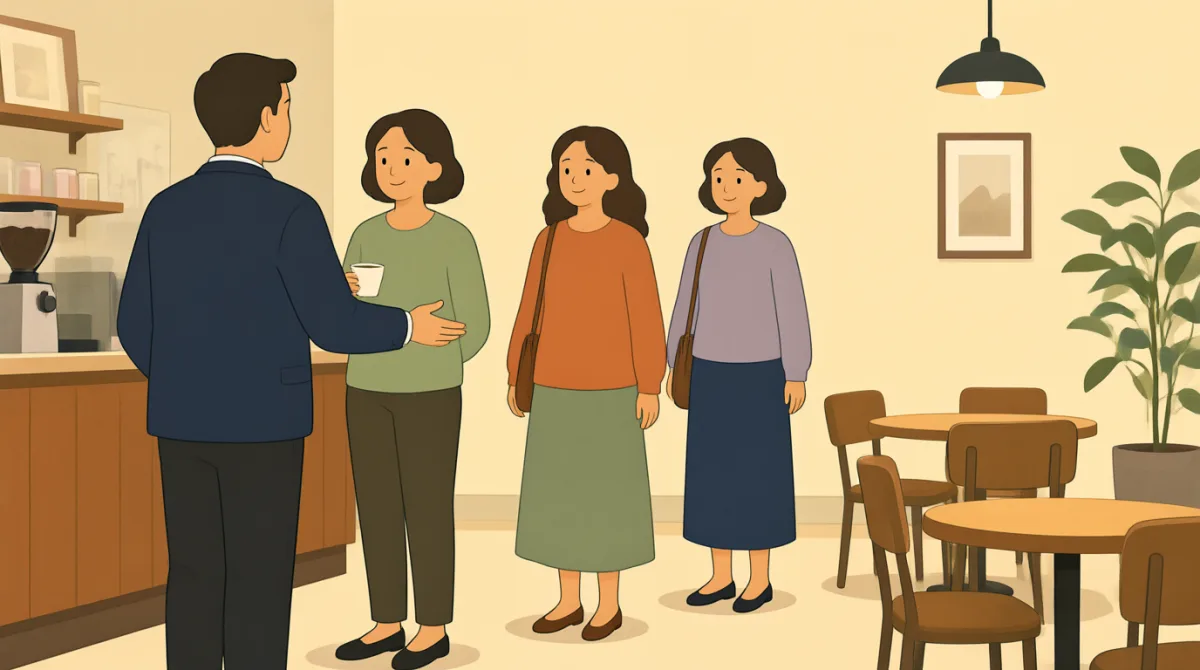

Oh, sorry. You can go ahead. I'm just filling my bottle.
อ๋อ ขอโทษนะ เชิญคุณก่อนเลย ฉันแค่กำลังเติมน้ำใส่ขวด

Oh, really? Thanks! I just need a quick sip.
อ๋อ จริงเหรอ ขอบคุณนะ! ฉันแค่ขอดื่มน้ำอึกเดียว
No problem at all. Go for it.
ไม่เป็นไรเลย เชิญเลย
(After taking a quick drink) Thanks again, I appreciate it.
(หลังจากดื่มน้ำเร็ว ๆ) ขอบคุณอีกครั้งนะ ฉันซาบซึ้งมาก
You're welcome! Have a good one.
ยินดีเลย! ขอให้วันนี้เป็นวันที่ดีนะ
You too!
เช่นกันนะ!
คำศัพท์7
- go aheadเชิญก่อน
This phrase means to proceed or take your turn first. It's polite to use when offering someone to do something before you, like in a line.
วลี “go ahead” หมายถึงทำต่อหรือไปก่อนถึงตาของตัวเอง ใช้อย่างสุภาพเวลาบอกให้ใครทำบางอย่างก่อนเรา เช่น ตอนต่อแถว
- fillingกำลังเติม
As a verb here, it means putting liquid into a container, like water into a bottle. Use it when describing refilling something.
ในที่นี้ “filling” เป็นคำกริยา หมายถึงการใส่ของเหลวลงในภาชนะ เช่น เติมน้ำใส่ขวด ใช้พูดถึงการเติมของที่พร่องให้เต็มอีกครั้ง
- sipน้ำอึกหนึ่ง
A small amount of liquid you drink quickly. It's useful for situations where you only need a little drink, not a full one.
“sip” หมายถึงของเหลวปริมาณเล็กน้อยที่ดื่มอย่างรวดเร็ว เหมาะใช้ในสถานการณ์ที่ต้องการดื่มนิดเดียว ไม่ได้ดื่มเต็มที่
- no problemไม่เป็นไร
A casual way to say it's okay or not a big deal, often in response to thanks. It's very common in everyday English.
“no problem” เป็นคำพูดสบาย ๆ ที่หมายถึงไม่เป็นไรหรือไม่ใช่เรื่องใหญ่ มักใช้ตอบรับคำขอบคุณ และเป็นวลีที่ใช้กันบ่อยในชีวิตประจำวัน
- go for itเชิญเลย
An encouraging phrase meaning to go ahead and do it. Use it to motivate someone to take an action, like using the water fountain.
“go for it” เป็นวลีให้กำลังใจที่หมายถึงลงมือทำหรือทำได้เลย ใช้กระตุ้นให้ใครทำบางอย่าง เช่น ใช้ที่กดน้ำได้เลย
- appreciateซาบซึ้ง
To feel grateful for something. Say it to show thanks in a more formal or sincere way than just 'thanks'.
“appreciate” หมายถึงรู้สึกขอบคุณในสิ่งที่ได้รับ ใช้แสดงความขอบคุณอย่างจริงใจหรือเป็นทางการกว่าการพูดแค่ “thanks”
- have a good oneขอให้วันนี้เป็นวันที่ดีนะ
A friendly, informal goodbye meaning 'have a good day' or 'enjoy yourself'. Common in casual American English interactions.
“have a good one” เป็นคำอำลาแบบเป็นกันเอง หมายถึงขอให้มีวันที่ดีหรือขอให้สนุก เป็นสำนวนที่ใช้กันทั่วไปในการพูดคุยสบาย ๆ ในภาษาอังกฤษแบบอเมริกัน
ประโยคสำคัญ6
- 1
Oh, sorry. You can go ahead. I'm just filling my bottle.
อ๋อ ขอโทษนะ เชิญคุณก่อนเลย ฉันแค่กำลังเติมน้ำใส่ขวด
This is a polite way to let someone go first in line. 'Go ahead' is key for offering turns. Use it in public places like a gym when you're taking longer. The structure shows apology + offer + reason.
ประโยคนี้ใช้บอกอย่างสุภาพให้ใครไปก่อนในแถว “Go ahead” เป็นวลีสำคัญสำหรับการเชิญให้อีกฝ่ายถึงตาก่อน ใช้ได้ในที่สาธารณะ เช่น ที่ยิม เมื่อคุณต้องใช้เวลานานกว่า โครงสร้างคือ ขอโทษ + เชิญให้ไปก่อน + บอกเหตุผล
- 2
Oh, really? Thanks! I just need a quick sip.
อ๋อ จริงเหรอ ขอบคุณนะ! ฉันแค่ขอดื่มน้ำอึกเดียว
Expresses surprise and gratitude. 'Really?' shows confirmation, and 'quick sip' explains why it's fast. Useful for accepting help politely in short interactions; practice the exclamation for natural tone.
ประโยคนี้แสดงความแปลกใจและความขอบคุณ “Really?” ใช้ถามยืนยัน ส่วน “quick sip” อธิบายว่าทำไมถึงใช้เวลาไม่นาน เหมาะสำหรับตอบรับความช่วยเหลืออย่างสุภาพในการพูดคุยสั้น ๆ ลองฝึกออกเสียงอุทานให้ฟังเป็นธรรมชาติ
- 3
No problem at all. Go for it.
ไม่เป็นไรเลย เชิญเลย
A reassuring response to thanks, meaning it's easy. 'Go for it' encourages action. This pattern is great for casual politeness; 'at all' adds emphasis to show it's no trouble.
เป็นคำตอบเพื่อให้อีกฝ่ายสบายใจเมื่อเขาขอบคุณ หมายถึงไม่ลำบากเลย “Go for it” เป็นการสนับสนุนให้อีกฝ่ายลงมือทำ รูปแบบนี้เหมาะกับการแสดงความสุภาพแบบเป็นกันเอง ส่วน “at all” ช่วยเน้นว่าไม่เป็นปัญหาเลย
- 4
Thanks again, I appreciate it.
ขอบคุณอีกครั้งนะ ฉันซาบซึ้งมาก
Repeats thanks sincerely after an action. 'Appreciate it' is a common idiom for gratitude. Use after receiving help to sound appreciative; note the comma for natural pause.
ประโยคนี้ใช้ย้ำคำขอบคุณอย่างจริงใจหลังจากอีกฝ่ายช่วยเหลือ “Appreciate it” เป็นสำนวนที่ใช้แสดงความขอบคุณบ่อย ๆ ใช้หลังได้รับความช่วยเหลือเพื่อให้ฟังดูซาบซึ้งใจ สังเกตการเว้นจังหวะเล็กน้อยตรงเครื่องหมายจุลภาค
- 5
You're welcome! Have a good one.
ยินดีเลย! ขอให้วันนี้เป็นวันที่ดีนะ
Standard reply to thanks, followed by a casual farewell. 'You're welcome' is essential politeness. This full sentence ends conversations nicely in quick public encounters.
เป็นคำตอบมาตรฐานเมื่อมีคนกล่าวขอบคุณ ตามด้วยคำอำลาแบบเป็นกันเอง “You're welcome” เป็นมารยาทสำคัญ ประโยคเต็มนี้ช่วยจบการสนทนาสั้น ๆ ในสถานที่สาธารณะได้อย่างสุภาพ
- 6
You too!
เช่นกันนะ!
A simple way to return a wish, like 'have a good one'. It's reciprocal and very common. Use it to mirror the other person's goodbye for friendly balance; short and easy to remember.
เป็นวิธีสั้น ๆ ในการตอบกลับคำอวยพร เช่น “have a good one” ใช้ส่งความปรารถนาดีกลับไป และเป็นสำนวนที่พบได้บ่อย ใช้พูดตามคำอำลาของอีกฝ่ายเพื่อให้การสนทนาเป็นมิตร จำง่ายและสั้นกระชับ