Acknowledging & Entering
ขอบคุณและก้าวเข้าไป
You are the person being waited for. After someone holds the door, you quickly step in, offering a more immediate or slightly more elaborate 'thank you' upon entering.
คุณคือคนที่อีกฝ่ายกำลังรออยู่ หลังจากมีคนช่วยเปิดประตูลิฟต์ให้ คุณรีบก้าวเข้าไปพร้อมกล่าวขอบคุณทันที หรือขอบคุณอย่างละเอียดขึ้นเล็กน้อย
บทสนทนา6
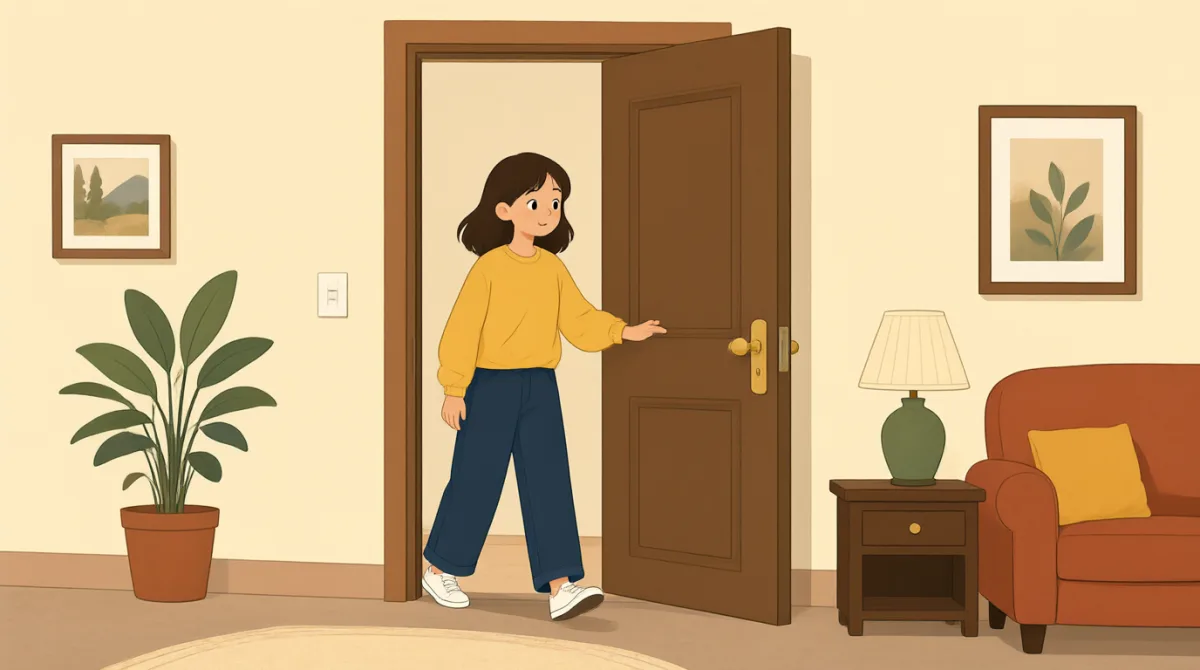

Hold on! It's closing.
เดี๋ยวก่อน! ประตูกำลังจะปิดแล้ว

Oh, thank you so much! I really appreciate that.
อุ๊ย ขอบคุณมากเลยค่ะ! ซึ้งใจจริง ๆ ค่ะ
No problem at all. Just made it!
ไม่เป็นไรเลยครับ เข้ามาทันพอดี!
You're a lifesaver. I thought I was going to miss it.
คุณช่วยชีวิตฉันไว้เลยค่ะ นึกว่าจะขึ้นไม่ทันแล้ว
Glad I could help. Which floor are you heading to?
ดีใจที่ช่วยได้นะครับ จะไปชั้นไหนครับ
The third, please. Thanks again!
ชั้นสามค่ะ ขอบคุณอีกครั้งนะคะ!
คำศัพท์6
- hold onรอก่อน
A polite way to say 'wait a moment' or 'don't close yet', often used when you need someone to pause an action like closing an elevator door.
คำพูดสุภาพที่ใช้บอกให้รอสักครู่หรืออย่าเพิ่งปิด มักใช้เมื่อต้องการให้ใครหยุดการกระทำชั่วคราว เช่น ปิดประตูลิฟต์
- appreciateซาบซึ้ง
To feel grateful for someone's help or kindness; it's a more formal way to express thanks than just 'thank you'.
รู้สึกขอบคุณต่อความช่วยเหลือหรือน้ำใจของใครสักคน เป็นคำที่ฟังดูเป็นทางการกว่าการพูดแค่ 'thank you'
- no problemไม่เป็นไร
A casual response to 'thank you', meaning it's not a big deal or you're welcome; very common in everyday conversations.
คำตอบสบาย ๆ เมื่อมีคนพูด 'thank you' หมายถึงไม่ใช่เรื่องใหญ่หรือยินดีช่วย เป็นคำที่ใช้กันทั่วไปในบทสนทนาประจำวัน
- lifesaverผู้ช่วยชีวิต
An informal expression for someone who helps you out of a difficult situation, like saving time by holding a door; used to show strong gratitude.
สำนวนไม่เป็นทางการที่ใช้เรียกคนที่ช่วยให้พ้นจากสถานการณ์ลำบาก เช่น ช่วยประหยัดเวลาด้วยการเปิดประตูให้ ใช้เพื่อแสดงความขอบคุณอย่างมาก
- heading toกำลังมุ่งหน้าไป
Means 'going to' or 'on the way to' a place; useful for asking about someone's destination in polite small talk.
หมายถึงกำลังไปยังสถานที่แห่งหนึ่งหรืออยู่ระหว่างทางไป ใช้ถามจุดหมายของอีกฝ่ายในการพูดคุยสุภาพสั้น ๆ ได้
- floorชั้น
A level or story in a building, like the ground floor or third floor; essential for directions in elevators or buildings.
ระดับหรือชั้นของอาคาร เช่น ชั้นล่างหรือชั้นสาม เป็นคำสำคัญสำหรับบอกทางในลิฟต์หรืออาคาร
ประโยคสำคัญ6
- 1
Hold on! It's closing.
เดี๋ยวก่อน! ประตูกำลังจะปิดแล้ว
This is a quick, urgent request to stop something from happening, like a door closing. 'Hold on' is an imperative for 'wait', and 'it's closing' describes the present continuous action. Use it in situations where you need immediate help to catch something.
ประโยคนี้เป็นคำขอเร่งด่วนสั้น ๆ ให้หยุดบางอย่างไว้ก่อน เช่น การปิดประตู 'Hold on' เป็นคำสั่งให้รอ ส่วน 'it's closing' บอกว่าการปิดกำลังเกิดขึ้น ใช้เมื่อต้องการความช่วยเหลือทันทีเพื่อให้ขึ้นลิฟต์หรือคว้าสิ่งของได้ทัน
- 2
Oh, thank you so much! I really appreciate that.
อุ๊ย ขอบคุณมากเลยค่ะ! ซึ้งใจจริง ๆ ค่ะ
A polite and enthusiastic way to express gratitude. 'Thank you so much' intensifies thanks, and 'I really appreciate that' adds sincerity using the verb 'appreciate' in simple present. Useful after someone does a small favor to make the interaction warmer.
เป็นวิธีแสดงความขอบคุณอย่างสุภาพและกระตือรือร้น 'Thank you so much' ช่วยเน้นความขอบคุณ ส่วน 'I really appreciate that' เพิ่มความจริงใจด้วยคำกริยา 'appreciate' ในรูปปัจจุบันกาล ใช้หลังจากมีคนช่วยเหลือเล็ก ๆ น้อย ๆ เพื่อให้บทสนทนาอบอุ่นขึ้น
- 3
No problem at all. Just made it!
ไม่เป็นไรเลยครับ เข้ามาทันพอดี!
A friendly response to thanks, meaning it's easy and no trouble. 'No problem at all' is idiomatic for 'you're welcome', and 'just made it' uses past tense to describe narrowly succeeding. Great for casual, reassuring replies in daily encounters.
เป็นคำตอบเป็นมิตรเมื่อมีคนขอบคุณ หมายความว่าไม่ลำบากหรือยินดีช่วย 'No problem at all' เป็นสำนวนที่ใช้แทน 'you're welcome' ส่วน 'just made it' ใช้รูปอดีตกาลบอกว่าทำทันอย่างเฉียดฉิว เหมาะกับการตอบอย่างเป็นกันเองและช่วยให้อีกฝ่ายสบายใจในชีวิตประจำวัน
- 4
You're a lifesaver. I thought I was going to miss it.
คุณช่วยชีวิตฉันไว้เลยค่ะ นึกว่าจะขึ้นไม่ทันแล้ว
An exaggerated compliment for help that avoids inconvenience. 'You're a lifesaver' is a fixed expression, and 'I thought I was going to miss it' uses past continuous for unrealized expectation with 'going to' for future in the past. Use it to show relief and build rapport.
เป็นคำชมเกินจริงเพื่อขอบคุณสำหรับความช่วยเหลือที่ช่วยให้ไม่ต้องลำบาก 'You're a lifesaver' เป็นสำนวนตายตัว ส่วน 'I thought I was going to miss it' ใช้รูปอดีตต่อเนื่องเพื่อเล่าถึงสิ่งที่คิดว่าจะเกิดขึ้นแต่ไม่ได้เกิด โดย 'going to' ใช้พูดถึงอนาคตจากมุมมองในอดีต ใช้แสดงความโล่งใจและสร้างความสนิทสนม
- 5
Glad I could help. Which floor are you heading to?
ดีใจที่ช่วยได้นะครับ จะไปชั้นไหนครับ
Shows happiness in assisting and shifts to practical help. 'Glad I could help' uses 'glad' with modal 'could' for ability, and the question uses 'which' for choices and 'heading to' preposition phrase. Ideal for continuing polite conversation in shared spaces like elevators.
ประโยคนี้แสดงความยินดีที่ได้ช่วย และชวนคุยต่อเพื่อให้ความช่วยเหลือในทางปฏิบัติ 'Glad I could help' ใช้ 'glad' ร่วมกับ 'could' เพื่อบอกว่าสามารถช่วยได้ ส่วนคำถามใช้ 'which' เพื่อถามว่าเลือกข้อไหน และใช้วลีบุพบท 'heading to' เหมาะสำหรับพูดคุยสุภาพต่อในพื้นที่ส่วนรวมอย่างลิฟต์
- 6
The third, please. Thanks again!
ชั้นสามค่ะ ขอบคุณอีกครั้งนะคะ!
A direct request for a specific floor with politeness. 'The third' specifies using ordinal number, 'please' softens the request, and 'thanks again' reinforces gratitude. Commonly used when entering elevators to ask for button pressing.
เป็นการขอให้กดชั้นที่ต้องการอย่างตรงไปตรงมาแต่สุภาพ 'The third' ระบุชั้นด้วยเลขลำดับ 'please' ช่วยให้คำขอฟังสุภาพขึ้น และ 'thanks again' ย้ำคำขอบคุณอีกครั้ง มักใช้เมื่อขึ้นลิฟต์เพื่อขอให้อีกฝ่ายกดปุ่มให้