Initial Hold & First Thanks
ช่วยกดค้างไว้ให้ แล้วก็ขอบคุณ
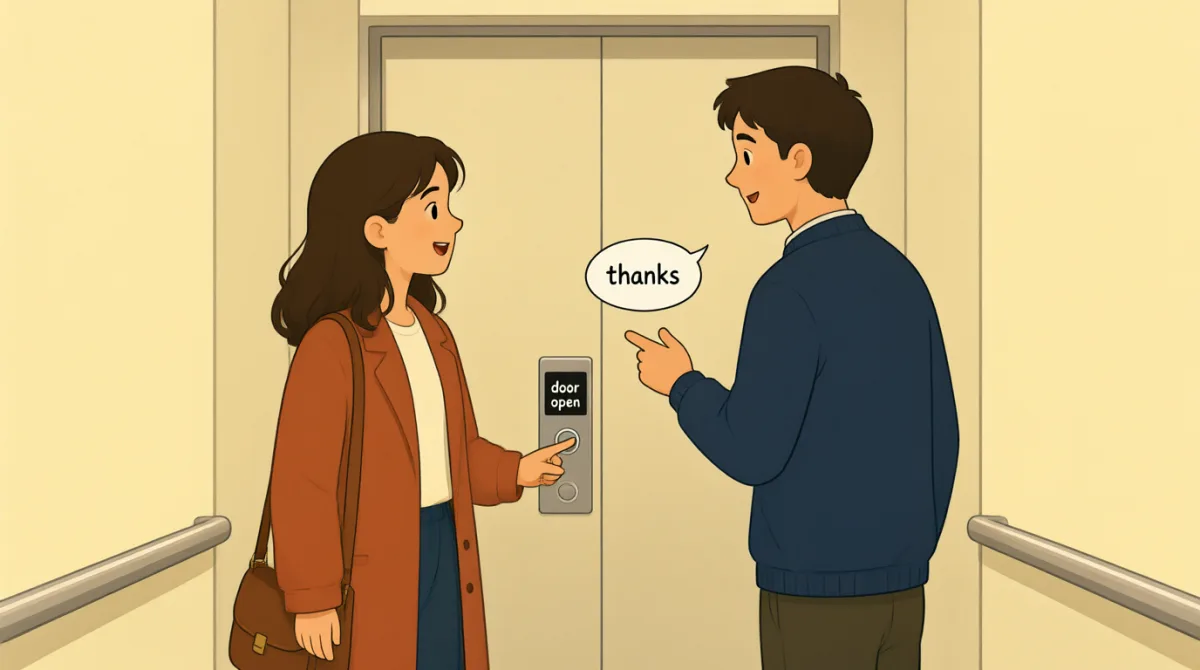
You are inside the elevator, see someone approaching, and press the 'door open' button. The person sees you holding it and offers a quick 'thanks'.
คุณอยู่ในลิฟต์ เห็นคนหนึ่งกำลังเดินมา จึงกดปุ่มเปิดประตูไว้ เขาเห็นว่าคุณช่วยกดค้างไว้ จึงรีบกล่าวขอบคุณ
บทสนทนา4

(From inside the elevator, seeing someone approach) Oh, just a second!
(จากด้านในลิฟต์ เมื่อเห็นคนกำลังเดินมา) โอ้ รอแป๊บนึง!

(Approaching the elevator) Oh, thanks! You didn't have to.
(ขณะเดินมาที่ลิฟต์) โอ้ ขอบคุณนะ! ไม่ต้องลำบากก็ได้
No problem at all! Glad I caught you.
ไม่เป็นไรเลย! ดีจังที่รอทัน
Appreciate it. Just made it.
ขอบคุณนะ มาทันพอดีเลย
คำศัพท์7
- secondวินาที
Here, 'a second' means a very short time, like 'wait a moment'. Use it to politely ask someone to wait briefly, e.g., 'Hold on a second!'
ในที่นี้ “a second” หมายถึงเวลาสั้น ๆ เช่น “รอสักครู่” ใช้ขอให้อีกฝ่ายรอแป๊บหนึ่งอย่างสุภาพ เช่น “Hold on a second!”
- thanksขอบคุณ
A casual way to say 'thank you'. It's very common in quick, everyday situations to show appreciation.
วิธีพูด “ขอบคุณ” แบบสบาย ๆ ใช้กันบ่อยมากในสถานการณ์ทั่วไปที่ต้องการแสดงความซาบซึ้งอย่างรวดเร็ว
- didn't have toไม่จำเป็นต้องทำ
This phrase politely downplays someone's help, meaning 'you weren't obligated to do that'. It's a modest response to thanks, showing humility.
วลีนี้ใช้พูดถ่อมตัวและลดความสำคัญของความช่วยเหลืออย่างสุภาพ หมายถึง “คุณไม่จำเป็นต้องทำแบบนั้นก็ได้” มักใช้ตอบรับคำขอบคุณอย่างนอบน้อม
- no problemไม่เป็นไร
Means 'it's not difficult' or 'happy to help'. Use it to respond to thanks in a friendly, casual way.
หมายถึง “ไม่ลำบากเลย” หรือ “ยินดีช่วย” ใช้ตอบรับคำขอบคุณอย่างเป็นกันเอง
- appreciateซาบซึ้ง / ขอบคุณ
To feel grateful for something. 'Appreciate it' is a common, slightly more formal way to say thanks than 'thanks'.
รู้สึกขอบคุณต่อสิ่งที่ใครบางคนทำให้ “Appreciate it” เป็นวิธีพูดขอบคุณที่ใช้กันบ่อย และฟังดูเป็นทางการกว่า “thanks” เล็กน้อย
- caughtทัน / เห็นทัน
In this context, 'caught you' means 'saw you in time' or 'managed to wait for you'. It's idiomatic for arriving just before something happens, like an elevator closing.
ในบริบทนี้ “caught you” หมายถึง “เห็นคุณทัน” หรือ “รอคุณทัน” เป็นสำนวนที่ใช้เมื่อมาถึงหรือทำอะไรได้ก่อนที่บางอย่างจะเกิดขึ้น เช่น ประตูลิฟต์ปิด
- made itมาทัน
Means 'arrived in time' or 'just succeeded'. Use it when you barely catch something, like a bus or elevator.
หมายถึง “มาถึงทันเวลา” หรือ “ทำสำเร็จแบบเฉียดฉิว” ใช้เมื่อเกือบไม่ทันขึ้นรถเมล์หรือลิฟต์ แต่สุดท้ายก็ทัน
ประโยคสำคัญ5
- 1
Oh, just a second!
โอ้ รอแป๊บนึง!
This is a polite way to ask someone to wait a moment. It's useful for quick interruptions in daily life. The 'Oh' adds a natural, surprised tone; no special grammar, just casual spoken English.
ประโยคนี้ใช้ขอให้อีกฝ่ายรอสักครู่ เหมาะกับการพูดแทรกสั้น ๆ ในชีวิตประจำวัน คำว่า “Oh” ช่วยให้ฟังดูเป็นธรรมชาติและเหมือนเพิ่งนึกขึ้นได้ ไม่มีไวยากรณ์พิเศษ เป็นภาษาอังกฤษพูดแบบสบาย ๆ
- 2
Oh, thanks! You didn't have to.
โอ้ ขอบคุณนะ! ไม่ต้องลำบากก็ได้
A quick thank you followed by a modest comment. Useful when someone helps you unexpectedly. 'Didn't have to' uses past tense to soften the thanks; practice this for polite social interactions.
เป็นการขอบคุณสั้น ๆ ตามด้วยคำพูดถ่อมตัว เหมาะเวลาได้รับความช่วยเหลือโดยไม่คาดคิด “Didn't have to” ใช้รูปอดีตเพื่อทำให้คำขอบคุณฟังดูนุ่มนวลขึ้น ลองฝึกใช้ในบทสนทนาสุภาพในชีวิตประจำวัน
- 3
No problem at all!
ไม่เป็นไรเลย!
Responds to thanks by saying it's easy to help. Very common in American English for casual courtesy. 'At all' emphasizes it's no trouble; great for building friendly conversations.
ใช้ตอบคำขอบคุณเพื่อบอกว่าการช่วยเหลือไม่ใช่เรื่องลำบาก เป็นสำนวนที่ใช้กันบ่อยมากในภาษาอังกฤษแบบอเมริกันเมื่อต้องการแสดงความมีน้ำใจ “At all” เน้นว่าไม่ลำบากเลย ช่วยให้บทสนทนาดูเป็นมิตร
- 4
Glad I caught you.
ดีจังที่รอทัน
Means happy to have waited in time. Useful after helping someone enter quickly. 'Caught' is an idiom; the sentence uses present perfect 'I caught' for a recent action, showing relief.
หมายถึงดีใจที่รออีกฝ่ายทัน ใช้พูดหลังจากช่วยให้ใครสักคนขึ้นลิฟต์ได้ทัน “Caught” เป็นสำนวน ส่วนประโยคใช้ present perfect “I caught” เพื่อพูดถึงการกระทำที่เพิ่งเกิดขึ้นและสื่อถึงความโล่งใจ
- 5
Appreciate it. Just made it.
ขอบคุณนะ มาทันพอดีเลย
Short thanks plus confirmation of arriving in time. Practical for rushed situations. 'Appreciate it' is informal; 'just made it' uses simple past for a completed action; combine for efficient politeness.
เป็นคำขอบคุณสั้น ๆ พร้อมยืนยันว่ามาทันเวลา ใช้ได้จริงในสถานการณ์เร่งรีบ ‘Appreciate it’ เป็นคำพูดไม่เป็นทางการ ส่วน ‘just made it’ ใช้ past simple เพื่อบอกว่าการกระทำนั้นเสร็จสิ้นแล้ว เมื่อนำมาพูดรวมกันจึงสุภาพกระชับ