Holding for Multiple People
ช่วยเปิดลิฟต์ให้หลายคน
You hold the elevator door for one person, and then realize there are more people behind them also coming. You continue to hold the door, and multiple 'thank yous' might be exchanged.
คุณช่วยเปิดประตูลิฟต์ให้คนหนึ่งคน แล้วก็เห็นว่ายังมีคนอื่นตามมาข้างหลังอีก คุณจึงช่วยเปิดประตูค้างไว้ และอาจมีการกล่าวขอบคุณกันหลายครั้ง
บทสนทนา8
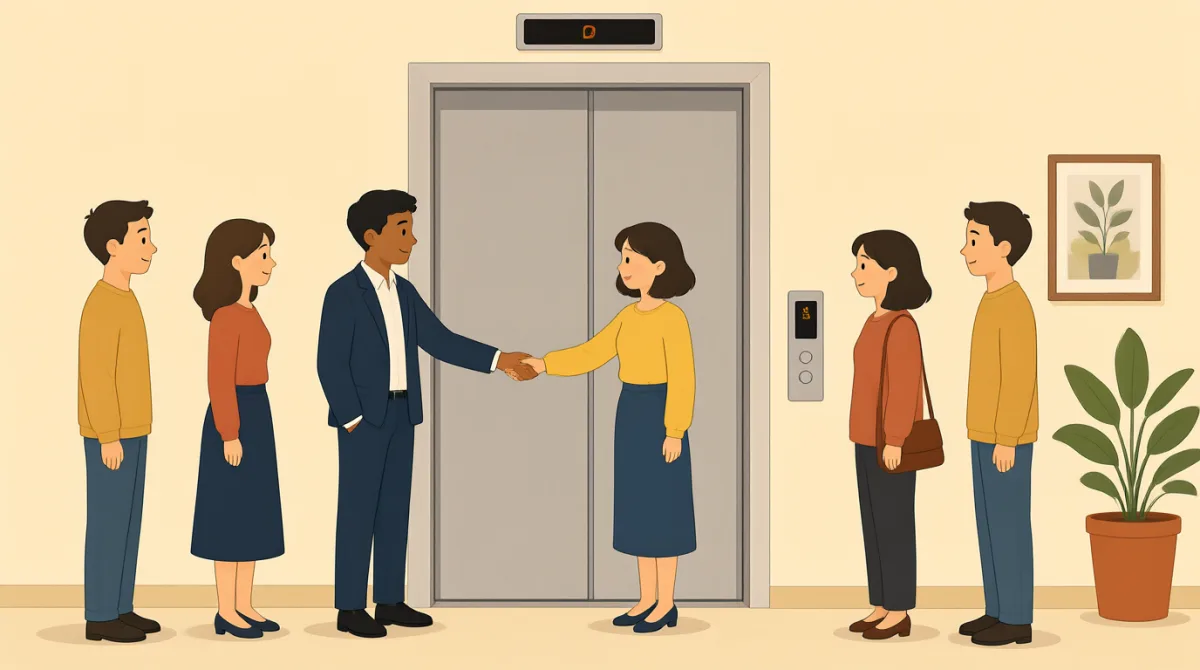

Oh, looks like someone's coming. I'll hold it.
อ๋อ เหมือนมีคนกำลังมานะครับ ผมช่วยเปิดไว้ให้

Thank you so much!
ขอบคุณมากเลยค่ะ!
No problem! Oh, more coming too. I'll just keep it open for a sec.
ไม่เป็นไรครับ อ๋อ ยังมีคนมาอีก เดี๋ยวผมเปิดค้างไว้อีกแป๊บนึงนะครับ

Appreciate it!
ขอบคุณนะครับ!
Yes, really, thank you for waiting.
ใช่ค่ะ ขอบคุณที่รอนะคะ
No worries at all. Everyone make it in?
ไม่เป็นไรเลยครับ ทุกคนเข้ามาครบหรือยังครับ
Yep, we're all good. Which floor are you going to?
ครับ ครบแล้ว คุณจะไปชั้นไหนครับ
Just 5, but I can hit whatever you need.
ผมไปแค่ชั้น 5 ครับ แต่ผมกดชั้นที่พวกคุณจะไปให้ได้นะครับ
คำศัพท์6
- holdค้างไว้
To hold something means to keep it in position, like holding an elevator door open so others can enter. It's a polite action in public spaces.
hold หมายถึงประคองหรือทำให้บางสิ่งอยู่กับที่ เช่น ช่วยเปิดประตูลิฟต์ค้างไว้ให้คนอื่นเข้ามา การทำแบบนี้ถือเป็นมารยาทที่ดีในที่สาธารณะ
- comingกำลังมา
Coming is the present participle of 'come,' used here to mean approaching or arriving soon, like someone walking towards the elevator.
coming เป็นรูป present participle ของ 'come' ในที่นี้หมายถึงกำลังเข้ามาใกล้หรือจะมาถึงในไม่ช้า เช่น มีคนกำลังเดินมาที่ลิฟต์
- No problemไม่เป็นไร
A casual way to say 'you're welcome' or 'it's okay,' showing it's not a bother. Common in friendly, everyday responses.
No problem เป็นคำพูดสบาย ๆ ที่ใช้ตอบรับคำขอบคุณหรือบอกว่าไม่เป็นไร สื่อว่าเราไม่ลำบากใจ เป็นคำตอบที่ใช้กันบ่อยในชีวิตประจำวัน
- appreciateซาบซึ้งในความช่วยเหลือ
To appreciate means to feel grateful for something. 'Appreciate it!' is a quick way to thank someone for their help.
appreciate หมายถึงรู้สึกขอบคุณหรือซาบซึ้งในบางสิ่ง 'Appreciate it!' เป็นวิธีขอบคุณสั้น ๆ สำหรับความช่วยเหลือของใครสักคน
- No worriesไม่ต้องห่วง
An informal expression meaning 'don't worry' or 'it's fine,' often used to reassure someone that everything is okay.
No worries เป็นสำนวนไม่เป็นทางการที่หมายถึง 'ไม่ต้องห่วง' หรือ 'ไม่เป็นไร' มักใช้เพื่อให้อีกฝ่ายสบายใจว่าทุกอย่างเรียบร้อยดี
- hitกด
In this context, 'hit' means to press a button, like hitting the floor button in an elevator. It's slang for activating something quickly.
ในบริบทนี้ 'hit' หมายถึงกดปุ่ม เช่น กดปุ่มชั้นในลิฟต์ เป็นคำไม่เป็นทางการที่ใช้พูดถึงการกดหรือเปิดใช้งานบางอย่างอย่างรวดเร็ว
ประโยคสำคัญ7
- 1
Oh, looks like someone's coming. I'll hold it.
อ๋อ เหมือนมีคนกำลังมานะครับ ผมช่วยเปิดไว้ให้
This sentence uses 'looks like' to express an observation, and 'I'll hold it' is a future action for politeness. Useful for offering help in public, like holding doors; practice the contraction 'I'll' for natural speech.
ประโยคนี้ใช้ 'looks like' เพื่อบอกสิ่งที่สังเกตเห็น และ 'I'll hold it' ใช้พูดถึงสิ่งที่กำลังจะทำเพื่อแสดงน้ำใจ เหมาะสำหรับเสนอความช่วยเหลือในที่สาธารณะ เช่น ช่วยเปิดประตู ลองฝึกพูดรูปย่อ 'I'll' ให้เป็นธรรมชาติด้วยนะครับ
- 2
Thank you so much!
ขอบคุณมากเลยค่ะ!
A strong expression of gratitude, emphasizing thanks with 'so much.' It's very common in quick polite exchanges and shows enthusiasm; use it when someone does a small favor for you.
เป็นคำขอบคุณที่เน้นความรู้สึกขอบคุณด้วย 'so much' นิยมใช้กันมากในการพูดขอบคุณสั้น ๆ อย่างสุภาพ และฟังดูจริงใจ ใช้ได้เมื่อมีคนช่วยทำสิ่งเล็ก ๆ น้อย ๆ ให้ค่ะ
- 3
No problem! Oh, more coming too. I'll just keep it open for a sec.
ไม่เป็นไรครับ อ๋อ ยังมีคนมาอีก เดี๋ยวผมเปิดค้างไว้อีกแป๊บนึงนะครับ
Starts with a casual response to thanks, then observes more people with 'more coming too.' 'For a sec' means for a second (short time). Useful for continuing courtesy; note the informal 'sec' for everyday talk.
เริ่มด้วยคำตอบรับคำขอบคุณแบบเป็นกันเอง จากนั้นบอกว่ายังมีคนมาอีกด้วยคำว่า 'more coming too' ส่วน 'for a sec' หมายถึงแค่ชั่วครู่หรือแป๊บเดียว ใช้พูดต่อเพื่อแสดงน้ำใจได้สบาย ๆ และสังเกตว่า 'sec' เป็นรูปไม่เป็นทางการที่ใช้ในชีวิตประจำวัน
- 4
Appreciate it!
ขอบคุณนะครับ!
A short, informal thank you meaning 'I appreciate your help.' It's practical for busy situations like elevators; use it to sound natural and friendly without full sentences.
เป็นคำขอบคุณสั้น ๆ แบบไม่เป็นทางการที่หมายถึง 'ผมซาบซึ้งในความช่วยเหลือของคุณ' ใช้ได้ดีในสถานการณ์ที่ต้องรีบอย่างตอนอยู่ในลิฟต์ พูดแบบนี้แล้วฟังดูเป็นธรรมชาติและเป็นมิตรโดยไม่ต้องพูดเป็นประโยคเต็ม
- 5
Yes, really, thank you for waiting.
ใช่ค่ะ ขอบคุณที่รอนะคะ
Emphasizes thanks with 'really' and specifies the action 'for waiting.' Good for reinforcing gratitude in groups; the structure 'thank you for + verb-ing' explains the reason, which is a common pattern.
ประโยคนี้เน้นคำขอบคุณด้วย 'really' และบอกชัดเจนว่าขอบคุณที่อีกฝ่ายทำอะไร โดยใช้ 'for waiting' เหมาะสำหรับย้ำความขอบคุณเมื่ออยู่กันหลายคน โครงสร้าง 'thank you for + verb-ing' ใช้บอกเหตุผลที่ขอบคุณ เป็นรูปแบบที่พบได้บ่อยค่ะ
- 6
No worries at all. Everyone make it in?
ไม่เป็นไรเลยครับ ทุกคนเข้ามาครบหรือยังครับ
Reassures with 'no worries at all,' then asks a question using 'make it in' for entering successfully. Useful to check on others politely; note the question form without 'did' for informal speech.
ประโยคนี้เริ่มด้วย 'no worries at all' เพื่อให้อีกฝ่ายสบายใจ แล้วถามด้วย 'make it in' ซึ่งหมายถึงเข้ามาได้สำเร็จ ใช้ถามเช็กคนอื่นอย่างสุภาพได้ สังเกตว่าคำถามนี้ละ 'did' ซึ่งเป็นรูปแบบไม่เป็นทางการครับ
- 7
Just 5, but I can hit whatever you need.
ผมไปแค่ชั้น 5 ครับ แต่ผมกดชั้นที่พวกคุณจะไปให้ได้นะครับ
Answers a question simply with 'just' meaning 'only,' and offers help with 'I can hit whatever you need' using 'hit' for pressing buttons. Practical for elevator small talk; shows courtesy by prioritizing others.
ตอบคำถามสั้น ๆ ด้วย 'just' ที่หมายถึง 'แค่' แล้วเสนอตัวช่วยด้วย 'I can hit whatever you need' โดยใช้ 'hit' ในความหมายว่ากดปุ่ม เป็นประโยคที่ใช้ชวนคุยสบาย ๆ ในลิฟต์ได้ และแสดงน้ำใจด้วยการช่วยกดชั้นให้คนอื่นครับ