Approaching & Requesting Hold
เดินมาใกล้และขอให้ช่วยกดเปิดประตู
You are rushing towards the elevator, and someone inside notices you and holds the door. You might say 'Can you hold that?' or just 'Thanks!' as you approach.
คุณกำลังรีบไปที่ลิฟต์ แล้วคนข้างในเห็นคุณและกดค้างประตูไว้ ตอนเดินเข้าไป คุณอาจพูดว่า 'Can you hold that?' หรือแค่พูดว่า 'Thanks!' ก็ได้
บทสนทนา4
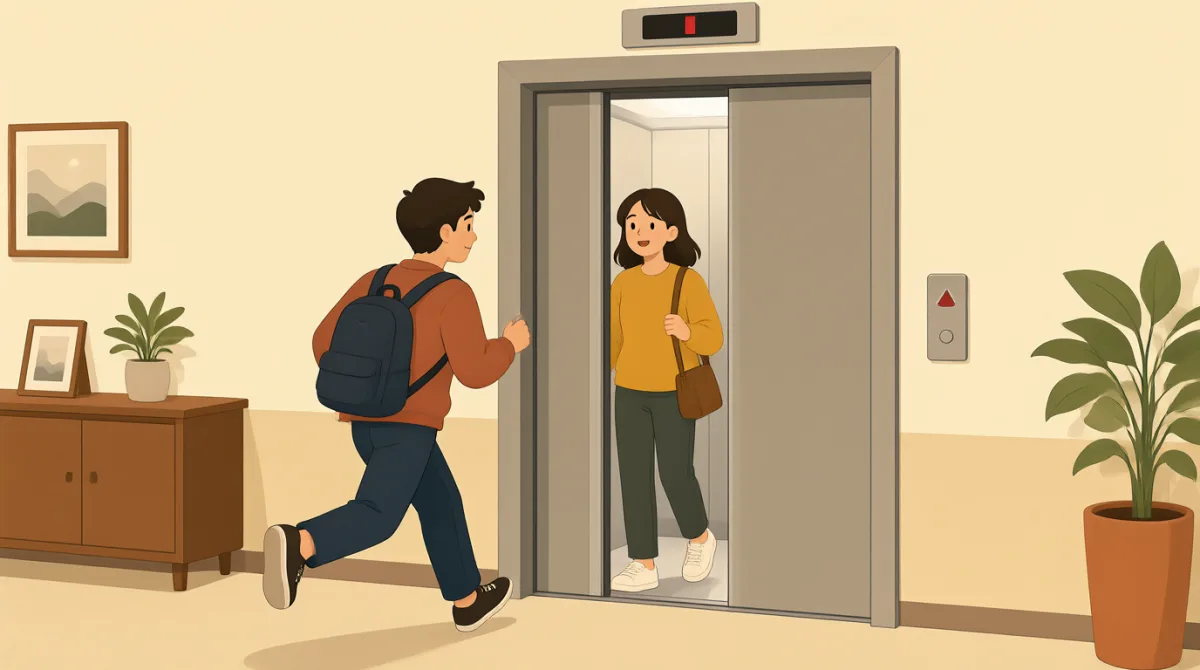

Oh, can you possibly hold that for just a second?
เอ่อ ช่วยกดค้างไว้สักครู่ได้ไหมคะ

Sure, no problem! Coming right up.
ได้เลย ไม่มีปัญหา กำลังจะปิดแล้วครับ
Thanks so much, really appreciate it!
ขอบคุณมากเลยนะคะ ซาบซึ้งจริง ๆ ค่ะ
Anytime. Don't worry about it.
ยินดีเสมอครับ ไม่ต้องคิดมาก
คำศัพท์5
- holdกดค้างไว้
To hold something means to keep it open or in place. In this context, 'hold the door' means to press the button to keep the elevator door from closing so someone can enter.
hold หมายถึงทำให้บางอย่างเปิดอยู่หรืออยู่กับที่ ในบริบทนี้ 'hold the door' หมายถึงกดปุ่มให้ประตูลิฟต์ไม่ปิด เพื่อให้ใครสักคนเข้ามาได้
- possiblyเป็นไปได้ไหม
Possibly is used to make a polite request, similar to 'if possible.' It softens the question to sound more courteous, like asking nicely without demanding.
possibly ใช้ทำให้คำขอฟังสุภาพขึ้น มีความหมายคล้ายกับ 'if possible' (ถ้าเป็นไปได้) ช่วยทำให้คำถามฟังนุ่มนวล ไม่เหมือนเป็นการสั่งหรือเรียกร้อง
- secondวินาที
Here, 'second' means a very short time, like one moment. It's common in requests to ask for a brief delay, as in 'wait just a second.'
ในที่นี้ 'second' หมายถึงช่วงเวลาสั้น ๆ เช่น ครู่หนึ่ง มักใช้เวลาขอให้รอสักพัก เช่น 'wait just a second' (รอสักครู่นะ)
- appreciateซาบซึ้ง, เห็นคุณค่า
To appreciate means to be grateful for someone's help or kindness. It's a polite way to express thanks, often used in formal or sincere situations.
appreciate หมายถึงรู้สึกขอบคุณสำหรับความช่วยเหลือหรือน้ำใจของใครสักคน เป็นวิธีสุภาพในการแสดงความขอบคุณ มักใช้ในสถานการณ์ที่เป็นทางการหรือเมื่อรู้สึกขอบคุณอย่างจริงใจ
- anytimeได้เสมอ
Anytime means 'at any time' or 'you're welcome anytime.' It's a casual response to thanks, showing the help was no big deal and offered willingly.
Anytime หมายถึง 'at any time' (ได้ทุกเมื่อ) หรือสื่อว่าอีกฝ่ายยินดีช่วยเสมอ เป็นคำตอบสบาย ๆ เมื่อมีคนขอบคุณ แสดงว่าการช่วยนั้นไม่ใช่เรื่องใหญ่และเต็มใจช่วย
ประโยคสำคัญ4
- 1
Oh, can you possibly hold that for just a second?
เอ่อ ช่วยกดค้างไว้สักครู่ได้ไหมคะ
This is a polite request to keep the elevator door open briefly. Use it when you're approaching quickly and need a moment. The structure uses 'can you' for asking permission, with 'possibly' and 'just a second' to make it softer and less demanding. It's useful in everyday courtesy situations like elevators or doors.
นี่เป็นคำขออย่างสุภาพให้ช่วยเปิดประตูลิฟต์ไว้สักครู่ ใช้ได้ตอนที่คุณกำลังรีบเดินมาและต้องการเวลาอีกนิด โครงสร้าง 'can you' ใช้ขอให้อีกฝ่ายช่วย โดยมี 'possibly' และ 'just a second' ช่วยให้ฟังนุ่มนวลและไม่เหมือนเรียกร้อง นำไปใช้ได้ในสถานการณ์สุภาพทั่วไป เช่น ที่ลิฟต์หรือประตู
- 2
Sure, no problem!
ได้เลย ไม่มีปัญหา!
This is a friendly agreement to help. 'Sure' means yes enthusiastically, and 'no problem' shows it's easy to do. Use this to respond positively to requests. It's informal and common in casual interactions, helping build rapport.
นี่เป็นการตอบรับอย่างเป็นมิตรเพื่อบอกว่ายินดีช่วย 'Sure' หมายถึงตกลงอย่างเต็มใจ ส่วน 'no problem' แสดงว่าทำได้ง่าย ๆ ใช้ตอบรับคำขอได้อย่างเป็นธรรมชาติ เป็นสำนวนไม่เป็นทางการที่ใช้กันทั่วไปในการสนทนาสบาย ๆ และช่วยสร้างความเป็นกันเอง
- 3
Thanks so much, really appreciate it!
ขอบคุณมากเลยนะคะ ซาบซึ้งจริง ๆ ค่ะ!
This expresses strong gratitude after receiving help. 'Thanks so much' is emphatic thanks, and 'really appreciate it' adds sincerity. Use it right after someone assists you. It's a key phrase for polite thanks in service or favor scenarios, with simple present tense for ongoing feelings.
ประโยคนี้ใช้แสดงความขอบคุณอย่างมากหลังจากได้รับความช่วยเหลือ 'Thanks so much' เป็นการขอบคุณอย่างเต็มที่ และ 'really appreciate it' เพิ่มความจริงใจ ใช้พูดได้ทันทีหลังจากมีคนช่วย เป็นวลีสำคัญสำหรับการขอบคุณอย่างสุภาพเมื่อมีคนช่วยเหลือหรือทำสิ่งดี ๆ ให้
- 4
Anytime. Don't worry about it.
ยินดีเสมอครับ ไม่ต้องคิดมาก
This is a casual way to say 'you're welcome' and dismiss any need for thanks. 'Anytime' means happy to help again, and 'don't worry about it' means no need to feel obligated. Use it to respond to thanks humbly. It's practical for everyday politeness, using imperative for reassurance.
นี่เป็นวิธีสบาย ๆ ในการพูดว่าไม่เป็นไร และบอกอีกฝ่ายว่าไม่ต้องขอบคุณ 'Anytime' หมายถึงยินดีช่วยอีกได้เสมอ ส่วน 'don't worry about it' หมายถึงไม่ต้องรู้สึกเกรงใจ ใช้ตอบเมื่อมีคนขอบคุณอย่างถ่อมตัว เป็นสำนวนสุภาพที่ใช้ได้ในชีวิตประจำวัน โดยใช้รูปประโยคคำสั่งเพื่อช่วยให้อีกฝ่ายสบายใจ