Machine Out of Change
เครื่องไม่มีเงินทอน
The customer inserts a bill, but the vending machine cannot give back the correct change, or notifies the customer it has no change.
ลูกค้าหยอดธนบัตร แต่เครื่องขายสินค้าอัตโนมัติทอนเงินให้ไม่ได้ หรือแจ้งว่าไม่มีเงินทอน
บทสนทนา9
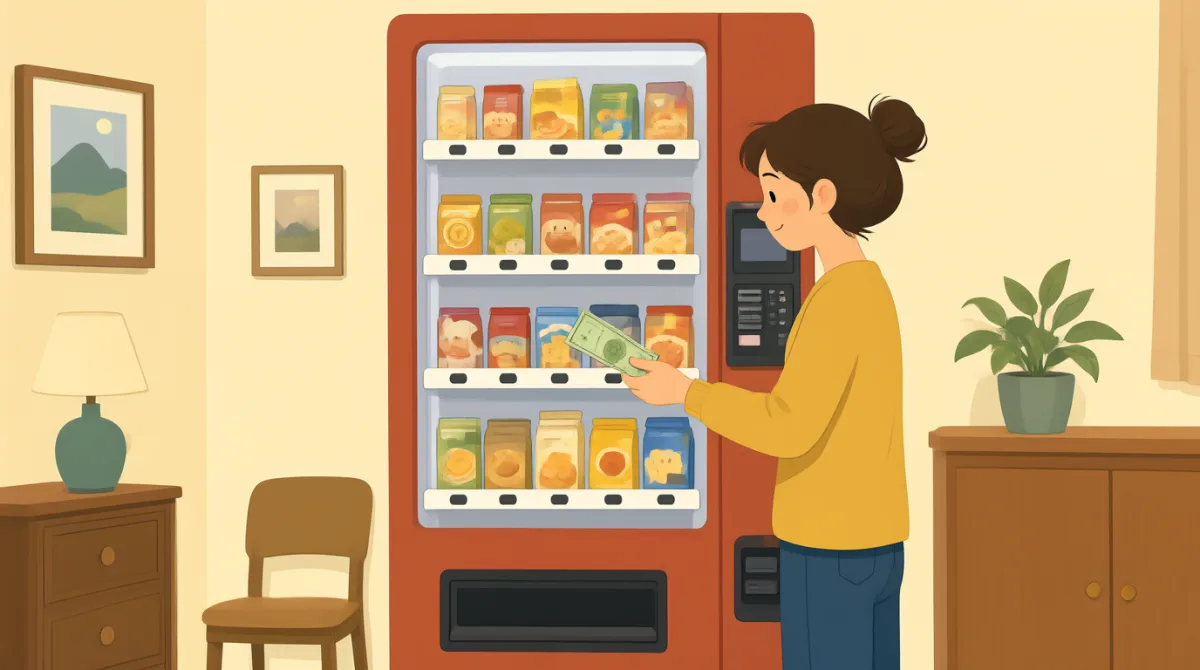

Hmm, I really want this soda. Okay, let's see.
อืม อยากกินน้ำอัดลมนี่จัง เอาล่ะ ลองดูกัน
Alright, putting in a five-dollar bill.
โอเค ใส่ธนบัตรห้าดอลลาร์นะ
Oh, what? 'No change available'? Are you serious?
อ้าว อะไรนะ ‘ไม่มีเงินทอน’? เอาจริงดิ?

What's wrong, Leo?
มีอะไรเหรอ ลีโอ?
This machine says it has no change. I put in a five, and the drink is only two bucks.
เครื่องนี้บอกว่าไม่มีเงินทอน ฉันใส่แบงก์ห้าดอลลาร์ไป แต่เครื่องดื่มราคาแค่สองเหรียญเอง
Ah, that happens sometimes. It's really annoying.
อ๋อ บางทีก็เป็นแบบนี้แหละ น่าหงุดหงิดจริง ๆ
So it won't give me the drink or my money back?
งั้นมันก็ไม่ให้เครื่องดื่มหรือคืนเงินฉันเหรอ?
It should return your bill. Try pressing the coin return button.
มันน่าจะคืนธนบัตรให้ ลองกดปุ่มคืนเหรียญดูสิ
Phew, okay, it spit the five-dollar bill back out. Guess I'll try another machine.
เฮ้อ โอเค มันคายแบงก์ห้าดอลลาร์ออกมาแล้ว สงสัยฉันต้องลองไปใช้เครื่องอื่น
คำศัพท์7
- sodaน้ำอัดลม
A sweet, fizzy drink like cola or lemon soda, often sold in vending machines. Use it when talking about beverages: 'I want a soda.'
เครื่องดื่มหวานซ่า เช่น โคล่าหรือน้ำมะนาวโซดา มักมีขายในเครื่องขายสินค้าอัตโนมัติ ใช้พูดถึงเครื่องดื่มได้ เช่น 'I want a soda.' (ฉันอยากได้น้ำอัดลม)
- billธนบัตร
A piece of paper money, like a five-dollar bill. In this context, it means currency note, not a restaurant check. Say: 'I inserted a bill.'
เงินกระดาษ เช่น ธนบัตรห้าดอลลาร์ ในบริบทนี้หมายถึงธนบัตร ไม่ใช่ใบเรียกเก็บเงินจากร้านอาหาร พูดได้ว่า 'I inserted a bill.' (ฉันใส่ธนบัตรเข้าไป)
- changeเงินทอน
Small coins or money returned after paying more than the cost. Here, 'no change available' means the machine can't give coins back. Common in shopping: 'Do you have change?'
เหรียญหรือเงินที่ได้รับคืนเมื่อจ่ายเงินเกินราคา ในที่นี้ 'no change available' หมายถึงเครื่องไม่มีเหรียญทอนให้ มักใช้เวลาไปซื้อของ เช่น 'Do you have change?' (มีเงินทอนไหม)
- bucksbucks
Informal slang for dollars in American English. 'Two bucks' means two dollars. Use casually with friends: 'It costs five bucks.'
คำไม่เป็นทางการในภาษาอังกฤษแบบอเมริกันที่ใช้แทน dollars (ดอลลาร์) 'Two bucks' หมายถึงสองดอลลาร์ ใช้คุยกันแบบสบาย ๆ เช่น 'It costs five bucks.' (ราคา 5 ดอลลาร์)
- annoyingน่าหงุดหงิด
Something that irritates or bothers you mildly. In daily talk: 'That's annoying when machines break.' Helps express frustration simply.
ใช้พูดถึงสิ่งที่ทำให้รำคาญหรือขัดใจเล็กน้อย เช่น 'That's annoying when machines break.' (เครื่องเสียทีไรน่าหงุดหงิดทุกที) เป็นคำง่าย ๆ ที่ช่วยบอกความรู้สึกไม่พอใจในชีวิตประจำวัน
- coin return buttonปุ่มคืนเหรียญ
A button on a vending machine that returns your money if there's a problem. Practical for fixing issues: 'Press the coin return button.'
ปุ่มบนเครื่องขายสินค้าอัตโนมัติที่ใช้คืนเงินเมื่อเกิดปัญหา ใช้พูดถึงวิธีแก้ปัญหาได้ เช่น 'Press the coin return button.' (กดปุ่มคืนเหรียญ)
- spit outคายออกมา
When a machine ejects something forcefully, like money. Informal: 'The machine spit out my bill.' Describes mechanical actions vividly.
ใช้เมื่อเครื่องดีดหรือคายสิ่งของออกมา เช่น เงิน พูดแบบไม่เป็นทางการได้ว่า 'The machine spit out my bill.' (เครื่องคายธนบัตรของฉันออกมา) เป็นวิธีบรรยายการทำงานของเครื่องให้เห็นภาพ
ประโยคสำคัญ8
- 1
Hmm, I really want this soda. Okay, let's see.
อืม อยากกินน้ำอัดลมนี่จัง เอาล่ะ ลองดูกัน
This shows hesitation and decision-making with 'hmm' and 'let's see' for thinking aloud. Useful for everyday planning; 'hmm' is a filler sound like 'um' in Chinese.
'Hmm' และ 'let's see' ช่วยแสดงว่ากำลังลังเลและคิดตัดสินใจออกเสียง เหมาะกับการวางแผนเรื่องต่าง ๆ ในชีวิตประจำวัน ส่วน 'hmm' เป็นเสียงอ้ำอึ้งคล้าย 'um' ในภาษาจีน
- 2
Alright, putting in a five-dollar bill.
โอเค ใส่ธนบัตรห้าดอลลาร์นะ
Announces an action with 'alright' for agreement and 'putting in' as present continuous for ongoing action. Practice for describing steps: simple present continuous tense.
'Alright' ใช้แสดงการตกลง ส่วน 'putting in' เป็นรูป present continuous ที่บอกว่ากำลังทำบางอย่างอยู่ ลองใช้บรรยายขั้นตอนต่าง ๆ ด้วยรูป present continuous
- 3
Oh, what? 'No change available'? Are you serious?
อ้าว อะไรนะ ‘No change available’? เอาจริงดิ?
Expresses surprise and frustration with 'oh what?' and rhetorical 'are you serious?'. Useful for reacting to problems; question tag adds emphasis without expecting answer.
'Oh, what?' และ 'Are you serious?' ใช้แสดงความประหลาดใจและหงุดหงิด เหมาะกับการตอบสนองเมื่อเจอปัญหา คำถาม 'Are you serious?' ใช้เน้นความรู้สึก ไม่ได้คาดหวังคำตอบจริง ๆ
- 4
This machine says it has no change. I put in a five, and the drink is only two bucks.
เครื่องนี้บอกว่าไม่มีเงินทอน ฉันใส่แบงก์ห้าดอลลาร์ไป แต่เครื่องดื่มราคาแค่สอง bucks เอง
Reports a problem and explains details using 'says' for machine message and contrast with 'and...only'. Key for complaining politely; uses informal 'bucks' for money.
ประโยคนี้บอกปัญหาและรายละเอียด โดยใช้ 'says' เพื่อเล่าข้อความที่เครื่องแจ้ง และใช้ 'and...only' เพื่อเน้นความต่าง เหมาะกับการบอกปัญหาอย่างสุภาพ ส่วน 'bucks' เป็นคำไม่เป็นทางการที่ใช้เรียกเงิน
- 5
Ah, that happens sometimes. It's really annoying.
อ๋อ บางทีก็เป็นแบบนี้แหละ น่าหงุดหงิดจริง ๆ
Acknowledges a common issue with 'ah' for realization and 'sometimes' for frequency. 'Annoying' expresses mild irritation; useful in conversations to empathize.
'Ah' แสดงว่าเพิ่งเข้าใจ ส่วน 'sometimes' บอกความถี่ว่าเกิดขึ้นเป็นบางครั้ง 'Annoying' ใช้บอกความหงุดหงิดเล็กน้อย เป็นคำที่ใช้แสดงความเห็นใจในการสนทนาได้
- 6
So it won't give me the drink or my money back?
งั้นมันก็ไม่ให้เครื่องดื่มหรือคืนเงินฉันเหรอ?
Seeks confirmation with 'so' for conclusion and 'won't' (will not) for future negative. Tag question form; practice for asking about expectations in services.
'So' ใช้สรุปสิ่งที่เข้าใจ ส่วน 'won't' ย่อมาจาก 'will not' ใช้พูดถึงสิ่งที่จะไม่เกิดขึ้นในอนาคต ประโยคคำถามนี้ใช้ถามยืนยันสิ่งที่คาดว่าจะเกิดขึ้นเมื่อใช้บริการ
- 7
It should return your bill. Try pressing the coin return button.
มันน่าจะคืนธนบัตรให้ ลองกดปุ่มคืนเหรียญดูสิ
Gives advice with 'should' for expectation and imperative 'try pressing' for suggestion. Useful for helping others; imperative mood for instructions.
'Should' ใช้บอกว่าสิ่งนั้นน่าจะเป็นไปตามที่คาดไว้ ส่วน 'try pressing' ใช้แนะนำให้ลองทำบางอย่าง เหมาะกับการช่วยแนะนำคนอื่น โดยคำสั่ง 'pressing' บอกให้ลองกดปุ่ม
- 8
Phew, okay, it spit the five-dollar bill back out. Guess I'll try another machine.
เฮ้อ โอเค มันคายแบงก์ห้าดอลลาร์ออกมาแล้ว สงสัยฉันต้องลองไปใช้เครื่องอื่น
Relief with 'phew' and inference with 'guess I'll' for future plan. 'Spit...back out' describes action; shows casual decision-making after resolution.
'Phew' แสดงความโล่งใจ ส่วน 'guess I'll' ใช้บอกข้อสรุปหรือแผนที่จะทำต่อไป 'Spit...back out' บรรยายการคายสิ่งของออกมา ประโยคนี้แสดงการตัดสินใจแบบสบาย ๆ หลังปัญหาคลี่คลาย