Machine Out of Change
機器零錢不足
The customer inserts a bill, but the vending machine cannot give back the correct change, or notifies the customer it has no change.
顧客投入紙幣,但自動售貨機無法找零,或提示顧客零錢不足。
對話9
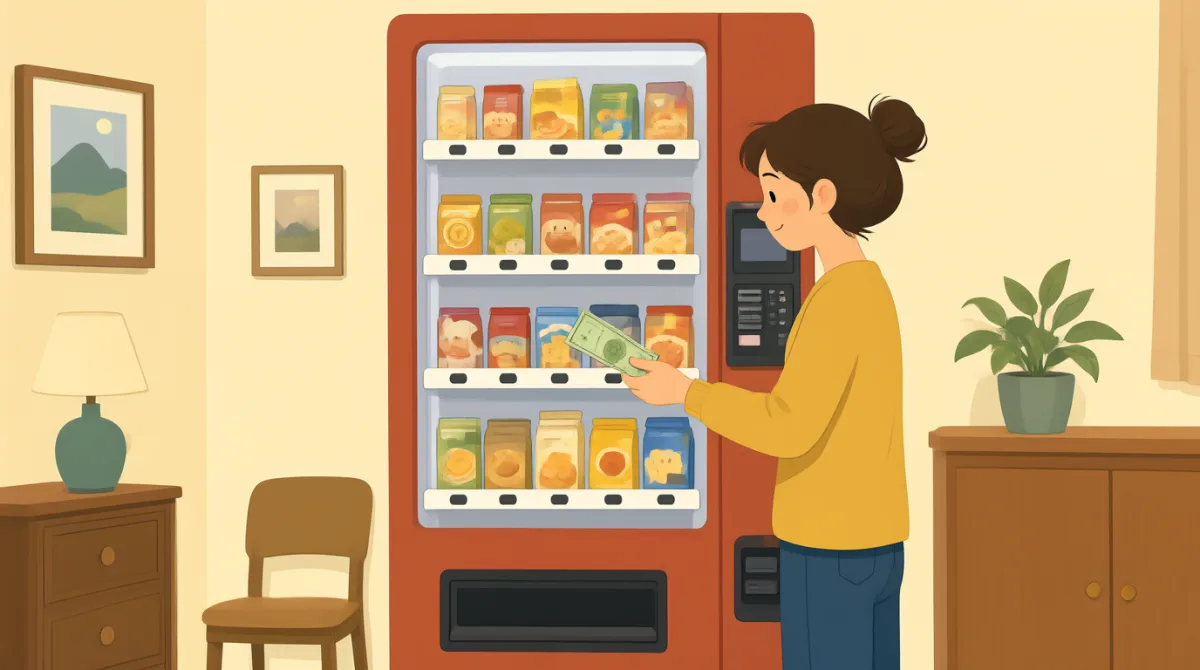

Hmm, I really want this soda. Okay, let's see.
嗯,我真想喝這瓶汽水。好的,看看。
Alright, putting in a five-dollar bill.
好的,放進去一張五美元的紙幣。
Oh, what? 'No change available'? Are you serious?
哦,什麼?“零錢不足”?開玩笑吧?

What's wrong, Leo?
怎麼了,利奧?
This machine says it has no change. I put in a five, and the drink is only two bucks.
這臺機器說零錢不足。我放進去五塊錢,飲料才兩塊錢。
Ah, that happens sometimes. It's really annoying.
啊,有時會這樣。真煩人。
So it won't give me the drink or my money back?
那它不會給我飲料,也不會把錢退給我嗎?
It should return your bill. Try pressing the coin return button.
它應該會退還你的紙幣。試試按退幣按鈕。
Phew, okay, it spit the five-dollar bill back out. Guess I'll try another machine.
呼,好的,它把五美元紙幣吐出來了。看來我得試試別的機器了。
詞彙7
- soda汽水
A sweet, fizzy drink like cola or lemon soda, often sold in vending machines. Use it when talking about beverages: 'I want a soda.'
像可樂或檸檬汽水這類帶氣泡的甜飲料,自動售貨機裡經常有賣。談到飲料時可以用這個詞,比如:'I want a soda.'
- bill紙幣
A piece of paper money, like a five-dollar bill. In this context, it means currency note, not a restaurant check. Say: 'I inserted a bill.'
紙幣,比如一張五美元的紙幣。在這裡指紙幣,不是餐廳賬單。可以說:'I inserted a bill.'
- change零錢
Small coins or money returned after paying more than the cost. Here, 'no change available' means the machine can't give coins back. Common in shopping: 'Do you have change?'
指小面額硬幣,或付款金額超過商品價格時找回的錢。這裡的 'no change available'(沒有零錢可找)表示機器無法找零。購物時常會用到這個詞,比如:'Do you have change?'(你有零錢嗎?)
- bucks美元(口語)
Informal slang for dollars in American English. 'Two bucks' means two dollars. Use casually with friends: 'It costs five bucks.'
美國英語中表示美元的非正式說法。'Two bucks'(兩美元)就是兩塊錢。和朋友聊天時可以隨意使用,比如:'It costs five bucks.'(它要五美元。)
- annoying煩人的
Something that irritates or bothers you mildly. In daily talk: 'That's annoying when machines break.' Helps express frustration simply.
形容某件事讓人有點惱火或心煩。日常聊天中可以說:'That's annoying when machines break.'(機器壞了真煩人。)這個詞可以簡單地表達不滿。
- coin return button退幣按鈕
A button on a vending machine that returns your money if there's a problem. Practical for fixing issues: 'Press the coin return button.'
自動售貨機上出現問題時,可以按這個按鈕取回錢。遇到故障時很實用,可以說:'Press the coin return button.'(按退幣按鈕。)
- spit out吐出
When a machine ejects something forcefully, like money. Informal: 'The machine spit out my bill.' Describes mechanical actions vividly.
形容機器用力彈出某樣東西,比如錢。口語中可以說:'The machine spit out my bill.'(機器把我的紙幣吐出來了。)這個說法生動地描述了機器的動作。
關鍵句8
- 1
Hmm, I really want this soda. Okay, let's see.
嗯,我真想喝這瓶汽水。好吧,看看。
This shows hesitation and decision-making with 'hmm' and 'let's see' for thinking aloud. Useful for everyday planning; 'hmm' is a filler sound like 'um' in Chinese.
'hmm' 和 'let's see' 表現出猶豫和思考時做決定的過程,常用於自言自語。日常安排事情時很實用;'hmm' 是思考時發出的語氣聲,有點像中文裡的“嗯”。
- 2
Alright, putting in a five-dollar bill.
好,那我放進去一張五美元的紙幣。
Announces an action with 'alright' for agreement and 'putting in' as present continuous for ongoing action. Practice for describing steps: simple present continuous tense.
用 'alright' 表示同意或準備開始,再用 'putting in' 的現在進行時來說明正在做什麼。可以用這種說法描述操作步驟;這裡用的是現在進行時。
- 3
Oh, what? 'No change available'? Are you serious?
哦,什麼?“零錢不足”?你認真的嗎?
Expresses surprise and frustration with 'oh what?' and rhetorical 'are you serious?'. Useful for reacting to problems; question tag adds emphasis without expecting answer.
用 'oh what?' 表達驚訝,再用反問 'are you serious?' 表達不滿。遇到問題時可以這樣回應;這個反問是為了加強語氣,並不是真的等對方回答。
- 4
This machine says it has no change. I put in a five, and the drink is only two bucks.
這臺機器說它沒有零錢可找。我放進去一張五美元的紙幣,可飲料才兩美元。
Reports a problem and explains details using 'says' for machine message and contrast with 'and...only'. Key for complaining politely; uses informal 'bucks' for money.
用 'says' 轉述機器螢幕上的提示,再用 'and...only' 說明價格上的反差。遇到問題時可以用這個句型說明情況;'bucks' 是表示美元的口語說法。
- 5
Ah, that happens sometimes. It's really annoying.
啊,這種事有時會發生。真煩人。
Acknowledges a common issue with 'ah' for realization and 'sometimes' for frequency. 'Annoying' expresses mild irritation; useful in conversations to empathize.
用 'ah' 表示想到了什麼或恍然大悟,用 'sometimes' 表示事情發生的頻率。'Annoying' 表示有點惱火,聊天時可以用它表達同感。
- 6
So it won't give me the drink or my money back?
所以它既不會給我飲料,也不會把錢退給我嗎?
Seeks confirmation with 'so' for conclusion and 'won't' (will not) for future negative. Tag question form; practice for asking about expectations in services.
用 'so' 引出結論,再用 'won't'(will not 的縮寫)表示將來不會發生的事。這種問法適合確認服務過程中可能出現的情況。
- 7
It should return your bill. Try pressing the coin return button.
它應該會把你的紙幣退回來。試試按退幣按鈕。
Gives advice with 'should' for expectation and imperative 'try pressing' for suggestion. Useful for helping others; imperative mood for instructions.
用 'should' 表示預期,用祈使句 'try pressing' 提出建議。你可以用這種說法給別人提供幫助;祈使句常用於給出指示。
- 8
Phew, okay, it spit the five-dollar bill back out. Guess I'll try another machine.
呼,好吧,它把那張五美元的紙幣吐出來了。看來我得試試另一臺機器。
Relief with 'phew' and inference with 'guess I'll' for future plan. 'Spit...back out' describes action; shows casual decision-making after resolution.
用 'phew' 表示鬆了口氣,用 'guess I'll' 表示推測接下來要做的事。'Spit...back out' 描述機器把東西吐回來的動作,也體現了問題解決後輕鬆隨意地做決定。