Machine Out of Change
मशीन में छुट्टे नहीं हैं
The customer inserts a bill, but the vending machine cannot give back the correct change, or notifies the customer it has no change.
ग्राहक नोट डालता है, लेकिन वेंडिंग मशीन सही छुट्टे नहीं दे पाती या बताती है कि उसके पास छुट्टे नहीं हैं।
संवाद9
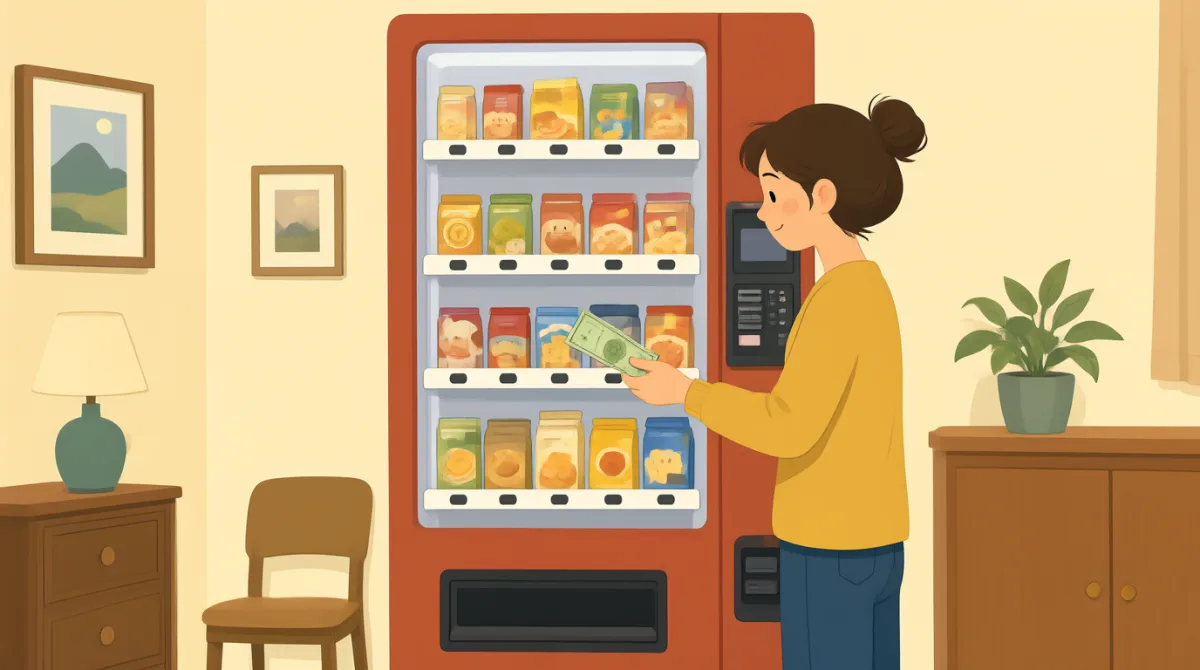

Hmm, I really want this soda. Okay, let's see.
हम्म, मुझे सच में यह सोडा चाहिए। अच्छा, देखते हैं।
Alright, putting in a five-dollar bill.
ठीक है, पाँच डॉलर का नोट डालता हूँ।
Oh, what? 'No change available'? Are you serious?
अरे, क्या? ‘छुट्टे उपलब्ध नहीं हैं’? सच में?

What's wrong, Leo?
क्या हुआ, Leo?
This machine says it has no change. I put in a five, and the drink is only two bucks.
यह मशीन कह रही है कि उसके पास छुट्टे नहीं हैं। मैंने पाँच डॉलर का नोट डाला, और ड्रिंक सिर्फ़ दो डॉलर की है।
Ah, that happens sometimes. It's really annoying.
अरे, ऐसा कभी-कभी होता है। सच में बहुत झुंझलाहट होती है।
So it won't give me the drink or my money back?
तो यह न तो मुझे ड्रिंक देगी, न ही मेरे पैसे लौटाएगी?
It should return your bill. Try pressing the coin return button.
इसे तुम्हारा नोट लौटा देना चाहिए। छुट्टे लौटाने वाला बटन दबाकर देखो।
Phew, okay, it spit the five-dollar bill back out. Guess I'll try another machine.
उफ़, ठीक है, इसने पाँच डॉलर का नोट वापस उगल दिया। लगता है, अब किसी दूसरी मशीन से कोशिश करूँगा।
शब्दावली7
- sodaसोडा
A sweet, fizzy drink like cola or lemon soda, often sold in vending machines. Use it when talking about beverages: 'I want a soda.'
कोला या नींबू सोडा जैसा मीठा, गैस वाला पेय, जो अक्सर वेंडिंग मशीनों में मिलता है। पेय की बात करते समय इसका इस्तेमाल करें: 'I want a soda.' (मुझे सोडा चाहिए।)
- billनोट
A piece of paper money, like a five-dollar bill. In this context, it means currency note, not a restaurant check. Say: 'I inserted a bill.'
काग़ज़ का पैसा, जैसे पाँच डॉलर का नोट। इस संदर्भ में इसका मतलब करेंसी का नोट है, रेस्तराँ का बिल नहीं। कहें: 'I inserted a bill.' (मैंने एक नोट डाला।)
- changeछुट्टे
Small coins or money returned after paying more than the cost. Here, 'no change available' means the machine can't give coins back. Common in shopping: 'Do you have change?'
छोटे सिक्के या ज़्यादा पैसे देने पर वापस मिलने वाली रकम। यहाँ 'no change available' का मतलब है कि मशीन छुट्टे वापस नहीं दे सकती। खरीदारी के समय आम तौर पर कह सकते हैं: 'Do you have change?' (क्या आपके पास छुट्टे हैं?)
- bucksबक्स
Informal slang for dollars in American English. 'Two bucks' means two dollars. Use casually with friends: 'It costs five bucks.'
अमेरिकी अंग्रेज़ी में डॉलर के लिए अनौपचारिक शब्द। 'Two bucks' का मतलब दो डॉलर है। दोस्तों से अनौपचारिक बातचीत में कहें: 'It costs five bucks.' (इसकी कीमत पाँच डॉलर है।)
- annoyingझुंझलाहट भरा
Something that irritates or bothers you mildly. In daily talk: 'That's annoying when machines break.' Helps express frustration simply.
ऐसी चीज़ जो आपको हल्की-सी चिढ़ या परेशानी दे। रोज़मर्रा की बातचीत में कहें: 'That's annoying when machines break.' (मशीनें खराब हों तो बहुत झुंझलाहट होती है।) इससे आप अपनी परेशानी सीधे तौर पर जता सकते हैं।
- coin return buttonछुट्टे लौटाने वाला बटन
A button on a vending machine that returns your money if there's a problem. Practical for fixing issues: 'Press the coin return button.'
वेंडिंग मशीन का वह बटन जो कोई समस्या होने पर आपके पैसे वापस करता है। गड़बड़ी ठीक करने के लिए काम आता है: 'Press the coin return button.' (छुट्टे लौटाने वाला बटन दबाएँ।)
- spit outज़ोर से बाहर उगलना
When a machine ejects something forcefully, like money. Informal: 'The machine spit out my bill.' Describes mechanical actions vividly.
जब कोई मशीन किसी चीज़ को, जैसे पैसे को, ज़ोर से बाहर निकालती है। अनौपचारिक तौर पर कहें: 'The machine spit out my bill.' (मशीन ने मेरा नोट बाहर उगल दिया।) इससे मशीन की हरकत का जीवंत वर्णन होता है।
मुख्य वाक्य8
- 1
Hmm, I really want this soda. Okay, let's see.
हम्म, मुझे सच में यह सोडा चाहिए। अच्छा, देखते हैं।
This shows hesitation and decision-making with 'hmm' and 'let's see' for thinking aloud. Useful for everyday planning; 'hmm' is a filler sound like 'um' in Chinese.
'hmm' और 'let's see' बोलकर सोचने या निर्णय लेने में होने वाली झिझक दिखाई जाती है। रोज़मर्रा की योजनाओं के बारे में बात करते समय यह काम आता है। 'hmm' सोचते समय निकाली जाने वाली आवाज़ है, जैसे चीनी में 'um'।
- 2
Alright, putting in a five-dollar bill.
ठीक है, पाँच डॉलर का नोट डालता हूँ।
Announces an action with 'alright' for agreement and 'putting in' as present continuous for ongoing action. Practice for describing steps: simple present continuous tense.
'alright' सहमति जताता है, जबकि 'putting in' किसी जारी क्रिया का वर्णन करता है। अपने कदम बताते समय यह तरीका काम आता है; इसमें वर्तमान निरंतर काल का इस्तेमाल हुआ है।
- 3
Oh, what? 'No change available'? Are you serious?
अरे, क्या? ‘छुट्टे उपलब्ध नहीं हैं’? सच में?
Expresses surprise and frustration with 'oh what?' and rhetorical 'are you serious?'. Useful for reacting to problems; question tag adds emphasis without expecting answer.
'oh what?' से हैरानी और 'are you serious?' से अविश्वास या झुंझलाहट जताई जाती है। किसी समस्या पर प्रतिक्रिया देते समय यह उपयोगी है। आख़िरी सवाल ज़ोर देने के लिए है, जवाब की उम्मीद नहीं होती।
- 4
This machine says it has no change. I put in a five, and the drink is only two bucks.
यह मशीन कह रही है कि उसके पास छुट्टे नहीं हैं। मैंने पाँच डॉलर का नोट डाला, और ड्रिंक सिर्फ़ दो डॉलर की है।
Reports a problem and explains details using 'says' for machine message and contrast with 'and...only'. Key for complaining politely; uses informal 'bucks' for money.
'says' का इस्तेमाल मशीन पर दिख रहे संदेश को बताने के लिए और 'and...only' का इस्तेमाल तुलना जताने के लिए किया गया है। किसी समस्या की विनम्रता से शिकायत करने के लिए यह वाक्य काम आता है। पैसों के लिए अनौपचारिक शब्द 'bucks' इस्तेमाल हुआ है।
- 5
Ah, that happens sometimes. It's really annoying.
अरे, ऐसा कभी-कभी होता है। सच में बहुत झुंझलाहट होती है।
Acknowledges a common issue with 'ah' for realization and 'sometimes' for frequency. 'Annoying' expresses mild irritation; useful in conversations to empathize.
'ah' से बात समझ में आने का भाव और 'sometimes' से किसी चीज़ के कभी-कभार होने का पता चलता है। 'annoying' हल्की झुंझलाहट जताता है और बातचीत में सहानुभूति दिखाने के लिए उपयोगी है।
- 6
So it won't give me the drink or my money back?
तो यह न तो मुझे ड्रिंक देगी, न ही मेरे पैसे लौटाएगी?
Seeks confirmation with 'so' for conclusion and 'won't' (will not) for future negative. Tag question form; practice for asking about expectations in services.
'so' से नतीजा निकालकर पुष्टि माँगी जाती है और 'won't' (will not) भविष्य में किसी काम के न होने को दर्शाता है। सेवाओं के बारे में यह पूछने का उपयोगी तरीका है कि आगे क्या होगा।
- 7
It should return your bill. Try pressing the coin return button.
इसे तुम्हारा नोट लौटा देना चाहिए। छुट्टे लौटाने वाला बटन दबाकर देखो।
Gives advice with 'should' for expectation and imperative 'try pressing' for suggestion. Useful for helping others; imperative mood for instructions.
'should' से अपेक्षित बात बताई जाती है और सुझाव देने के लिए 'try pressing' का इस्तेमाल होता है। दूसरों की मदद करते समय यह उपयोगी है। निर्देश देने के लिए यहाँ आज्ञार्थक रूप है।
- 8
Phew, okay, it spit the five-dollar bill back out. Guess I'll try another machine.
उफ़, ठीक है, इसने पाँच डॉलर का नोट वापस उगल दिया। लगता है, अब किसी दूसरी मशीन से कोशिश करूँगा।
Relief with 'phew' and inference with 'guess I'll' for future plan. 'Spit...back out' describes action; shows casual decision-making after resolution.
'phew' राहत जताता है और 'guess I'll' आगे की योजना का अनुमान बताता है। 'spit...back out' किसी चीज़ को वापस बाहर निकालने की क्रिया बताता है। समस्या सुलझने के बाद सहज रूप से अगला कदम तय करने का यह उदाहरण है।