Machine Out of Change
মেশিনে খুচরা নেই
The customer inserts a bill, but the vending machine cannot give back the correct change, or notifies the customer it has no change.
ক্রেতা একটি নোট ঢোকান, কিন্তু ভেন্ডিং মেশিনটি ঠিকমতো খুচরা ফেরত দিতে পারে না, অথবা জানায় যে তার কাছে খুচরা নেই।
সংলাপ9
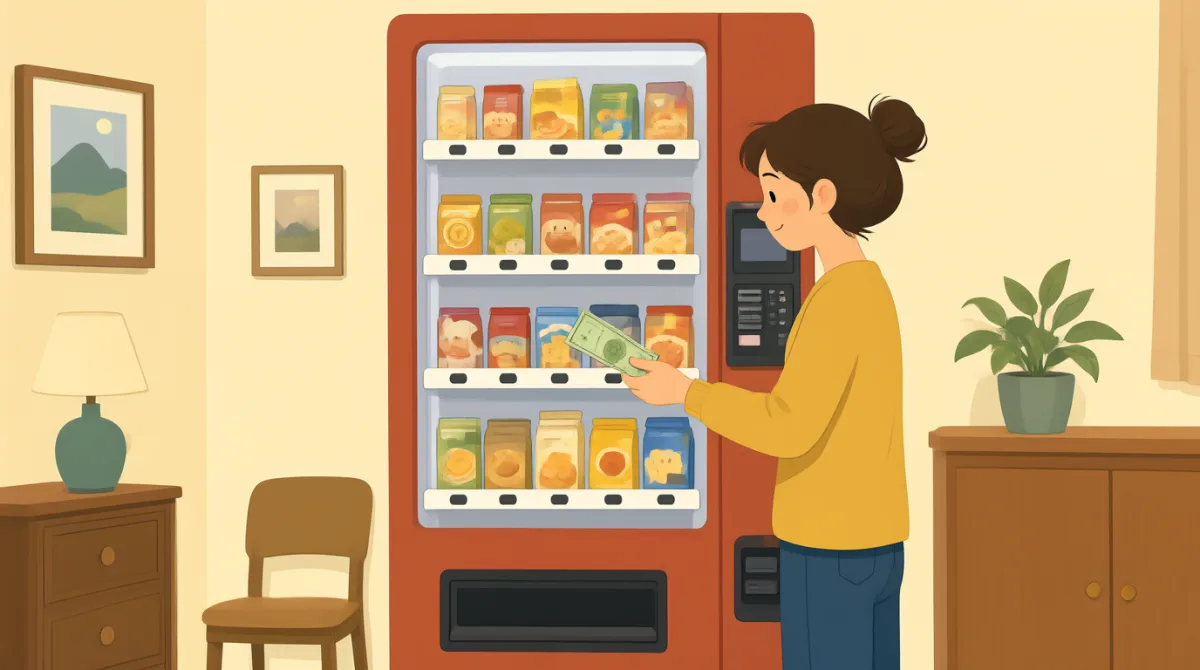

Hmm, I really want this soda. Okay, let's see.
হুম, এই সোডাটা আমার খুব খেতে ইচ্ছে করছে। আচ্ছা, দেখি।
Alright, putting in a five-dollar bill.
ঠিক আছে, পাঁচ ডলারের একটা নোট ঢোকাচ্ছি।
Oh, what? 'No change available'? Are you serious?
আরে, কী? ‘খুচরা নেই’? সত্যি বলছ?

What's wrong, Leo?
কী হয়েছে, লিও?
This machine says it has no change. I put in a five, and the drink is only two bucks.
মেশিনটা বলছে খুচরা নেই। পাঁচ ডলারের নোট দিয়েছি, আর পানীয়টার দাম মাত্র দুই ডলার।
Ah, that happens sometimes. It's really annoying.
আহা, মাঝে মাঝে এমন হয়। খুব বিরক্তিকর।
So it won't give me the drink or my money back?
তাহলে এটা আমাকে পানীয়টাও দেবে না, টাকাটাও ফেরত দেবে না?
It should return your bill. Try pressing the coin return button.
তোমার নোটটা ফেরত দেওয়ার কথা। কয়েন ফেরত দেওয়ার বোতামটা টিপে দেখো।
Phew, okay, it spit the five-dollar bill back out. Guess I'll try another machine.
উফ, ঠিক আছে, পাঁচ ডলারের নোটটা ফেরত দিয়ে দিল। মনে হয় অন্য একটা মেশিন চেষ্টা করব।
শব্দভান্ডার7
- sodaসোডা
A sweet, fizzy drink like cola or lemon soda, often sold in vending machines. Use it when talking about beverages: 'I want a soda.'
কোলা বা লেবুর সোডার মতো মিষ্টি, বুদবুদযুক্ত পানীয়, যা প্রায়ই ভেন্ডিং মেশিনে বিক্রি হয়। পানীয়ের কথা বলতে শব্দটি ব্যবহার করো: 'I want a soda.' (আমি একটা সোডা চাই।)
- billনোট
A piece of paper money, like a five-dollar bill. In this context, it means currency note, not a restaurant check. Say: 'I inserted a bill.'
কাগজের টাকা, যেমন পাঁচ ডলারের নোট। এই প্রসঙ্গে এর মানে মুদ্রার নোট, রেস্তোরাঁর বিল নয়। বলো: 'I inserted a bill.' (আমি একটা নোট ঢুকিয়েছি।)
- changeখুচরা
Small coins or money returned after paying more than the cost. Here, 'no change available' means the machine can't give coins back. Common in shopping: 'Do you have change?'
বেশি টাকা দেওয়ার পর ফেরত পাওয়া ছোট কয়েন বা টাকা। এখানে, 'no change available' মানে মেশিনটি ফেরত দেওয়ার মতো কয়েন দিতে পারছে না। কেনাকাটার সময় এভাবে বলা হয়: 'Do you have change?' (আপনার কাছে খুচরা আছে?)
- bucksbucks
Informal slang for dollars in American English. 'Two bucks' means two dollars. Use casually with friends: 'It costs five bucks.'
আমেরিকান ইংরেজিতে ডলারের কথ্য নাম। 'Two bucks' মানে দুই ডলার। বন্ধুদের সঙ্গে অনানুষ্ঠানিকভাবে বলো: 'It costs five bucks.' (এটার দাম পাঁচ ডলার।)
- annoyingবিরক্তিকর
Something that irritates or bothers you mildly. In daily talk: 'That's annoying when machines break.' Helps express frustration simply.
যা তোমাকে কিছুটা বিরক্ত বা ক্ষুব্ধ করে। দৈনন্দিন কথায়: 'That's annoying when machines break.' (মেশিন নষ্ট হলে সেটা বিরক্তিকর।) সহজভাবে বিরক্তি প্রকাশ করতে এই শব্দটি কাজে লাগে।
- coin return buttonকয়েন ফেরত দেওয়ার বোতাম
A button on a vending machine that returns your money if there's a problem. Practical for fixing issues: 'Press the coin return button.'
ভেন্ডিং মেশিনের এমন একটি বোতাম, যা কোনো সমস্যা হলে তোমার টাকা ফেরত দেয়। সমস্যা মেটাতে কাজে লাগে: 'Press the coin return button.' (কয়েন ফেরত দেওয়ার বোতামটি চাপো।)
- spit outহঠাৎ বের করে দেওয়া
When a machine ejects something forcefully, like money. Informal: 'The machine spit out my bill.' Describes mechanical actions vividly.
কোনো মেশিন জোরে কিছু বাইরে বের করে দিলে, যেমন টাকা, এভাবে বলা হয়। কথ্য ব্যবহার: 'The machine spit out my bill.' (মেশিনটা আমার নোটটা হঠাৎ বের করে দিল।) যন্ত্রের কাজটি জীবন্তভাবে বর্ণনা করে।
গুরুত্বপূর্ণ বাক্য8
- 1
Hmm, I really want this soda. Okay, let's see.
হুম, এই সোডাটা আমার খুব খেতে ইচ্ছে করছে। আচ্ছা, দেখি।
This shows hesitation and decision-making with 'hmm' and 'let's see' for thinking aloud. Useful for everyday planning; 'hmm' is a filler sound like 'um' in Chinese.
'hmm' আর 'let's see' দিয়ে ভাবতে ভাবতে দ্বিধা ও সিদ্ধান্ত নেওয়ার কথা বোঝানো হয়েছে। দৈনন্দিন পরিকল্পনার কথায় এটি কাজে লাগে; 'hmm' হলো ভাবার সময় বলা একটি শব্দ, যেমন 'um'।
- 2
Alright, putting in a five-dollar bill.
ঠিক আছে, পাঁচ ডলারের একটা নোট ঢোকাচ্ছি।
Announces an action with 'alright' for agreement and 'putting in' as present continuous for ongoing action. Practice for describing steps: simple present continuous tense.
'alright' দিয়ে সম্মতি জানিয়ে কোনো কাজ শুরু করার কথা বলা হয়, আর চলমান কাজ বোঝাতে 'putting in' ব্যবহার করা হয়েছে। কোনো কাজের ধাপ বর্ণনার জন্য এই চলমান বর্তমান কালের গঠনটি অনুশীলন করো।
- 3
Oh, what? 'No change available'? Are you serious?
আরে, কী? ‘খুচরা নেই’? সত্যি বলছ?
Expresses surprise and frustration with 'oh what?' and rhetorical 'are you serious?'. Useful for reacting to problems; question tag adds emphasis without expecting answer.
'oh what?' দিয়ে বিস্ময়, আর 'are you serious?' দিয়ে বিরক্তি প্রকাশ করা হয়েছে। কোনো সমস্যায় প্রতিক্রিয়া জানাতে এগুলো কাজে লাগে; শেষের প্রশ্নটি জোর দেওয়ার জন্য, উত্তর আশা করে নয়।
- 4
This machine says it has no change. I put in a five, and the drink is only two bucks.
মেশিনটা বলছে খুচরা নেই। পাঁচ ডলারের নোট দিয়েছি, আর পানীয়টার দাম মাত্র দুই ডলার।
Reports a problem and explains details using 'says' for machine message and contrast with 'and...only'. Key for complaining politely; uses informal 'bucks' for money.
'says' দিয়ে মেশিনের বার্তা জানিয়ে সমস্যাটি বলা হয়েছে, আর 'and...only' দিয়ে দামের তুলনা বোঝানো হয়েছে। ভদ্রভাবে অভিযোগ করার সময় এই বাক্যটি কাজে লাগে; টাকার জন্য অনানুষ্ঠানিক 'bucks' ব্যবহার করা হয়েছে।
- 5
Ah, that happens sometimes. It's really annoying.
আহা, মাঝে মাঝে এমন হয়। খুব বিরক্তিকর।
Acknowledges a common issue with 'ah' for realization and 'sometimes' for frequency. 'Annoying' expresses mild irritation; useful in conversations to empathize.
'ah' দিয়ে বুঝতে পারার প্রতিক্রিয়া এবং 'sometimes' দিয়ে কত ঘন ঘন ঘটে তা বোঝানো হয়েছে। 'annoying' সামান্য বিরক্তি প্রকাশ করে; কথোপকথনে সহমর্মিতা জানাতে এটি কাজে লাগে।
- 6
So it won't give me the drink or my money back?
তাহলে এটা আমাকে পানীয়টাও দেবে না, টাকাটাও ফেরত দেবে না?
Seeks confirmation with 'so' for conclusion and 'won't' (will not) for future negative. Tag question form; practice for asking about expectations in services.
'so' দিয়ে সিদ্ধান্ত টেনে নিশ্চিত হতে চাওয়া হয়েছে, আর 'won't' হলো ভবিষ্যৎ কালকে নাকচ করে বলা। কোনো পরিষেবা থেকে কী আশা করা যায়, তা জানতে এই প্রশ্নের ধরনটি অনুশীলন করো।
- 7
It should return your bill. Try pressing the coin return button.
তোমার নোটটা ফেরত দেওয়ার কথা। কয়েন ফেরত দেওয়ার বোতামটা টিপে দেখো।
Gives advice with 'should' for expectation and imperative 'try pressing' for suggestion. Useful for helping others; imperative mood for instructions.
'should' দিয়ে কী হওয়ার কথা তা বোঝানো হয়েছে, আর 'try pressing' দিয়ে পরামর্শ দেওয়া হয়েছে। কাউকে সাহায্য করতে এই গঠনটি কাজে লাগে; নির্দেশ দিতে আদেশসূচক বাক্য ব্যবহার করা হয়েছে।
- 8
Phew, okay, it spit the five-dollar bill back out. Guess I'll try another machine.
উফ, ঠিক আছে, পাঁচ ডলারের নোটটা ফেরত দিয়ে দিল। মনে হয় অন্য একটা মেশিন চেষ্টা করব।
Relief with 'phew' and inference with 'guess I'll' for future plan. 'Spit...back out' describes action; shows casual decision-making after resolution.
'phew' দিয়ে স্বস্তি আর 'guess I'll' দিয়ে ভবিষ্যতের পরিকল্পনা বোঝানো হয়েছে। 'spit...back out' দিয়ে মেশিনের জিনিসটি বের করে দেওয়ার কথা বলা হয়েছে; সমস্যা মিটে যাওয়ার পর অনানুষ্ঠানিকভাবে সিদ্ধান্ত নেওয়ার উদাহরণ এটি।