Item Stuck or Not Dispensed
ของติดหรือไม่หล่นออกมา
The customer pays for an item, but it gets stuck or does not come out of the vending machine.
ลูกค้าจ่ายเงินซื้อสินค้าแล้ว แต่สินค้าติดอยู่หรือไม่หล่นออกมาจากตู้ขายสินค้าอัตโนมัติ
บทสนทนา6
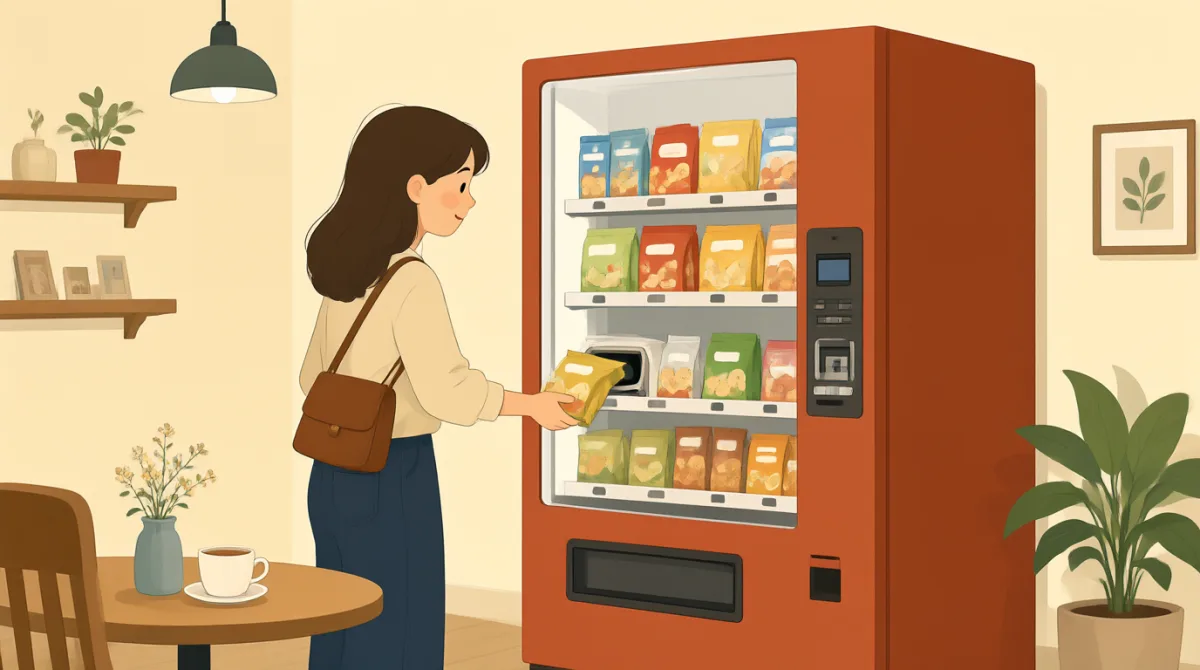

Ugh, my drink got stuck! It just didn't drop.
เฮ้อ เครื่องดื่มฉันติดอยู่! มันไม่หล่นลงมาสักที

Oh no, really? Let me see. Sometimes giving it a little shake helps.
แย่จัง จริงเหรอ? ขอฉันดูหน่อย บางทีลองเขย่าเบา ๆ อาจช่วยได้นะ
I tried that! It's right there, but it won't budge. I paid for it, too.
ลองแล้ว! มันอยู่ตรงนั้นแหละ แต่ไม่ขยับเลย ฉันก็จ่ายเงินไปแล้วด้วย
Hmm, that's frustrating. Is there a number on the machine to report issues?
อืม น่าหงุดหงิดจัง บนตู้มีเบอร์ให้โทรแจ้งปัญหาไหม?
Yes, there is. It says to call this number for refunds or stuck items. I'll give them a call.
มีนะ เขียนว่าให้โทรเบอร์นี้ถ้าต้องการเงินคืนหรือมีของติดอยู่ เดี๋ยวฉันโทรไปนะ
Good idea. Hopefully, they can sort it out for you quickly.
ดีเลย หวังว่าพวกเขาจะช่วยจัดการให้เธอได้เร็ว ๆ นะ
คำศัพท์6
- stuckติดอยู่
Means something is not moving or coming out, like an item jammed in a machine. Use it when something is trapped: 'The door is stuck.'
หมายถึงสิ่งที่ขยับหรือออกมาไม่ได้ เช่น ของที่ติดคาอยู่ในเครื่อง ใช้พูดถึงสิ่งที่ติดอยู่ เช่น 'The door is stuck.' (ประตูติดอยู่)
- dropหล่น
In this context, means to fall or come out from the vending machine. It's common for items: 'The candy didn't drop.'
ในบริบทนี้หมายถึงหล่นหรือออกมาจากตู้ขายสินค้าอัตโนมัติ มักใช้กับสิ่งของ เช่น 'The candy didn't drop.' (ลูกอมไม่หล่นออกมา)
- shakeเขย่า
To move something quickly back and forth to loosen it. Useful tip: 'Shake the machine gently if something is stuck.'
ขยับสิ่งของไปมาอย่างรวดเร็วเพื่อให้สิ่งที่ติดอยู่คลายออก เคล็ดลับที่ใช้ได้คือ 'Shake the machine gently if something is stuck.' (ถ้ามีของติดอยู่ ให้เขย่าตู้อย่างเบามือ)
- budgeขยับ
Means to move even a little. Use it for stubborn things: 'It won't budge no matter what I do.'
หมายถึงขยับแม้เพียงเล็กน้อย ใช้กับสิ่งที่ดื้อหรือขยับยาก เช่น 'It won't budge no matter what I do.' (ไม่ว่าฉันจะทำยังไง มันก็ไม่ขยับ)
- frustratingน่าหงุดหงิด
Describes something that makes you annoyed or upset. Common in daily problems: 'This traffic is so frustrating.'
ใช้บรรยายสิ่งที่ทำให้รู้สึกรำคาญหรือไม่สบายใจ มักใช้กับปัญหาในชีวิตประจำวัน เช่น 'This traffic is so frustrating.' (รถติดนี่น่าหงุดหงิดมาก)
- refundsการคืนเงิน
Money given back when you buy something that doesn't work. In shops or machines: 'I need a refund for this item.'
เงินที่ได้รับคืนเมื่อซื้อของแล้วของใช้การไม่ได้ ใช้พูดถึงร้านค้าหรือตู้ขายสินค้า เช่น 'I need a refund for this item.' (ฉันต้องการเงินคืนสำหรับสินค้าชิ้นนี้)
ประโยคสำคัญ6
- 1
Ugh, my drink got stuck! It just didn't drop.
เฮ้อ เครื่องดื่มฉันติดอยู่! มันไม่หล่นลงมาสักที
This expresses frustration when something fails. 'Ugh' is an informal sound of annoyance. Useful for complaining politely about machine problems; the past tense 'got stuck' and 'didn't drop' show what happened.
ประโยคนี้ใช้แสดงความหงุดหงิดเมื่อมีบางอย่างใช้ไม่ได้ 'Ugh' เป็นเสียงอุทานแบบไม่เป็นทางการเพื่อแสดงความรำคาญ เหมาะสำหรับบ่นอย่างสุภาพเมื่อเจอปัญหากับเครื่อง คำว่า 'got stuck' และ 'didn't drop' ใช้รูปอดีตเพื่อบอกว่าเกิดอะไรขึ้น
- 2
Sometimes giving it a little shake helps.
บางทีลองเขย่าเบา ๆ อาจช่วยได้นะ
This gives helpful advice using the gerund 'giving' after 'sometimes.' It's practical for suggesting simple fixes in everyday situations like this.
ประโยคนี้ให้คำแนะนำโดยใช้รูปกริยาเติม -ing ใน 'giving' หลัง 'sometimes' เป็นวิธีแนะนำวิธีแก้ง่าย ๆ ที่นำไปใช้ได้จริงในชีวิตประจำวัน
- 3
It's right there, but it won't budge.
มันอยู่ตรงนั้นแหละ แต่ไม่ขยับเลย
Uses a contrast with 'but' to show location versus problem. 'Won't budge' is future in the present for ongoing issues. Great for describing stuck objects clearly.
ใช้ 'but' เพื่อแสดงความขัดแย้งระหว่างตำแหน่งของสิ่งของกับปัญหาที่เกิดขึ้น 'Won't budge' ใช้บอกว่าสิ่งนั้นยังขยับไม่ได้ เหมาะสำหรับอธิบายให้ชัดว่าของติดอยู่
- 4
Is there a number on the machine to report issues?
บนตู้มีเบอร์ให้โทรแจ้งปัญหาไหม?
A polite question using infinitive 'to report' for purpose. 'Issues' means problems. Useful when seeking help in public places like asking about customer service.
เป็นคำถามสุภาพที่ใช้ 'to report' เพื่อบอกจุดประสงค์ ส่วน 'issues' หมายถึงปัญหา ใช้ถามหาความช่วยเหลือในที่สาธารณะ เช่น สอบถามช่องทางติดต่อฝ่ายบริการลูกค้า
- 5
It says to call this number for refunds or stuck items.
เขียนว่าให้โทรเบอร์นี้ถ้าต้องการเงินคืนหรือมีของติดอยู่
Reports instructions with 'says to' for commands. 'For' shows purpose. This sentence helps explain machine labels and when to contact support.
ใช้ 'says to' เพื่อบอกคำแนะนำหรือคำสั่งที่เขียนไว้ และใช้ 'for' เพื่อบอกจุดประสงค์ ประโยคนี้มีประโยชน์เมื่อต้องอธิบายข้อความบนป้ายของเครื่องหรือบอกว่าควรติดต่อฝ่ายช่วยเหลือเมื่อไร
- 6
Hopefully, they can sort it out for you quickly.
หวังว่าพวกเขาจะช่วยจัดการให้เธอได้เร็ว ๆ นะ
Expresses hope with 'hopefully' and modal 'can' for ability. 'Sort it out' is an idiom meaning to fix. Use this to encourage someone facing a problem.
ใช้ 'hopefully' เพื่อแสดงความหวัง และใช้กริยาช่วย 'can' เพื่อพูดถึงความสามารถ 'Sort it out' เป็นสำนวนที่หมายถึงแก้ปัญหา ใช้พูดให้กำลังใจคนที่กำลังเจอปัญหาได้