Machine Out of Change
دستگاه پول خرد ندارد
The customer inserts a bill, but the vending machine cannot give back the correct change, or notifies the customer it has no change.
مشتری اسکناسی داخل دستگاه میاندازد، اما دستگاه فروش خودکار نمیتواند باقیپول درست را برگرداند یا به مشتری اطلاع میدهد که پول خرد ندارد.
گفتوگو9
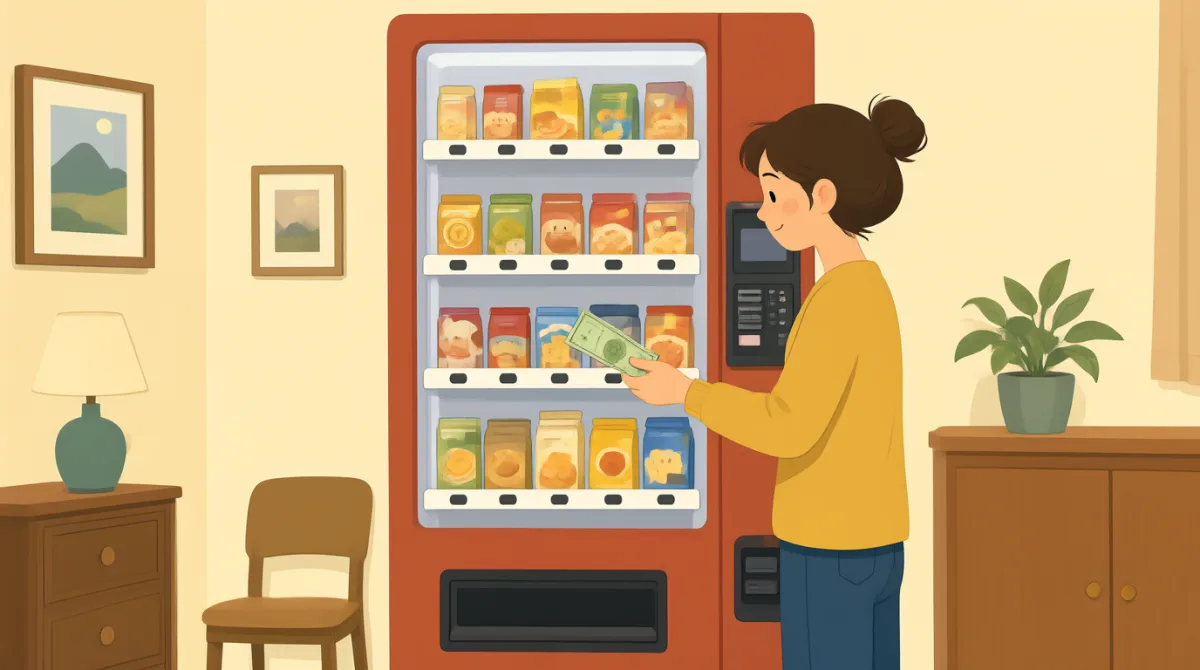

Hmm, I really want this soda. Okay, let's see.
هوم، واقعاً دلم یه نوشابه میخواد. خب، ببینم چی میشه.
Alright, putting in a five-dollar bill.
خب، دارم یه اسکناس پنجدلاری میندازم.
Oh, what? 'No change available'? Are you serious?
اوه، چی؟ «پول خرد موجود نیست»؟ جدی میگی؟

What's wrong, Leo?
چی شده، لئو؟
This machine says it has no change. I put in a five, and the drink is only two bucks.
این دستگاه میگه پول خرد نداره. من یه اسکناس پنجدلاری انداختم، ولی قیمت نوشیدنی فقط دو دلاره.
Ah, that happens sometimes. It's really annoying.
آها، بعضی وقتها این اتفاق میافته. واقعاً رو اعصابه.
So it won't give me the drink or my money back?
یعنی نه نوشیدنی رو میده، نه پولم رو پس میده؟
It should return your bill. Try pressing the coin return button.
باید اسکناست رو پس بده. دکمهٔ برگشت سکه رو فشار بده.
Phew, okay, it spit the five-dollar bill back out. Guess I'll try another machine.
اوف، خب، اسکناس پنجدلاری رو پس داد. فکر کنم یه دستگاه دیگه رو امتحان کنم.
واژگان7
- sodaنوشابه
A sweet, fizzy drink like cola or lemon soda, often sold in vending machines. Use it when talking about beverages: 'I want a soda.'
نوشیدنی شیرین و گازداری مثل کولا یا نوشابهٔ لیمویی که اغلب در دستگاههای فروش خودکار فروخته میشه. برای صحبت دربارهٔ نوشیدنیها به کار میره: 'I want a soda.' (یه نوشابه میخوام.)
- billاسکناس
A piece of paper money, like a five-dollar bill. In this context, it means currency note, not a restaurant check. Say: 'I inserted a bill.'
یک تکه پول کاغذی، مثل اسکناس پنجدلاری. اینجا منظور اسکناس است، نه صورتحساب رستوران. بگو: 'I inserted a bill.' (یک اسکناس داخل دستگاه انداختم.)
- changeپول خرد؛ باقیپول
Small coins or money returned after paying more than the cost. Here, 'no change available' means the machine can't give coins back. Common in shopping: 'Do you have change?'
سکههای ریز یا پولی که وقتی بیشتر از قیمت کالا پرداخت میکنید، به شما پس میدهند. اینجا، 'no change available' یعنی دستگاه نمیتونه سکه پس بده. در خریدوفروش رایجه: 'Do you have change?' (پول خرد دارید؟)
- bucksدلار (محاورهای)
Informal slang for dollars in American English. 'Two bucks' means two dollars. Use casually with friends: 'It costs five bucks.'
واژهای عامیانه در انگلیسی آمریکایی برای دلار. 'Two bucks' یعنی دو دلار. در گفتوگوی خودمانی به کار میره: 'It costs five bucks.' (قیمتش پنج دلاره.)
- annoyingآزاردهنده
Something that irritates or bothers you mildly. In daily talk: 'That's annoying when machines break.' Helps express frustration simply.
چیزی که کمی کلافهتان میکند یا روی اعصابتان میرود. در گفتوگوی روزمره: 'That's annoying when machines break.' (وقتی دستگاهها خراب میشن، واقعاً آزاردهندهست.) برای بیان سادهٔ ناراحتی به کار میره.
- coin return buttonدکمهٔ برگشت سکه
A button on a vending machine that returns your money if there's a problem. Practical for fixing issues: 'Press the coin return button.'
دکمهای روی دستگاه فروش خودکار که اگر مشکلی پیش بیاد، پولتون رو پس میده. برای حل مشکل به کار میره: 'Press the coin return button.' (دکمهٔ برگشت سکه رو فشار بده.)
- spit outبیرون انداختن
When a machine ejects something forcefully, like money. Informal: 'The machine spit out my bill.' Describes mechanical actions vividly.
وقتی دستگاه چیزی، مثل پول، رو با فشار بیرون میاندازه. حالت محاورهای: 'The machine spit out my bill.' (دستگاه اسکناسم رو بیرون انداخت.) این عبارت کار دستگاه رو بهشکل زنده و ملموس توصیف میکنه.
جملات کلیدی8
- 1
Hmm, I really want this soda. Okay, let's see.
هوم، واقعاً دلم یه نوشابه میخواد. خب، ببینم چی میشه.
This shows hesitation and decision-making with 'hmm' and 'let's see' for thinking aloud. Useful for everyday planning; 'hmm' is a filler sound like 'um' in Chinese.
در این جمله 'hmm' و 'let's see' برای نشان دادن تردید و تصمیمگیری با صدای بلند به کار میرن. برای برنامهریزی روزمره مفیده. 'hmm' صدایی پُرکننده مثل 'um' در انگلیسیه.
- 2
Alright, putting in a five-dollar bill.
خب، دارم یه اسکناس پنجدلاری میندازم.
Announces an action with 'alright' for agreement and 'putting in' as present continuous for ongoing action. Practice for describing steps: simple present continuous tense.
'alright' برای موافقت یا شروع کار و 'putting in' برای توصیف کاری که همین حالا در جریانه به کار میرن. برای گفتن مراحل انجام کار تمرین خوبیه؛ اینجا از حال استمراری ساده استفاده شده.
- 3
Oh, what? 'No change available'? Are you serious?
اوه، چی؟ «پول خرد موجود نیست»؟ جدی میگی؟
Expresses surprise and frustration with 'oh what?' and rhetorical 'are you serious?'. Useful for reacting to problems; question tag adds emphasis without expecting answer.
این جمله با 'oh what?' تعجب و با پرسش بلاغی 'are you serious?' کلافگی رو نشون میده. برای واکنش به مشکل مفیده؛ این پرسش برای تأکیده و انتظار پاسخ واقعی نداره.
- 4
This machine says it has no change. I put in a five, and the drink is only two bucks.
این دستگاه میگه پول خرد نداره. من یه اسکناس پنجدلاری انداختم، ولی قیمت نوشیدنی فقط دو دلاره.
Reports a problem and explains details using 'says' for machine message and contrast with 'and...only'. Key for complaining politely; uses informal 'bucks' for money.
با 'says' مشکل رو از زبان دستگاه گزارش میکنید و با 'and...only' جزئیات و تفاوت قیمت رو توضیح میدید. این ساختار برای شکایت مؤدبانه مفیده و 'bucks' واژهٔ محاورهای برای پول است.
- 5
Ah, that happens sometimes. It's really annoying.
آها، بعضی وقتها این اتفاق میافته. واقعاً رو اعصابه.
Acknowledges a common issue with 'ah' for realization and 'sometimes' for frequency. 'Annoying' expresses mild irritation; useful in conversations to empathize.
با 'ah' متوجه شدن موضوع و با 'sometimes' گاهی اتفاق افتادنش رو نشون میدید. 'annoying' ناراحتی خفیف رو بیان میکنه و برای همدلی در گفتوگو مفیده.
- 6
So it won't give me the drink or my money back?
یعنی نه نوشیدنی رو میده، نه پولم رو پس میده؟
Seeks confirmation with 'so' for conclusion and 'won't' (will not) for future negative. Tag question form; practice for asking about expectations in services.
با 'so' نتیجهگیری میکنید و 'won't' شکل کوتاه 'will not' است و منفی بودن اتفاقی در آینده رو نشون میده. این پرسش برای مطمئن شدن از چیزی که در موقعیتهای خدماتی انتظار دارید مفیده.
- 7
It should return your bill. Try pressing the coin return button.
باید اسکناست رو پس بده. دکمهٔ برگشت سکه رو فشار بده.
Gives advice with 'should' for expectation and imperative 'try pressing' for suggestion. Useful for helping others; imperative mood for instructions.
با 'should' چیزی رو که انتظار دارید بیان میکنید و با 'try pressing' پیشنهادی میدید. برای کمک به دیگران مفیده؛ بخش دوم جمله امری است و راهنمایی میکنه.
- 8
Phew, okay, it spit the five-dollar bill back out. Guess I'll try another machine.
اوف، خب، اسکناس پنجدلاری رو پس داد. فکر کنم یه دستگاه دیگه رو امتحان کنم.
Relief with 'phew' and inference with 'guess I'll' for future plan. 'Spit...back out' describes action; shows casual decision-making after resolution.
'phew' آسودگی خاطر و 'guess I'll' حدس و تصمیم برای آینده رو نشون میده. 'spit...back out' بیرون انداختن چیزی رو توصیف میکنه؛ جمله تصمیمگیری خودمانی پس از حل مشکل رو نشان میدهد.