Giving the Key and Details
Entregando a chave e explicando os detalhes
Emma gives Mia a spare key and explains where to leave the mail. They agree on when Emma will be back.
Emma entrega uma chave reserva a Mia e explica onde deixar a correspondência. Elas combinam quando Emma vai voltar.
Diálogo8
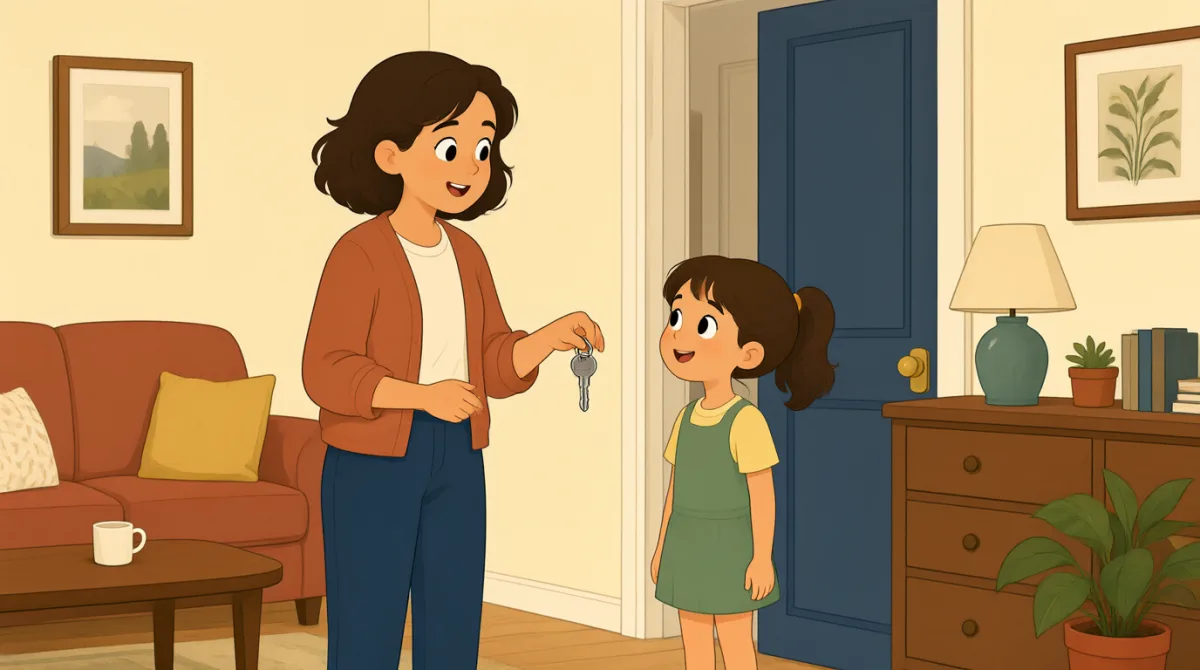

Here’s my spare key. The blue one is for the front door.
Aqui está minha chave reserva. A azul é da porta da frente.

Thanks. Where would you like me to leave your mail?
Obrigada. Onde você quer que eu deixe sua correspondência?
Could you put it on the small table by the door?
Você pode deixá-la na mesinha ao lado da porta?
Sure. I’ll bring it inside and leave it there.
Claro. Vou levar para dentro e deixar lá.
I’ll be back on Sunday evening. I can pick up the key then.
Volto no domingo à noite. Posso pegar a chave então.
That works. I’ll keep the key safe until you get back.
Combinado. Vou guardar a chave em segurança até você voltar.
Thanks so much, Mia. I’ll text you if my plans change.
Muito obrigada, Mia. Te mando uma mensagem se meus planos mudarem.
You’re welcome! Have a nice trip, and don’t worry about your mail.
Por nada! Boa viagem e não se preocupe com a correspondência.
Vocabulário8
- spare keychave reserva
An extra key that you keep in case someone needs to use it. Here, Emma gives Mia an extra key to her home.
Uma chave extra que você guarda para o caso de alguém precisar usá-la. Aqui, Emma dá a Mia uma chave extra da casa dela.
- front doorporta da frente
The main door at the front of a home or building. The blue key opens Emma’s front door.
A entrada principal de uma casa ou prédio. A chave azul abre a porta da frente da casa de Emma.
- leave your maildeixar sua correspondência
To put someone’s letters and packages in a place for them to find later. You can use this phrase when asking someone to hold your mail.
Colocar as cartas e encomendas de alguém em um lugar onde essa pessoa possa encontrá-las depois. Você pode usar essa expressão ao pedir que alguém guarde sua correspondência.
- bring it insidelevar para dentro
To carry something from outside into a building or home. Use “bring it inside” when asking someone to take something indoors.
Levar algo de fora para dentro de um prédio ou de uma casa. Use “bring it inside” quando pedir que alguém leve algo para dentro.
- pick up the keypegar a chave
To go and get the key. You can use “pick up” when arranging to collect something from someone.
Ir buscar a chave. Você pode usar “pick up” ao combinar de buscar algo com alguém.
- keep the key safeguardar a chave em segurança
To take care of the key so it is not lost or damaged. You can use this phrase when someone lends you something important.
Cuidar da chave para que ela não se perca nem seja danificada. Você pode usar essa expressão quando alguém lhe empresta algo importante.
- get backvoltar
To return to a place. Here, Mia will keep the key until Emma returns from her trip.
Retornar a um lugar. Aqui, Mia vai guardar a chave até Emma voltar da viagem.
- my plans changemeus planos mudarem
This means that your arrangements become different. You can say it when you may need to update someone about a change.
Isso significa que seus planos ficam diferentes. Você pode dizer isso quando talvez precise avisar alguém sobre uma mudança.
Frases-chave8
- 1
Where would you like me to leave your mail?
Onde você quer que eu deixe sua correspondência?
This is a polite way to ask where someone wants you to put something. Reuse “Where would you like me to leave [something]?” for packages or other items.
Essa é uma forma educada de perguntar onde alguém quer que você coloque alguma coisa. Reutilize “Where would you like me to leave [something]?” para falar de encomendas ou outros itens.
- 2
Could you put it on the small table by the door?
Você pode deixá-la na mesinha ao lado da porta?
This is a polite request that gives a clear place for an item. Replace “it” and the location to explain where something should go.
Esse é um pedido educado que indica claramente onde colocar algo. Troque “it” e o local para explicar onde alguma coisa deve ficar.
- 3
I’ll bring it inside and leave it there.
Vou levar para dentro e deixar lá.
This sentence explains what you will do with an item. Reuse “I’ll [action] and leave it [place]” to describe a simple plan.
Essa frase explica o que você vai fazer com alguma coisa. Reutilize “I’ll [action] and leave it [place]” para descrever um plano simples.
- 4
I’ll be back on Sunday evening.
Volto no domingo à noite.
This is a simple way to tell someone when you will return. Replace the day and time to share your own schedule.
Essa é uma forma simples de dizer a alguém quando você vai voltar. Troque o dia e o horário para informar seus próprios planos.
- 5
I can pick up the key then.
Posso pegar a chave então.
This sentence offers a time to collect something. Use “I can pick up [item] then” when agreeing on when to get it.
Essa frase sugere um horário para buscar alguma coisa. Use “I can pick up [item] then” ao combinar quando vai buscá-la.
- 6
I’ll keep the key safe until you get back.
Vou guardar a chave em segurança até você voltar.
This reassures someone that you will take care of their key until they return. Replace “the key” with another item you are looking after.
Essa frase tranquiliza alguém, dizendo que você vai cuidar da chave até essa pessoa voltar. Troque “the key” por outro item de que você esteja cuidando.
- 7
I’ll text you if my plans change.
Te mando uma mensagem se meus planos mudarem.
This tells someone how you will let them know if your arrangements become different. You can reuse “I’ll text you if…” to explain when you will send a message.
Essa frase diz como você vai avisar alguém caso seus planos mudem. Você pode reutilizar “I’ll text you if…” para explicar quando vai mandar uma mensagem.
- 8
Have a nice trip, and don’t worry about your mail.
Boa viagem e não se preocupe com a correspondência.
This is a friendly way to wish someone well and reassure them. You can change “trip” and “your mail” to fit other situations.
Essa é uma forma amigável de desejar boa viagem a alguém e tranquilizá-la. Você pode trocar “trip” e “your mail” para adaptar a frase a outras situações.