Giving the Key and Details
交鑰匙並說明細節
Emma gives Mia a spare key and explains where to leave the mail. They agree on when Emma will be back.
Emma把備用鑰匙交給Mia,並說明信件要放在哪裡。她們約好Emma回來的時間。
對話8
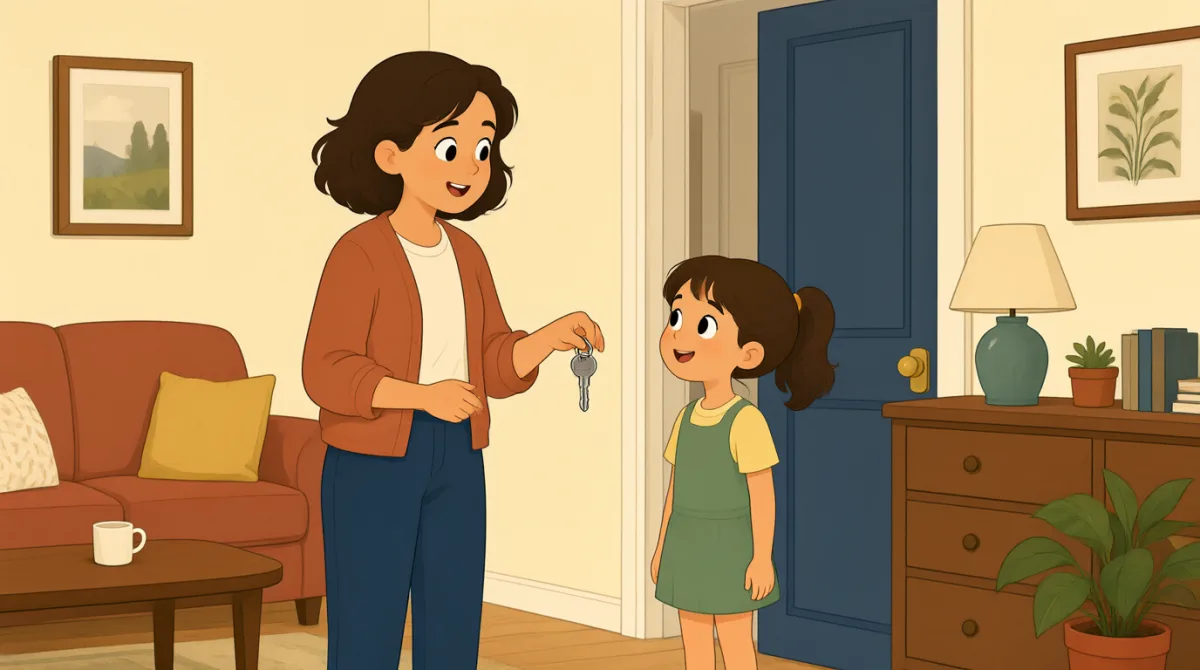

Here’s my spare key. The blue one is for the front door.
這是我的備用鑰匙。藍色的這把是前門的鑰匙。

Thanks. Where would you like me to leave your mail?
謝謝。你想讓我把信放在哪裡?
Could you put it on the small table by the door?
你能把信放在門邊的小桌子上嗎?
Sure. I’ll bring it inside and leave it there.
當然。我會把信拿進來,放在那裡。
I’ll be back on Sunday evening. I can pick up the key then.
我星期天晚上回來。到時候我可以來取鑰匙。
That works. I’ll keep the key safe until you get back.
沒問題。我會把鑰匙保管好,等你回來。
Thanks so much, Mia. I’ll text you if my plans change.
太謝謝你了,米婭。如果我的計劃有變,我會發簡訊告訴你。
You’re welcome! Have a nice trip, and don’t worry about your mail.
不客氣!旅途愉快,別擔心你的信件。
詞彙8
- spare key備用鑰匙
An extra key that you keep in case someone needs to use it. Here, Emma gives Mia an extra key to her home.
備用鑰匙是額外準備的一把鑰匙,以備有人需要使用。這裡,Emma把一把家裡的備用鑰匙交給了Mia。
- front door前門
The main door at the front of a home or building. The blue key opens Emma’s front door.
房屋或建築物正面的主要入口。藍色的鑰匙可以開啟Emma家的前門。
- leave your mail把你的郵件放好
To put someone’s letters and packages in a place for them to find later. You can use this phrase when asking someone to hold your mail.
把別人的信件和包裹放在某個地方,方便他們之後找到。請別人幫忙代收郵件時,可以用這個說法。
- bring it inside把它拿進屋
To carry something from outside into a building or home. Use “bring it inside” when asking someone to take something indoors.
把某樣東西從室外拿到建築物或屋裡。請別人把東西拿進室內時,可以用“bring it inside”。
- pick up the key取鑰匙
To go and get the key. You can use “pick up” when arranging to collect something from someone.
去把鑰匙拿回來。商量向別人取東西的時間時,可以用“pick up”。
- keep the key safe保管好鑰匙
To take care of the key so it is not lost or damaged. You can use this phrase when someone lends you something important.
照看好鑰匙,避免它丟失或損壞。別人把重要的東西借給你時,可以用這個說法。
- get back回來
To return to a place. Here, Mia will keep the key until Emma returns from her trip.
回到某個地方。這裡,Mia會替Emma保管鑰匙,直到Emma旅行回來。
- my plans change我的計劃有變
This means that your arrangements become different. You can say it when you may need to update someone about a change.
意思是你的安排變了。需要告知別人安排有變時,可以這麼說。
關鍵句8
- 1
Where would you like me to leave your mail?
你想讓我把郵件放在哪裡?
This is a polite way to ask where someone wants you to put something. Reuse “Where would you like me to leave [something]?” for packages or other items.
這是一種禮貌詢問別人想把東西放在哪裡的說法。可以套用“Where would you like me to leave [something]?”來詢問包裹或其他物品該放在哪裡。
- 2
Could you put it on the small table by the door?
你能把它放在門邊的小桌子上嗎?
This is a polite request that gives a clear place for an item. Replace “it” and the location to explain where something should go.
這是一個禮貌的請求,也明確說明了東西該放在哪裡。替換“it”和地點,就能說明某樣東西該放到哪裡。
- 3
I’ll bring it inside and leave it there.
我會把它拿進屋,放在那裡。
This sentence explains what you will do with an item. Reuse “I’ll [action] and leave it [place]” to describe a simple plan.
這句話說明你打算怎麼處理某樣東西。可以套用“I’ll [action] and leave it [place]”來描述一個簡單的計劃。
- 4
I’ll be back on Sunday evening.
我星期天晚上回來。
This is a simple way to tell someone when you will return. Replace the day and time to share your own schedule.
這是一種簡單的方式,可以告訴別人你什麼時候回來。替換日期和時間,就能告知自己的安排。
- 5
I can pick up the key then.
到時候我可以來取鑰匙。
This sentence offers a time to collect something. Use “I can pick up [item] then” when agreeing on when to get it.
這句話提出了一個取東西的時間。商量好什麼時候去拿時,可以用“I can pick up [item] then”。
- 6
I’ll keep the key safe until you get back.
我會把鑰匙保管好,直到你回來。
This reassures someone that you will take care of their key until they return. Replace “the key” with another item you are looking after.
這句話讓對方放心,告訴對方在他們回來之前你會替他們保管好鑰匙。可以把“the key”換成你代為照看的其他物品。
- 7
I’ll text you if my plans change.
如果我的計劃有變,我會發簡訊告訴你。
This tells someone how you will let them know if your arrangements become different. You can reuse “I’ll text you if…” to explain when you will send a message.
這句話告訴別人,如果你的安排有變,你會怎麼通知他們。可以套用“I’ll text you if…”來說明什麼情況下你會發訊息。
- 8
Have a nice trip, and don’t worry about your mail.
祝你旅途愉快,別擔心你的郵件。
This is a friendly way to wish someone well and reassure them. You can change “trip” and “your mail” to fit other situations.
這是一種友好的祝福和安慰。可以根據其他情境替換“trip”和“your mail”。