Giving the Key and Details
चाबी और बाकी ज़रूरी बातें
Emma gives Mia a spare key and explains where to leave the mail. They agree on when Emma will be back.
एमा मिया को एक अतिरिक्त चाबी देती है और बताती है कि डाक कहाँ रखनी है। दोनों तय करती हैं कि एमा कब वापस आएगी।
संवाद8
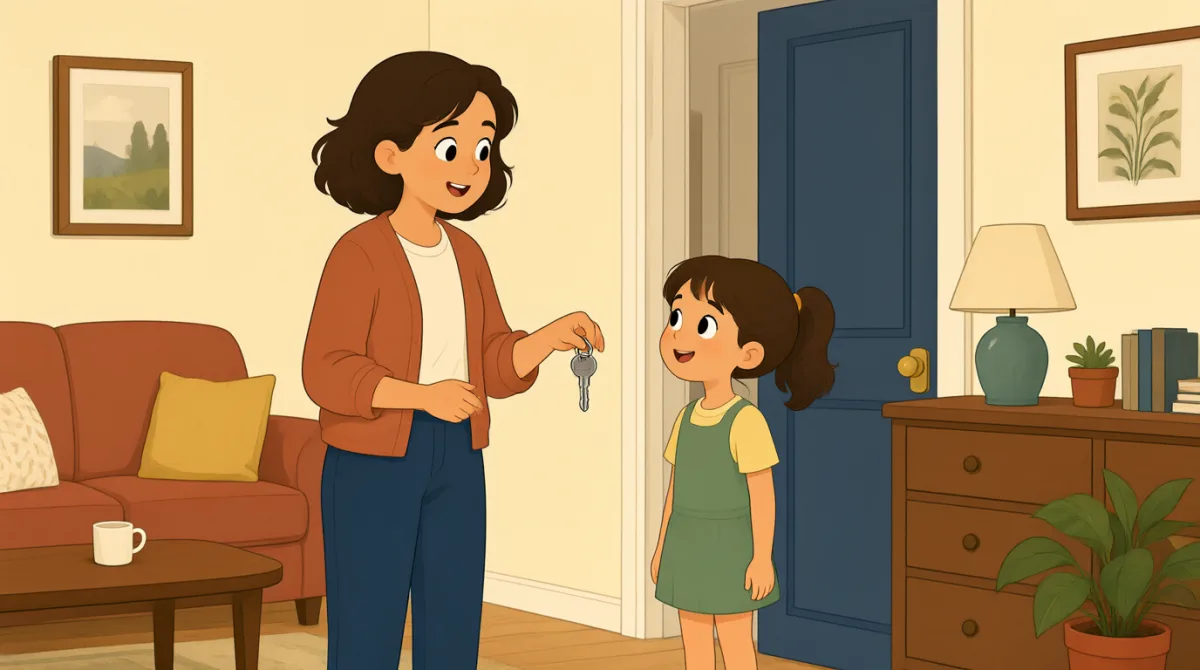

Here’s my spare key. The blue one is for the front door.
ये लो, मेरे घर की एक अतिरिक्त चाबी। नीली वाली मुख्य दरवाज़े की है।

Thanks. Where would you like me to leave your mail?
धन्यवाद। तुम चाहती हो कि मैं तुम्हारी डाक कहाँ रखूँ?
Could you put it on the small table by the door?
क्या तुम उसे दरवाज़े के पास वाली छोटी मेज़ पर रख दोगी?
Sure. I’ll bring it inside and leave it there.
ज़रूर। मैं उसे अंदर ले जाकर वहीं रख दूँगी।
I’ll be back on Sunday evening. I can pick up the key then.
मैं रविवार की शाम वापस आऊँगी। तब चाबी ले लूँगी।
That works. I’ll keep the key safe until you get back.
ठीक है। तुम्हारे वापस आने तक मैं चाबी संभालकर रखूँगी।
Thanks so much, Mia. I’ll text you if my plans change.
बहुत-बहुत धन्यवाद, मिया। अगर मेरे प्लान बदलें तो मैं तुम्हें मैसेज कर दूँगी।
You’re welcome! Have a nice trip, and don’t worry about your mail.
कोई बात नहीं! तुम्हारी यात्रा अच्छी रहे, और डाक की चिंता मत करना।
शब्दावली8
- spare keyअतिरिक्त चाबी
An extra key that you keep in case someone needs to use it. Here, Emma gives Mia an extra key to her home.
ऐसी फालतू चाबी जिसे इस स्थिति के लिए रखा जाता है कि किसी को उसकी ज़रूरत पड़ जाए। यहाँ एमा मिया को अपने घर की एक अतिरिक्त चाबी देती है।
- front doorमुख्य दरवाज़ा
The main door at the front of a home or building. The blue key opens Emma’s front door.
घर या इमारत के सामने की ओर बना मुख्य दरवाज़ा। नीली चाबी से एमा के घर का मुख्य दरवाज़ा खुलता है।
- leave your mailतुम्हारी डाक रख देना
To put someone’s letters and packages in a place for them to find later. You can use this phrase when asking someone to hold your mail.
किसी के पत्रों और पैकेजों को ऐसी जगह रखना जहाँ वे बाद में उन्हें पा सकें। किसी से अपनी डाक संभालकर रखने को कहने के लिए यह वाक्यांश इस्तेमाल कर सकते हो।
- bring it insideउसे अंदर ले जाना
To carry something from outside into a building or home. Use “bring it inside” when asking someone to take something indoors.
किसी चीज़ को बाहर से किसी इमारत या घर के अंदर ले जाना। किसी से कोई चीज़ अंदर ले जाने को कहने के लिए “bring it inside” कहो।
- pick up the keyचाबी लेने आना
To go and get the key. You can use “pick up” when arranging to collect something from someone.
चाबी लेने के लिए जाना। किसी से कोई चीज़ लेने आने की योजना तय करते समय “pick up” का इस्तेमाल कर सकते हो।
- keep the key safeचाबी संभालकर रखना
To take care of the key so it is not lost or damaged. You can use this phrase when someone lends you something important.
चाबी का ध्यान रखना ताकि वह खो न जाए या खराब न हो। जब कोई तुम्हें कोई ज़रूरी चीज़ उधार दे, तो यह वाक्यांश इस्तेमाल कर सकते हो।
- get backवापस आना
To return to a place. Here, Mia will keep the key until Emma returns from her trip.
किसी जगह लौटकर आना। यहाँ मिया एमा के यात्रा से लौटने तक चाबी अपने पास रखेगी।
- my plans changeमेरे प्लान बदलना
This means that your arrangements become different. You can say it when you may need to update someone about a change.
इसका मतलब है कि तुम्हारे तय किए हुए इंतज़ाम बदल गए हैं। जब किसी को बदलाव के बारे में बताना हो, तो यह कह सकते हो।
मुख्य वाक्य8
- 1
Where would you like me to leave your mail?
तुम चाहती हो कि मैं तुम्हारी डाक कहाँ रखूँ?
This is a polite way to ask where someone wants you to put something. Reuse “Where would you like me to leave [something]?” for packages or other items.
किसी से यह पूछने का यह एक विनम्र तरीका है कि वह कोई चीज़ कहाँ रखवाना चाहता है। पैकेज या दूसरी चीज़ों के लिए “Where would you like me to leave [something]?” का फिर से इस्तेमाल करो।
- 2
Could you put it on the small table by the door?
क्या तुम उसे दरवाज़े के पास वाली छोटी मेज़ पर रख दोगी?
This is a polite request that gives a clear place for an item. Replace “it” and the location to explain where something should go.
यह एक विनम्र अनुरोध है जिसमें चीज़ रखने की सही जगह बताई गई है। यह समझाने के लिए कि कोई चीज़ कहाँ रखनी है, “it” और जगह की जानकारी बदल दो।
- 3
I’ll bring it inside and leave it there.
मैं उसे अंदर ले जाकर वहीं रख दूँगी।
This sentence explains what you will do with an item. Reuse “I’ll [action] and leave it [place]” to describe a simple plan.
इस वाक्य में बताया गया है कि तुम किसी चीज़ के साथ क्या करोगे। अपनी आसान-सी योजना बताने के लिए “I’ll [action] and leave it [place]” का फिर से इस्तेमाल करो।
- 4
I’ll be back on Sunday evening.
मैं रविवार की शाम वापस आऊँगी।
This is a simple way to tell someone when you will return. Replace the day and time to share your own schedule.
किसी को यह बताने का आसान तरीका है कि तुम कब लौटोगे। अपना समय बताने के लिए दिन और समय बदल दो।
- 5
I can pick up the key then.
तब मैं चाबी लेने आ सकती हूँ।
This sentence offers a time to collect something. Use “I can pick up [item] then” when agreeing on when to get it.
इस वाक्य में कोई चीज़ लेने का समय बताया जाता है। उसे लेने का समय तय करते हुए “I can pick up [item] then” इस्तेमाल करो।
- 6
I’ll keep the key safe until you get back.
तुम्हारे वापस आने तक मैं चाबी संभालकर रखूँगी।
This reassures someone that you will take care of their key until they return. Replace “the key” with another item you are looking after.
इससे सामने वाले को भरोसा दिलाया जाता है कि उसके लौटने तक तुम उसकी चाबी का ध्यान रखोगे। जिस दूसरी चीज़ का ध्यान रख रहे हो, उसके लिए “the key” की जगह उसका नाम रख दो।
- 7
I’ll text you if my plans change.
अगर मेरे प्लान बदलें तो मैं तुम्हें मैसेज कर दूँगी।
This tells someone how you will let them know if your arrangements become different. You can reuse “I’ll text you if…” to explain when you will send a message.
इसमें बताया जाता है कि तुम्हारे इंतज़ाम बदलने पर तुम किसी को कैसे बताओगे। यह समझाने के लिए कि तुम कब मैसेज भेजोगे, “I’ll text you if…” का फिर से इस्तेमाल कर सकते हो।
- 8
Have a nice trip, and don’t worry about your mail.
तुम्हारी यात्रा अच्छी रहे, और अपनी डाक की चिंता मत करना।
This is a friendly way to wish someone well and reassure them. You can change “trip” and “your mail” to fit other situations.
किसी के लिए शुभकामना जताने और उसे भरोसा दिलाने का यह एक दोस्ताना तरीका है। दूसरी स्थितियों के मुताबिक “trip” और “your mail” बदल सकते हो।