Giving the Key and Details
Entregar la llave y dar detalles
Emma gives Mia a spare key and explains where to leave the mail. They agree on when Emma will be back.
Emma le da a Mia una llave de repuesto y le explica dónde dejar el correo. Acuerdan cuándo volverá Emma.
Diálogo8
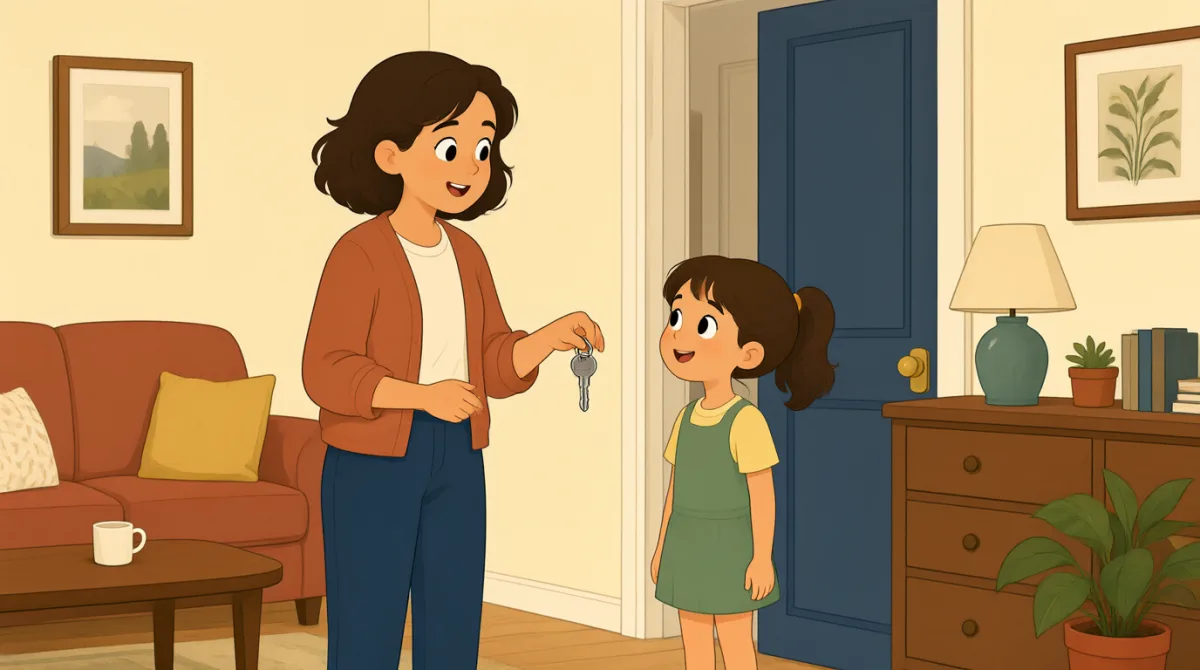

Here’s my spare key. The blue one is for the front door.
Aquí tienes mi llave de repuesto. La azul es la de la puerta principal.

Thanks. Where would you like me to leave your mail?
Gracias. ¿Dónde quieres que te deje el correo?
Could you put it on the small table by the door?
¿Puedes dejarlo en la mesita junto a la puerta?
Sure. I’ll bring it inside and leave it there.
Claro. Lo meteré en casa y lo dejaré allí.
I’ll be back on Sunday evening. I can pick up the key then.
Volveré el domingo por la tarde. Entonces puedo recoger la llave.
That works. I’ll keep the key safe until you get back.
Perfecto. Guardaré bien la llave hasta que vuelvas.
Thanks so much, Mia. I’ll text you if my plans change.
Muchísimas gracias, Mia. Te escribiré si cambian mis planes.
You’re welcome! Have a nice trip, and don’t worry about your mail.
¡De nada! Que tengas un buen viaje y no te preocupes por el correo.
Vocabulario8
- spare keyllave de repuesto
An extra key that you keep in case someone needs to use it. Here, Emma gives Mia an extra key to her home.
Una llave extra que guardas por si alguien necesita usarla. Aquí, Emma le da a Mia una llave extra de su casa.
- front doorpuerta principal
The main door at the front of a home or building. The blue key opens Emma’s front door.
La puerta de entrada de una casa o edificio. La llave azul abre la puerta principal de Emma.
- leave your maildejar el correo
To put someone’s letters and packages in a place for them to find later. You can use this phrase when asking someone to hold your mail.
Poner las cartas y los paquetes de alguien en un lugar donde pueda encontrarlos después. Puedes usar esta expresión cuando le pidas a alguien que te guarde el correo.
- bring it insidemeterlo en casa
To carry something from outside into a building or home. Use “bring it inside” when asking someone to take something indoors.
Llevar algo de afuera al interior de un edificio o una casa. Usa “bring it inside” cuando le pidas a alguien que meta algo.
- pick up the keyrecoger la llave
To go and get the key. You can use “pick up” when arranging to collect something from someone.
Ir a buscar la llave. Puedes usar “pick up” cuando acuerdas recoger algo de alguien.
- keep the key safeguardar bien la llave
To take care of the key so it is not lost or damaged. You can use this phrase when someone lends you something important.
Cuidar la llave para que no se pierda ni se dañe. Puedes usar esta expresión cuando alguien te presta algo importante.
- get backvolver
To return to a place. Here, Mia will keep the key until Emma returns from her trip.
Regresar a un lugar. Aquí, Mia guardará la llave hasta que Emma vuelva de su viaje.
- my plans changecambiar mis planes
This means that your arrangements become different. You can say it when you may need to update someone about a change.
Significa que tus planes son diferentes. Puedes decirlo cuando quizá tengas que avisarle a alguien de un cambio.
Frases clave8
- 1
Where would you like me to leave your mail?
¿Dónde quieres que te deje el correo?
This is a polite way to ask where someone wants you to put something. Reuse “Where would you like me to leave [something]?” for packages or other items.
Es una forma amable de preguntar dónde quiere alguien que pongas algo. Puedes volver a usar “Where would you like me to leave [something]?” para preguntar por paquetes u otros objetos.
- 2
Could you put it on the small table by the door?
¿Puedes dejarlo en la mesita junto a la puerta?
This is a polite request that gives a clear place for an item. Replace “it” and the location to explain where something should go.
Es una petición amable que indica claramente dónde dejar algo. Cambia “it” y el lugar para explicar dónde debe ir algo.
- 3
I’ll bring it inside and leave it there.
Lo meteré en casa y lo dejaré allí.
This sentence explains what you will do with an item. Reuse “I’ll [action] and leave it [place]” to describe a simple plan.
Esta frase explica qué harás con algo. Puedes volver a usar “I’ll [action] and leave it [place]” para describir un plan sencillo.
- 4
I’ll be back on Sunday evening.
Volveré el domingo por la tarde.
This is a simple way to tell someone when you will return. Replace the day and time to share your own schedule.
Es una forma sencilla de decirle a alguien cuándo regresarás. Cambia el día y la hora para contar cuál es tu horario.
- 5
I can pick up the key then.
Entonces puedo recoger la llave.
This sentence offers a time to collect something. Use “I can pick up [item] then” when agreeing on when to get it.
Esta frase propone un momento para recoger algo. Usa “I can pick up [item] then” cuando acuerdes cuándo ir a buscarlo.
- 6
I’ll keep the key safe until you get back.
Guardaré bien la llave hasta que vuelvas.
This reassures someone that you will take care of their key until they return. Replace “the key” with another item you are looking after.
Esta frase le asegura a alguien que cuidarás su llave hasta que vuelva. Cambia “the key” por otro objeto que estés cuidando.
- 7
I’ll text you if my plans change.
Te escribiré si cambian mis planes.
This tells someone how you will let them know if your arrangements become different. You can reuse “I’ll text you if…” to explain when you will send a message.
Esta frase le dice a alguien cómo le avisarás si cambian tus planes. Puedes volver a usar “I’ll text you if…” para explicar cuándo le enviarás un mensaje.
- 8
Have a nice trip, and don’t worry about your mail.
Que tengas un buen viaje y no te preocupes por el correo.
This is a friendly way to wish someone well and reassure them. You can change “trip” and “your mail” to fit other situations.
Es una forma amable de desearle lo mejor a alguien y tranquilizarlo. Puedes cambiar “trip” y “your mail” para adaptarlos a otras situaciones.