Giving the Key and Details
চাবি দেওয়া ও বিস্তারিত জানানো
Emma gives Mia a spare key and explains where to leave the mail. They agree on when Emma will be back.
এমা মিয়াকে একটি অতিরিক্ত চাবি দেয় এবং ডাক কোথায় রাখতে হবে তা বুঝিয়ে বলে। তারা ঠিক করে, এমা কবে ফিরবে।
সংলাপ8
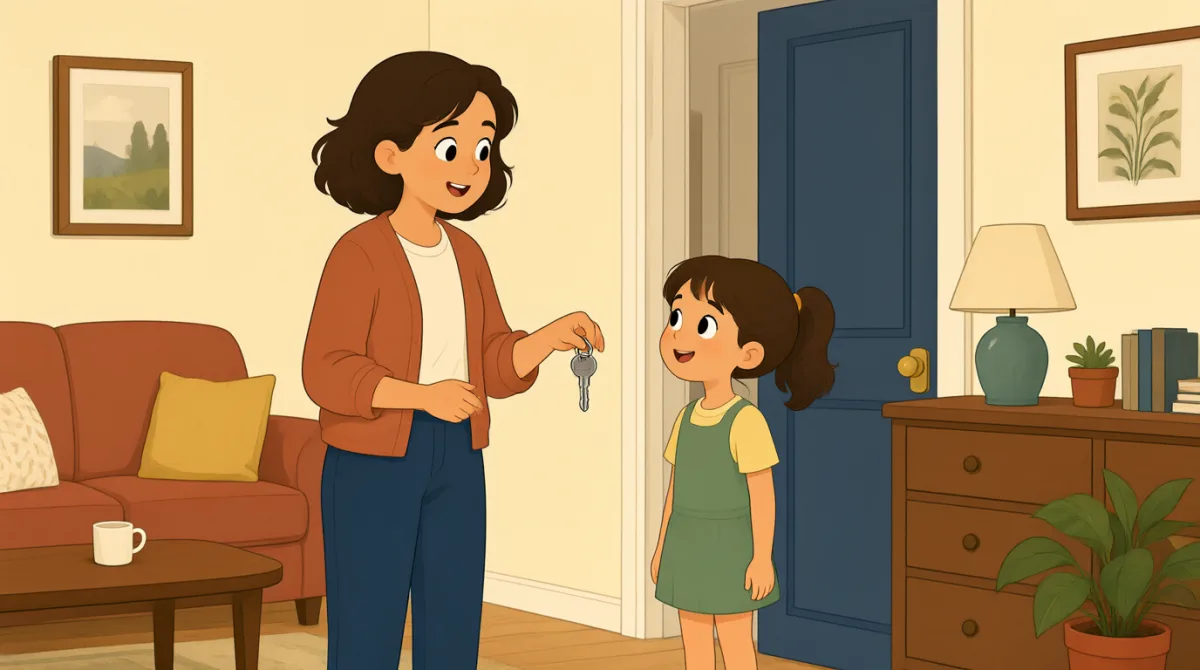

Here’s my spare key. The blue one is for the front door.
এই নাও আমার অতিরিক্ত চাবি। নীল চাবিটা সদর দরজার।

Thanks. Where would you like me to leave your mail?
ধন্যবাদ। তোমার ডাক কোথায় রাখব?
Could you put it on the small table by the door?
দরজার পাশে ছোট টেবিলটার ওপর রাখতে পারবে?
Sure. I’ll bring it inside and leave it there.
অবশ্যই। আমি ডাকগুলো ভেতরে এনে ওখানেই রেখে দেব।
I’ll be back on Sunday evening. I can pick up the key then.
আমি রবিবার সন্ধ্যায় ফিরব। তখন চাবিটা নিয়ে নিতে পারি।
That works. I’ll keep the key safe until you get back.
ঠিক আছে। তুমি ফিরে না আসা পর্যন্ত চাবিটা যত্ন করে রাখব।
Thanks so much, Mia. I’ll text you if my plans change.
অনেক ধন্যবাদ, মিয়া। আমার পরিকল্পনা বদলালে তোমাকে মেসেজ করব।
You’re welcome! Have a nice trip, and don’t worry about your mail.
কোনো ব্যাপার না! তোমার ভ্রমণ ভালো কাটুক, আর ডাক নিয়ে চিন্তা কোরো না।
শব্দভান্ডার8
- spare keyঅতিরিক্ত চাবি
An extra key that you keep in case someone needs to use it. Here, Emma gives Mia an extra key to her home.
কেউ ব্যবহার করতে চাইলে কাজে লাগবে ভেবে যে বাড়তি চাবি রেখে দেওয়া হয়। এখানে, এমা মিয়াকে তার বাড়ির একটি বাড়তি চাবি দিচ্ছে।
- front doorসদর দরজা
The main door at the front of a home or building. The blue key opens Emma’s front door.
বাড়ি বা ভবনের সামনের প্রধান দরজা। নীল চাবিটি এমার বাড়ির সদর দরজা খোলে।
- leave your mailতোমার ডাক রেখে দেওয়া
To put someone’s letters and packages in a place for them to find later. You can use this phrase when asking someone to hold your mail.
কারও চিঠি ও পার্সেল এমন জায়গায় রাখা, যাতে সে পরে সেগুলো খুঁজে পায়। কাউকে তোমার ডাক সামলে রাখতে বলার সময় এই কথাটি ব্যবহার করতে পারো।
- bring it insideভেতরে নিয়ে আসা
To carry something from outside into a building or home. Use “bring it inside” when asking someone to take something indoors.
কোনো জিনিস বাইরে থেকে কোনো ভবন বা বাড়ির ভেতরে নিয়ে যাওয়া। কাউকে কিছু ঘরের ভেতরে নিতে বলার সময় “bring it inside” ব্যবহার করো।
- pick up the keyচাবি নিয়ে নেওয়া
To go and get the key. You can use “pick up” when arranging to collect something from someone.
গিয়ে চাবিটি নিয়ে আসা। কারও কাছ থেকে কিছু সংগ্রহ করার ব্যবস্থা করার সময় “pick up” ব্যবহার করতে পারো।
- keep the key safeচাবিটি যত্ন করে রাখা
To take care of the key so it is not lost or damaged. You can use this phrase when someone lends you something important.
চাবিটি হারিয়ে বা নষ্ট হয়ে যাওয়া থেকে বাঁচাতে যত্ন নেওয়া। কেউ তোমাকে গুরুত্বপূর্ণ কিছু ধার দিলে এই কথাটি ব্যবহার করতে পারো।
- get backফিরে আসা
To return to a place. Here, Mia will keep the key until Emma returns from her trip.
কোনো জায়গায় আবার ফিরে যাওয়া। এখানে, এমা ভ্রমণ থেকে ফিরে না আসা পর্যন্ত মিয়া চাবিটি নিজের কাছে রাখবে।
- my plans changeআমার পরিকল্পনা বদলালে
This means that your arrangements become different. You can say it when you may need to update someone about a change.
এর মানে, তোমার আয়োজন বা পরিকল্পনা পাল্টে যায়। কাউকে পরিবর্তনের কথা জানাতে হতে পারে—এমন পরিস্থিতিতে তুমি এটি বলতে পারো।
গুরুত্বপূর্ণ বাক্য8
- 1
Where would you like me to leave your mail?
তোমার ডাক কোথায় রাখব?
This is a polite way to ask where someone wants you to put something. Reuse “Where would you like me to leave [something]?” for packages or other items.
কেউ কোনো জিনিস কোথায় রাখতে চায়, তা জানতে এটি ভদ্রভাবে বলার একটি উপায়। পার্সেল বা অন্য জিনিসের ক্ষেত্রে “Where would you like me to leave [something]?” কথাটি আবার ব্যবহার করতে পারো।
- 2
Could you put it on the small table by the door?
দরজার পাশে ছোট টেবিলটার ওপর রাখতে পারবে?
This is a polite request that gives a clear place for an item. Replace “it” and the location to explain where something should go.
কোনো জিনিস কোথায় রাখতে হবে, তা স্পষ্ট করে ভদ্রভাবে অনুরোধ করার উপায় এটি। জিনিস কোথায় রাখা উচিত তা বোঝাতে “it” এবং জায়গার নাম বদলে বলো।
- 3
I’ll bring it inside and leave it there.
আমি এটা ভেতরে এনে ওখানেই রেখে দেব।
This sentence explains what you will do with an item. Reuse “I’ll [action] and leave it [place]” to describe a simple plan.
এই বাক্যে কোনো জিনিস নিয়ে তুমি কী করবে তা বোঝানো হয়। একটি সহজ পরিকল্পনার কথা বলতে “I’ll [action] and leave it [place]” আবার ব্যবহার করতে পারো।
- 4
I’ll be back on Sunday evening.
আমি রবিবার সন্ধ্যায় ফিরব।
This is a simple way to tell someone when you will return. Replace the day and time to share your own schedule.
কবে ফিরবে তা কাউকে জানানোর সহজ উপায় এটি। নিজের সময়সূচি জানাতে দিন ও সময় বদলে বলো।
- 5
I can pick up the key then.
তখন আমি চাবিটা নিয়ে নিতে পারি।
This sentence offers a time to collect something. Use “I can pick up [item] then” when agreeing on when to get it.
কিছু সংগ্রহ করার সময় জানাতে এই বাক্যে একটি সময়ের প্রস্তাব দেওয়া হয়। কখন কিছু নিতে আসবে তা ঠিক করার সময় “I can pick up [item] then” ব্যবহার করো।
- 6
I’ll keep the key safe until you get back.
তুমি ফিরে না আসা পর্যন্ত আমি চাবিটা যত্ন করে রাখব।
This reassures someone that you will take care of their key until they return. Replace “the key” with another item you are looking after.
কেউ ফিরে না আসা পর্যন্ত তার চাবিটির যত্ন নেবে—এ কথা বলে তাকে নিশ্চিন্ত করা হয়। তুমি যে অন্য কোনো জিনিসের দেখাশোনা করছ, তার নাম দিয়ে “the key” বদলে নিতে পারো।
- 7
I’ll text you if my plans change.
আমার পরিকল্পনা বদলালে তোমাকে মেসেজ করব।
This tells someone how you will let them know if your arrangements become different. You can reuse “I’ll text you if…” to explain when you will send a message.
তোমার পরিকল্পনা বদলালে কীভাবে তাকে জানাবে, তা এই বাক্যে বলা হয়। কখন মেসেজ পাঠাবে তা বোঝাতে “I’ll text you if…” আবার ব্যবহার করতে পারো।
- 8
Have a nice trip, and don’t worry about your mail.
তোমার ভ্রমণ ভালো কাটুক, আর তোমার ডাক নিয়ে চিন্তা কোরো না।
This is a friendly way to wish someone well and reassure them. You can change “trip” and “your mail” to fit other situations.
কাউকে শুভকামনা জানিয়ে নিশ্চিন্ত করার বন্ধুত্বপূর্ণ উপায় এটি। অন্য পরিস্থিতির সঙ্গে মানিয়ে নিতে “trip” এবং “your mail” বদলে নিতে পারো।