The Kettle Breaks
Czajnik się zepsuł
A few months later, Emma's kettle stops heating. She checks the warranty papers and asks Mia what to do next.
Kilka miesięcy później czajnik Emmy przestaje grzać. Emma sprawdza dokumenty gwarancyjne i pyta Mię, co powinna teraz zrobić.
Dialog9
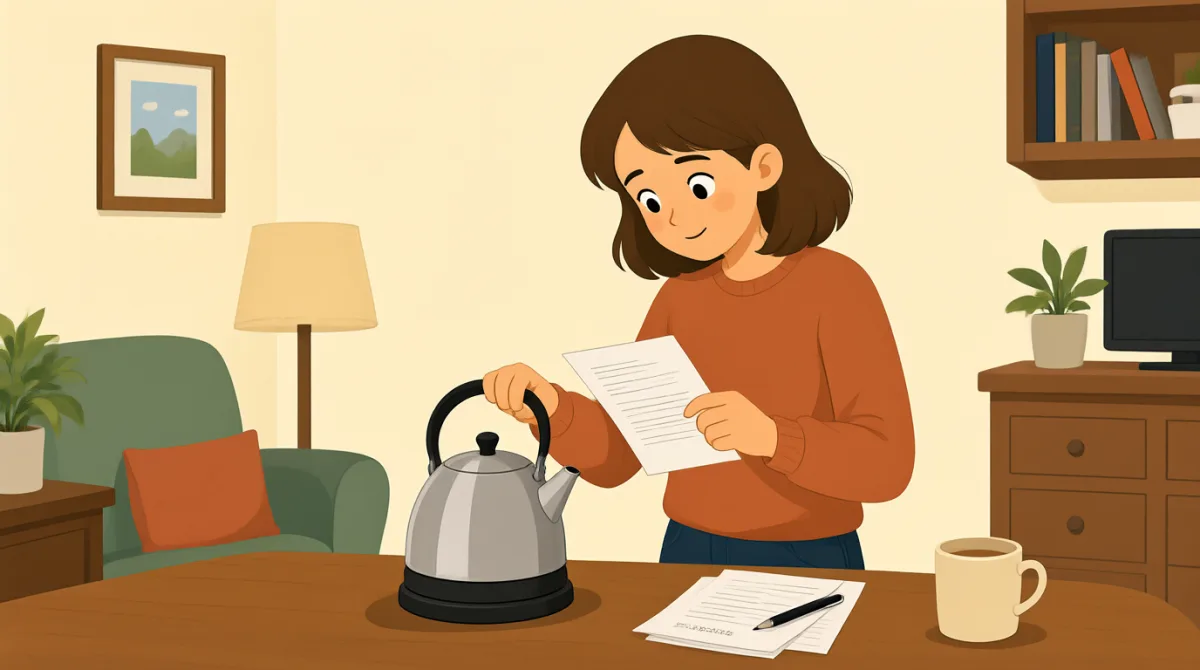

My kettle stopped heating this morning. It was working fine last night.
Mój czajnik przestał dziś rano grzać. Wczoraj wieczorem działał bez zarzutu.

Oh no. How long have you had it?
O nie. Jak długo go masz?
A few months. I think it still has a warranty.
Od kilku miesięcy. Chyba wciąż jest na gwarancji.
Did you check the warranty papers? They should say what to do.
Sprawdzałaś dokumenty gwarancyjne? Powinno być w nich napisane, co zrobić.
I did. It says the warranty covers problems with the kettle.
Tak. Jest napisane, że gwarancja obejmuje usterki czajnika.
Good. Does it tell you where to call or take it?
Dobrze. Jest tam napisane, gdzie zadzwonić albo go zanieść?
It says to call customer service before I bring it to the store.
Jest napisane, żeby zadzwonić do obsługi klienta, zanim zaniosę go do sklepu.
Then call them today. Keep your receipt and warranty papers nearby.
To zadzwoń do nich dzisiaj. Miej pod ręką paragon i dokumenty gwarancyjne.
I will. I hope they can fix it for free.
Tak zrobię. Mam nadzieję, że naprawią go za darmo.
Słownictwo8
- stopped heatingprzestał grzać
This means the kettle no longer gets hot. Use “stopped” plus an -ing verb to say that something no longer does an action.
To znaczy, że czajnik już się nie nagrzewa. Użyj „stopped” i czasownika z końcówką „-ing”, żeby powiedzieć, że coś przestało wykonywać daną czynność.
- a few monthskilka miesięcy
This means several months, but not a long time. You can use it to say how long you have had something.
To znaczy kilka miesięcy, ale nie bardzo długo. Możesz użyć tego wyrażenia, by powiedzieć, od jak dawna coś masz.
- warranty papersdokumenty gwarancyjne
These are documents that explain what the warranty covers and what to do if a product has a problem.
To dokumenty, które wyjaśniają, co obejmuje gwarancja i co zrobić, jeśli produkt ma usterkę.
- covers problemsobejmuje usterki
This means the warranty includes certain problems and may help pay to fix them. You can use “covers” to ask what protection a warranty provides.
To znaczy, że gwarancja obejmuje określone usterki i może pomóc pokryć koszty naprawy. Możesz użyć „covers”, by zapytać, jaką ochronę zapewnia gwarancja.
- customer serviceobsługa klienta
This is the team you contact when you need help with a product or service. You can call customer service to ask what to do.
To zespół, z którym kontaktujesz się, gdy potrzebujesz pomocy dotyczącej produktu lub usługi. Możesz zadzwonić do obsługi klienta i zapytać, co zrobić.
- bring it to the storezanieść to do sklepu
This means to take the kettle to the store. Use “bring it to” when explaining where you need to take something.
To znaczy zabrać czajnik do sklepu. Użyj „bring it to”, gdy wyjaśniasz, dokąd trzeba coś zanieść.
- keep your receiptzachować paragon
This means to save your proof of purchase. You may need it when returning or getting help with a product.
To znaczy zachować dowód zakupu. Może być potrzebny, gdy zwracasz produkt lub prosisz o pomoc w jego sprawie.
- for freeza darmo
This means without paying any money. You can use it to ask whether a repair or service has no cost.
To znaczy bez płacenia. Możesz użyć tego wyrażenia, by zapytać, czy naprawa lub usługa nic nie kosztuje.
Kluczowe zdania7
- 1
My kettle stopped heating this morning.
Mój czajnik przestał dziś rano grzać.
Use this sentence to explain a problem with an appliance. You can replace “kettle” and “heating” with another item and problem.
Użyj tego zdania, by opisać problem ze sprzętem domowym. Możesz zastąpić „kettle” i „heating” innym urządzeniem i problemem.
- 2
How long have you had it?
Jak długo go masz?
This is a useful way to ask how long someone has owned or used something. Use “How long have you had” with an item.
To przydatny sposób, by zapytać, jak długo ktoś ma lub używa jakiejś rzeczy. Użyj „How long have you had” i dodaj nazwę przedmiotu.
- 3
I think it still has a warranty.
Chyba wciąż jest na gwarancji.
Use this sentence when you believe a product may still be covered by a warranty. Replace “it” with the product you are talking about.
Użyj tego zdania, gdy sądzisz, że produkt może być jeszcze objęty gwarancją. Zastąp „it” nazwą produktu, o którym mówisz.
- 4
Did you check the warranty papers?
Sprawdzałaś dokumenty gwarancyjne?
This is a simple way to ask whether someone looked at the warranty information. You can replace “warranty papers” with another document.
To prosty sposób, by zapytać, czy ktoś sprawdził informacje o gwarancji. Możesz zastąpić „warranty papers” nazwą innego dokumentu.
- 5
It says to call customer service before I bring it to the store.
Jest napisane, żeby zadzwonić do obsługi klienta, zanim zaniosę go do sklepu.
Use this to explain instructions you found in a document. You can change the actions and destination to match the instructions.
Użyj tego zdania, by wyjaśnić instrukcje znalezione w dokumencie. Możesz zmienić czynności i miejsce docelowe, by dopasować je do instrukcji.
- 6
Keep your receipt and warranty papers nearby.
Miej pod ręką paragon i dokumenty gwarancyjne.
This is a helpful instruction to save important documents where you can find them. Replace the documents with anything someone may need for a call or visit.
To przydatna wskazówka, by przechowywać ważne dokumenty w miejscu, w którym łatwo je znaleźć. Możesz zastąpić te dokumenty czymś, co może się przydać podczas rozmowy telefonicznej lub wizyty.
- 7
I hope they can fix it for free.
Mam nadzieję, że naprawią go za darmo.
Use this sentence to express hope that someone will repair something at no cost. Replace “they” and “it” with the people and item you mean.
Użyj tego zdania, by wyrazić nadzieję, że ktoś coś naprawi bezpłatnie. Zastąp „they” i „it” osobami oraz przedmiotem, o które ci chodzi.