Calling the Bank’s Fraud Line
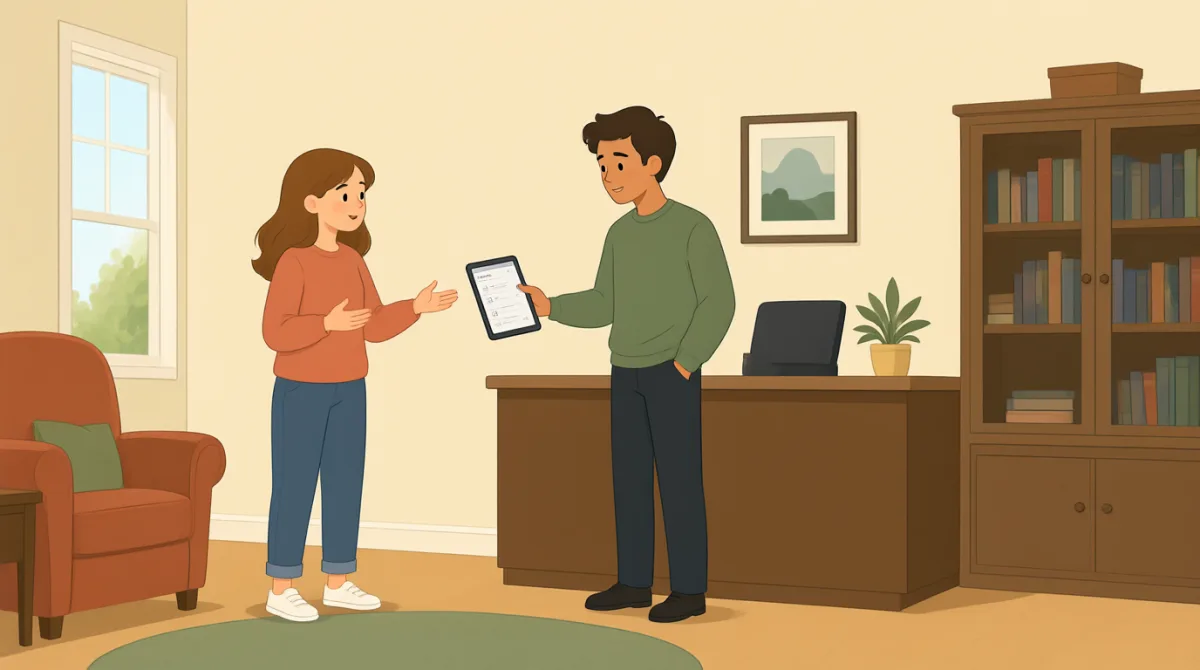
Emma calls the bank’s fraud team while Jack helps her find the relevant account details. She verifies her identity and explains that she may have been charged for purchases she didn’t make.
Dialogue11

Hi, I’m calling because I noticed a few charges on my credit card that I don’t recognize. I’d like to report them and find out what I should do next.

I’ve got your statement open here. The charges are dated Tuesday and Wednesday, and I’ve written down the amounts and merchant names in case they ask.
Before we go further, could you verify my identity? I can provide whatever details you need, but I’d rather not give my full card number over the phone.
Good call. Your account number is on the statement, but don’t read that out unless they specifically request it. They may be able to verify you another way.
Sure. The card is in my name, and I can confirm my billing address and the last four digits. Please let me know if you need another verification step.
The first charge is for an online electronics store, and the second is from a delivery service. Do either of those ring a bell?
No, neither one rings a bell. I haven’t ordered electronics or used that delivery service, so I’m concerned these may be unauthorized charges.
You should make it clear that you’re certain you didn’t authorize them, while leaving room for the bank to investigate before labeling the transactions as fraud.
I can confirm I didn’t make or approve either purchase. Could you note them as suspicious and tell me whether the card should be frozen right away?
That’s a sensible question. Ask whether freezing it could affect pending transactions, and what the bank will do about any additional charges that show up.
Understood. I’d also like a case number and an estimate of when I’ll hear back. If you need more information, what’s the best way to follow up?
Vocabulary7
- I don’t recognize
This means you do not know or remember something. Use it to explain that a charge or transaction seems unfamiliar.
- verify my identity
This means to confirm that you are really the person you claim to be. It is useful when speaking with a bank or another organization that handles private information.
- Good call.
This means that something is a sensible or wise choice. Use it to agree with someone’s practical suggestion.
- ring a bell
This informal phrase means to seem familiar or remind you of something. You can ask, “Does that name ring a bell?” when checking whether someone recognizes it.
- unauthorized charges
These are charges made without your permission. The phrase is useful when reporting transactions you did not approve.
- pending transactions
These are payments that have been started but have not yet been fully processed. You might ask how freezing a card could affect them.
- hear back
This means to receive a reply or update from someone. Use it to ask when you can expect a response.
Key Sentences7
- 1
I’d like to report them and find out what I should do next.
This politely explains your purpose and asks for guidance. You can reuse the structure, “I’d like to [take action] and find out what I should do next,” when contacting customer support.
- 2
Before we go further, could you verify my identity?
This is a polite way to check that an identity-confirmation step will happen before discussing sensitive details. You can use “Before we go further” to pause a conversation and clarify an important point.
- 3
I’d rather not give my full card number over the phone.
This clearly but politely expresses a preference about sharing sensitive information. The phrase “I’d rather not” is useful for setting a boundary without sounding confrontational.
- 4
No, neither one rings a bell.
This is a natural way to say that two things both seem unfamiliar. Reuse “neither one rings a bell” when responding to questions about two names, places, or events.
- 5
I haven’t ordered electronics or used that delivery service, so I’m concerned these may be unauthorized charges.
This sentence gives specific reasons for your concern while using “may be” to avoid claiming more than you know. It is useful when reporting suspicious activity before an investigation is complete.
- 6
Could you note them as suspicious and tell me whether the card should be frozen right away?
This asks the representative to record the issue and advise you on an immediate next step. The structure “Could you [action] and tell me whether…?” is useful for making a polite, two-part request.
- 7
I’d also like a case number and an estimate of when I’ll hear back.
This asks for a reference number and a timeframe for an update. You can reuse the sentence when following up on a complaint, claim, or support request.