Updating Automatic Payments
After the replacement card arrives, Emma and Jack make a list of subscriptions and bills linked to the old card. They work out which payment details need updating to avoid missed payments.
Dialogue10
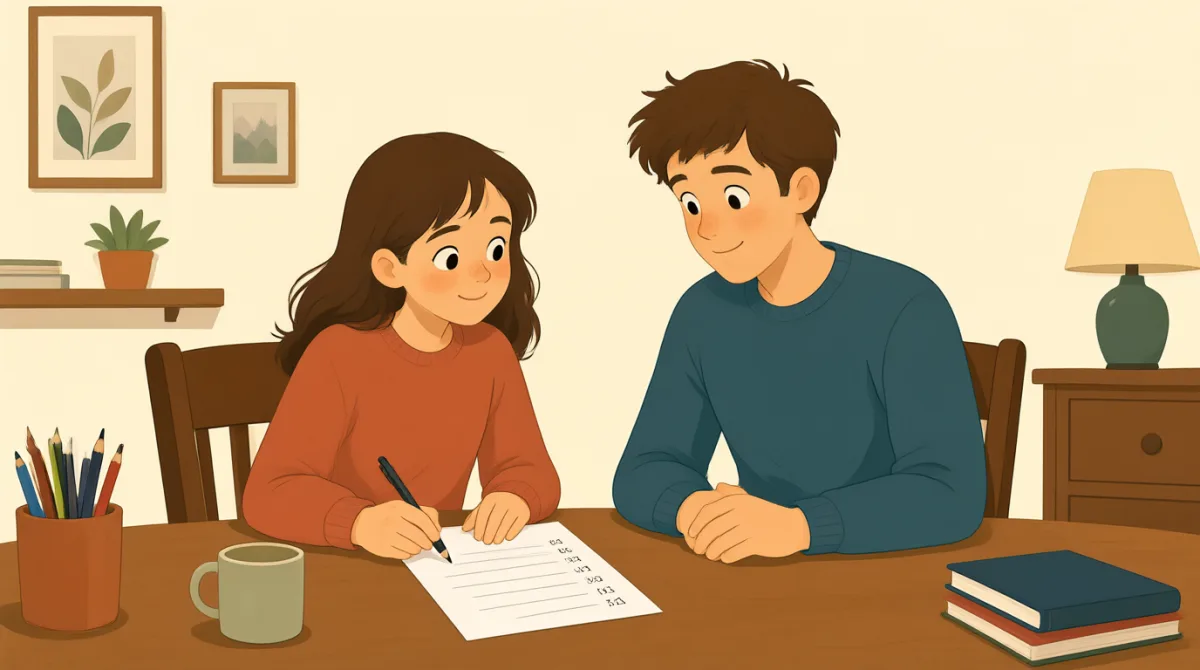

The replacement card finally arrived. Before I activate it, I want to make sure I update every automatic payment tied to the old number.

Good call. Let’s go through your statement and make a list. I’d start with the monthly bills, then check subscriptions that renew less often.
I’ve got my phone plan, electricity, and streaming service. The gym membership is billed quarterly, so I might not have noticed it right away.
Let’s mark the billing dates beside each one. You can update the card details through the providers’ websites, but check that you’re using their official sites.
The electricity payment is due in three days. If I change the details today, do you think it’ll go through in time, or should I use another payment method?
I wouldn’t leave it to chance. Update it now, then see whether the provider confirms the change. If it’s unclear, pay this bill another way.
That makes sense. I’ll also check whether any services are still trying to charge the frozen card. I don’t want a failed payment to disrupt anything.
Some banks can automatically transfer recurring payments to a replacement card, but it’s safer not to assume they did. Contact the bank if you’re unsure.
I’ll work through the list and save each confirmation email. Then I can check next month’s statement to make sure the payments went through correctly.
Perfect. And if you spot a charge you don’t recognize, don’t just update the payment details—report it to the bank so they can look into it.
Vocabulary7
- automatic payment
A payment that is taken from your account or card automatically on a regular schedule. Here, it refers to bills and subscriptions linked to Emma’s old card.
- tied to the old number
Linked to or using the old card number. Use “tied to” to describe something connected to a particular account, card, or service.
- go through
When a payment goes through, it is processed successfully. You can use this phrase to ask whether a payment will be completed.
- leave it to chance
To take a risk instead of making sure something happens. Here, Jack recommends taking action rather than hoping the bill is paid on time.
- unclear
Not easy to understand or confirm. You can use it when instructions or information do not make a situation certain.
- work through the list
To deal with each item on a list one by one. This phrase is useful for describing an organized approach to a task.
- look into it
To investigate or find out more about something. Here, the bank would investigate a charge Emma does not recognize.
Key Sentences8
- 1
Before I activate it, I want to make sure I update every automatic payment tied to the old number.
This sentence explains a precaution and its purpose. Reuse “I want to make sure I…” when you want to emphasize that you will check something carefully.
- 2
Let’s go through your statement and make a list.
This is a practical way to suggest reviewing information together and organizing what needs to be done. Replace “your statement” with another document or set of details.
- 3
You can update the card details through the providers’ websites, but check that you’re using their official sites.
This sentence gives advice while adding an important safety condition. Use “You can…, but check that…” to recommend an action with a necessary caution.
- 4
If I change the details today, do you think it’ll go through in time, or should I use another payment method?
This is a polite way to ask whether an action will work and consider a backup plan. The “If…, do you think… or should I…?” structure is useful when weighing options.
- 5
I wouldn’t leave it to chance.
This concise phrase advises someone not to risk an uncertain outcome. Use it when you recommend taking a practical step to prevent a problem.
- 6
Some banks can automatically transfer recurring payments to a replacement card, but it’s safer not to assume they did.
This sentence acknowledges a possibility while recommending caution. Reuse “Some…, but it’s safer not to assume…” when explaining why someone should verify something.
- 7
Then I can check next month’s statement to make sure the payments went through correctly.
This sentence describes a follow-up check to confirm that payments were successful. Use “check… to make sure…” when explaining how you will verify a result.
- 8
And if you spot a charge you don’t recognize, don’t just update the payment details—report it to the bank so they can look into it.
This sentence distinguishes between updating payment information and reporting a suspicious charge. Use “don’t just…, … so they can…” to emphasize the right action and its purpose.