Planning a Budget for the Group Trip
The friends start planning a weekend trip and discuss how to divide shared costs for transport, food, and accommodation. Grace suggests setting a budget in advance so nobody is caught off guard.
Dialogue9
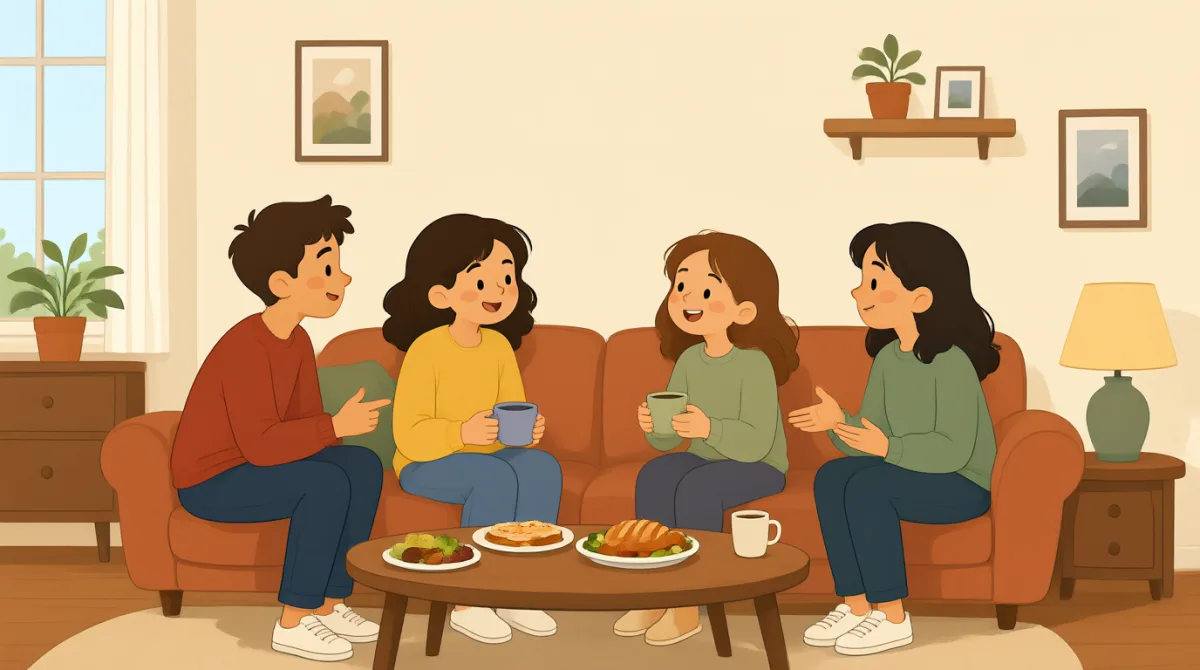

Before we book anything, let’s set a budget for the weekend. That way, nobody gets caught off guard by the costs.

Good idea. I’m hoping to keep my share under three hundred dollars, including transportation and a place to stay.

I found a rental house that looks amazing, but it’s a little pricey. We could split the cost four ways.

Let’s check the total first. If someone gets there late or leaves early, splitting everything evenly might not feel fair.
Fair point. We can divide the house by the number of nights each person stays, then split shared meals evenly.
That works for me. For transportation, should we share the gas if we drive, or compare it with train tickets?
Let’s compare both options. We should also set aside some money for snacks and one group dinner, not every meal.
Got it. I’ll look up train fares tonight, and we can agree on the numbers before anyone books anything.
Perfect. I’ll make a simple budget with the shared costs and each person’s estimate, so we can all plan ahead.
Vocabulary7
- set a budget
To decide in advance how much money you plan to spend. You can use this phrase when planning costs for a trip, event, or project.
- pricey
Informal for expensive. You can use it to describe something that costs more than you expected.
- split the cost four ways
To divide a cost equally among four people. Replace “four” with the number of people sharing the expense.
- evenly
In equal parts. It is useful when explaining how to divide money, food, or responsibilities fairly.
- set aside
To keep some money for a particular purpose. For example, you can set aside money for transport or emergencies.
- look up
To search for information, often online. You can look up prices, schedules, or details before making a decision.
- plan ahead
To make arrangements before something happens. Planning ahead can help people manage costs and avoid surprises.
Key Sentences8
- 1
Before we book anything, let’s set a budget for the weekend.
This is a natural way to suggest agreeing on spending limits before making plans. You can replace “the weekend” with another event or time period.
- 2
I’m hoping to keep my share under three hundred dollars, including transportation and a place to stay.
Use this sentence to explain your spending limit and what it covers. Replace the amount and expenses to fit your situation.
- 3
We could split the cost four ways.
This is a simple way to suggest sharing an expense equally. Change the number to match how many people are paying.
- 4
If someone gets there late or leaves early, splitting everything evenly might not feel fair.
This sentence gives a reason to question an equal split. The pattern “If…, … might not feel fair” helps you raise a concern politely.
- 5
We can divide the house by the number of nights each person stays, then split shared meals evenly.
This explains a practical way to divide different costs fairly. Use “divide [cost] by…” to describe a calculation and “split [cost] evenly” for equal sharing.
- 6
Let’s compare both options.
Use this short suggestion when there are two choices to consider. You can replace “options” with choices such as train tickets and driving.
- 7
We should also set aside some money for snacks and one group dinner, not every meal.
This sentence suggests planning for specific shared expenses while keeping spending under control. You can replace the items with other costs you want to include.
- 8
I’ll make a simple budget with the shared costs and each person’s estimate, so we can all plan ahead.
This is useful for offering to organize expenses and explaining why. Replace “budget” and “shared costs” with another plan or set of details.