Sharing Your Child’s Age And Level
Emma says that her daughter is six years old and can swim a little. Grace helps her choose the right level.
Dialogue8
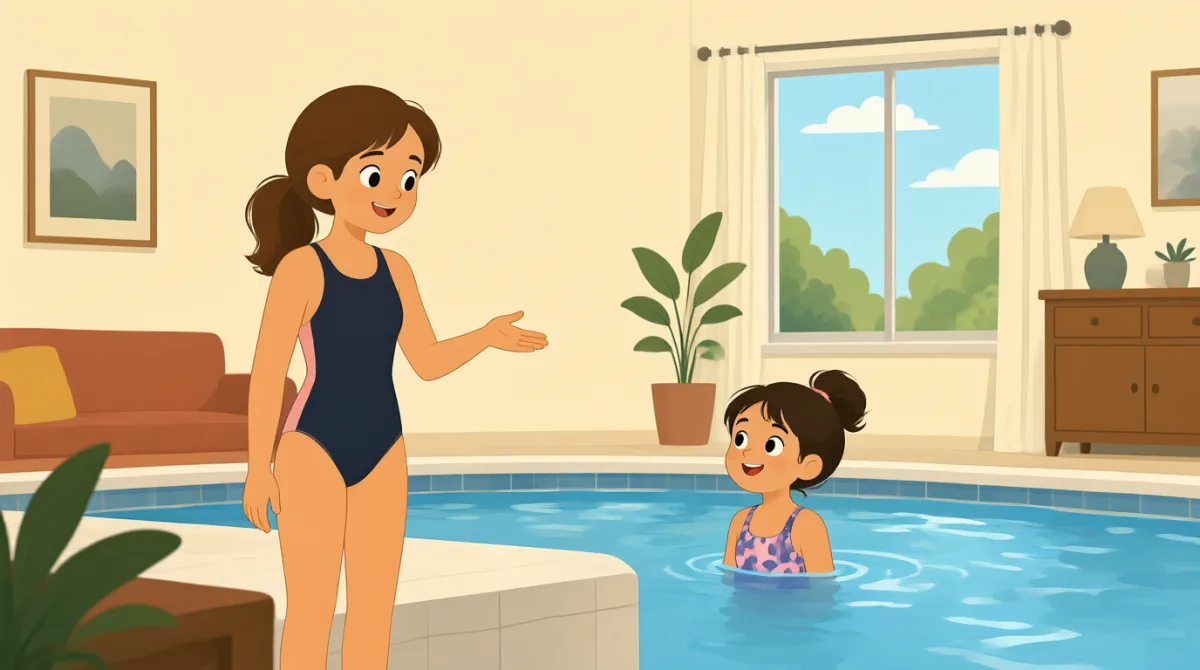

My daughter is six years old. She can swim a little, but she's still learning.

Thanks for telling me. Has she taken swimming lessons before?
No, she hasn't. She can float, but she isn't very confident in the water.
I understand. We have a beginner class for children who are still building confidence.
Would that class be right for her, even though she can swim a little?
Yes. The teacher can check her skills and help her move up when she's ready.
That sounds good. Does she need to be able to put her face in the water?
No, that's okay. The class will help her practice that safely, one step at a time.
Vocabulary8
- six years old
This tells someone a child's age. You can use “My child is [age] years old” to share your child's age.
- swim a little
This means someone has some swimming ability, but is not very skilled yet. Use it to describe a beginner's level.
- taken swimming lessons
This means someone has had swimming classes before. You can ask, “Have you taken [type of] lessons before?”
- float
To float is to stay on the surface of the water without sinking. You can use this word to describe a basic swimming skill.
- confident in the water
This means feeling comfortable and sure while in the water. Use it to describe how comfortable someone feels swimming.
- beginner class
A beginner class is for people who are just starting to learn a skill. You can ask if there is a beginner class for your child.
- move up
Here, “move up” means to go to a class at a higher level. You can use it when someone is ready for a more advanced class.
- one step at a time
This means doing something slowly, in small stages. Use it to describe a safe and gradual way to learn.
Key Sentences8
- 1
My daughter is six years old.
This is a simple way to give your child's age. You can replace “daughter” with “son” or “child” and change the age.
- 2
She can swim a little, but she's still learning.
This describes someone's current ability and shows that they are not finished learning. Use “can [activity] a little, but [person] is still learning” for other skills.
- 3
Has she taken swimming lessons before?
This is a polite question about someone's past experience. Replace “swimming lessons” with another class or activity to ask about different experience.
- 4
She can float, but she isn't very confident in the water.
This shares what a learner can do and what still feels difficult. You can use “can [skill], but isn't very confident with [activity]” to explain a learner's needs.
- 5
We have a beginner class for children who are still building confidence.
This offers a suitable class and explains who it is for. You can change “beginner class” and “children” to describe other lessons and learners.
- 6
Would that class be right for her, even though she can swim a little?
This is a polite way to check whether a class is suitable despite a learner's existing ability. You can replace “that class” and “she” to ask about another person or option.
- 7
The teacher can check her skills and help her move up when she's ready.
This explains how a teacher can assess a learner and guide them to a higher level. Use “when [person] is ready” to show that a change will happen at the right time.
- 8
The class will help her practice that safely, one step at a time.
This explains that a class will help someone learn a skill gradually and safely. Replace “that” with the skill the learner wants to practice.