Sharing Your Child’s Age And Level
Omówienie wieku i umiejętności dziecka
Emma says that her daughter is six years old and can swim a little. Grace helps her choose the right level.
Emma mówi, że jej córka ma sześć lat i umie trochę pływać. Grace pomaga jej wybrać odpowiedni poziom.
Dialog8
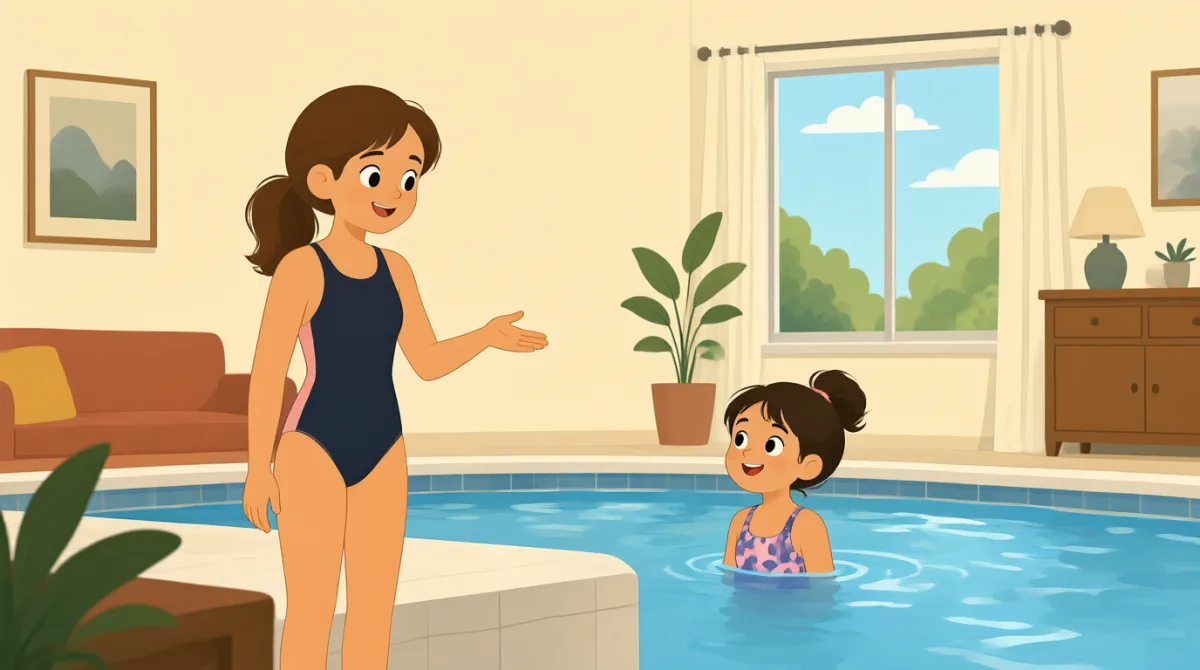

My daughter is six years old. She can swim a little, but she's still learning.
Moja córka ma sześć lat. Umie trochę pływać, ale wciąż się uczy.

Thanks for telling me. Has she taken swimming lessons before?
Dziękuję za informację. Czy wcześniej chodziła na lekcje pływania?
No, she hasn't. She can float, but she isn't very confident in the water.
Nie, nie chodziła. Potrafi utrzymać się na wodzie, ale nie czuje się w niej zbyt pewnie.
I understand. We have a beginner class for children who are still building confidence.
Rozumiem. Mamy grupę dla początkujących dzieci, które dopiero nabierają pewności siebie.
Would that class be right for her, even though she can swim a little?
Czy ta grupa będzie dla niej odpowiednia, mimo że umie trochę pływać?
Yes. The teacher can check her skills and help her move up when she's ready.
Tak. Nauczyciel może sprawdzić jej umiejętności i pomóc jej przejść na wyższy poziom, kiedy będzie gotowa.
That sounds good. Does she need to be able to put her face in the water?
To brzmi dobrze. Czy musi umieć zanurzyć twarz w wodzie?
No, that's okay. The class will help her practice that safely, one step at a time.
Nie, to nie problem. Na zajęciach będzie mogła bezpiecznie ćwiczyć tę umiejętność, krok po kroku.
Słownictwo8
- six years oldsześcioletni
This tells someone a child's age. You can use “My child is [age] years old” to share your child's age.
Tego wyrażenia używasz, by powiedzieć, ile dziecko ma lat. Możesz powiedzieć: „My child is [age] years old”, aby podać wiek swojego dziecka.
- swim a littleumieć trochę pływać
This means someone has some swimming ability, but is not very skilled yet. Use it to describe a beginner's level.
To znaczy, że ktoś ma pewne umiejętności pływackie, ale nie pływa jeszcze zbyt dobrze. Użyj tego wyrażenia, by opisać poziom osoby początkującej.
- taken swimming lessonschodzić na lekcje pływania
This means someone has had swimming classes before. You can ask, “Have you taken [type of] lessons before?”
To znaczy, że ktoś wcześniej brał udział w zajęciach pływackich. Możesz zapytać: „Have you taken [type of] lessons before?”
- floatutrzymywać się na wodzie
To float is to stay on the surface of the water without sinking. You can use this word to describe a basic swimming skill.
To stay on the surface of the water without sinking. Tego słowa możesz użyć, opisując podstawową umiejętność pływacką.
- confident in the waterczuć się pewnie w wodzie
This means feeling comfortable and sure while in the water. Use it to describe how comfortable someone feels swimming.
To znaczy czuć się swobodnie i pewnie w wodzie. Użyj tego wyrażenia, by opisać, jak ktoś czuje się podczas pływania.
- beginner classgrupa dla początkujących
A beginner class is for people who are just starting to learn a skill. You can ask if there is a beginner class for your child.
Grupa dla początkujących jest przeznaczona dla osób, które dopiero zaczynają uczyć się danej umiejętności. Możesz zapytać, czy jest grupa dla początkujących dla twojego dziecka.
- move upprzejść na wyższy poziom
Here, “move up” means to go to a class at a higher level. You can use it when someone is ready for a more advanced class.
Tutaj „move up” znaczy przejść do grupy na wyższym poziomie. Możesz użyć tego wyrażenia, gdy ktoś jest gotowy na bardziej zaawansowane zajęcia.
- one step at a timekrok po kroku
This means doing something slowly, in small stages. Use it to describe a safe and gradual way to learn.
To znaczy robić coś powoli, etapami. Użyj tego wyrażenia, by opisać bezpieczny, stopniowy sposób nauki.
Kluczowe zdania8
- 1
My daughter is six years old.
Moja córka ma sześć lat.
This is a simple way to give your child's age. You can replace “daughter” with “son” or “child” and change the age.
To prosty sposób, by podać wiek swojego dziecka. Możesz zamienić „daughter” na „son” lub „child” i podać inny wiek.
- 2
She can swim a little, but she's still learning.
Umie trochę pływać, ale wciąż się uczy.
This describes someone's current ability and shows that they are not finished learning. Use “can [activity] a little, but [person] is still learning” for other skills.
To zdanie opisuje czyjeś obecne umiejętności i pokazuje, że ta osoba nadal się uczy. W przypadku innych umiejętności użyj wzoru „can [activity] a little, but [person] is still learning”.
- 3
Has she taken swimming lessons before?
Czy wcześniej chodziła na lekcje pływania?
This is a polite question about someone's past experience. Replace “swimming lessons” with another class or activity to ask about different experience.
To uprzejme pytanie o wcześniejsze doświadczenia. Zastąp „swimming lessons” nazwą innych zajęć lub aktywności, by zapytać o inne doświadczenia.
- 4
She can float, but she isn't very confident in the water.
Potrafi utrzymać się na wodzie, ale nie czuje się w niej zbyt pewnie.
This shares what a learner can do and what still feels difficult. You can use “can [skill], but isn't very confident with [activity]” to explain a learner's needs.
To zdanie mówi, co uczeń potrafi, a co nadal sprawia mu trudność. Możesz użyć wzoru „can [skill], but isn't very confident with [activity]”, by wyjaśnić, jakich umiejętności uczeń potrzebuje.
- 5
We have a beginner class for children who are still building confidence.
Mamy grupę dla początkujących dzieci, które dopiero nabierają pewności siebie.
This offers a suitable class and explains who it is for. You can change “beginner class” and “children” to describe other lessons and learners.
To zdanie proponuje odpowiednią grupę i wyjaśnia, dla kogo jest przeznaczona. Możesz zmienić „beginner class” i „children”, by opisać inne zajęcia i uczestników.
- 6
Would that class be right for her, even though she can swim a little?
Czy ta grupa będzie dla niej odpowiednia, mimo że umie trochę pływać?
This is a polite way to check whether a class is suitable despite a learner's existing ability. You can replace “that class” and “she” to ask about another person or option.
To uprzejmy sposób, by zapytać, czy grupa będzie odpowiednia, mimo że uczeń ma już pewne umiejętności. Możesz zastąpić „that class” i „she”, by zapytać o inną osobę lub możliwość.
- 7
The teacher can check her skills and help her move up when she's ready.
Nauczyciel może sprawdzić jej umiejętności i pomóc jej przejść na wyższy poziom, kiedy będzie gotowa.
This explains how a teacher can assess a learner and guide them to a higher level. Use “when [person] is ready” to show that a change will happen at the right time.
To zdanie wyjaśnia, jak nauczyciel może ocenić umiejętności ucznia i pomóc mu przejść na wyższy poziom. Użyj „when [person] is ready”, by pokazać, że zmiana nastąpi we właściwym momencie.
- 8
The class will help her practice that safely, one step at a time.
Na zajęciach będzie mogła bezpiecznie ćwiczyć tę umiejętność, krok po kroku.
This explains that a class will help someone learn a skill gradually and safely. Replace “that” with the skill the learner wants to practice.
To zdanie wyjaśnia, że zajęcia pomogą komuś uczyć się danej umiejętności stopniowo i bezpiecznie. Zastąp „that” nazwą umiejętności, którą uczeń chce ćwiczyć.